A long summer of discontent leaves investors groping for an explanation
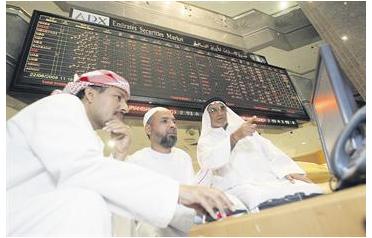
What was supposed to be a quiet summer for the region's markets (bolstered by solid Q2-2008 figures, but tempered somewhat by seasonally thin liquidity) has turned into a merciless market massacre. Investors are, naturally, asking why.
There was no real sign of a pending market crash. News flows, if anything, were overwhelmingly positive. Sure, the traditionally strong pre-earnings season had fizzled out quickly. And granted, foreign fund flows were mostly facing the wrong direction in July. But that was the whole Iran issue, and the uncertainty surrounding the impact on the GCC region of any escalation. Since mid-July, the rhetoric on the Iranian front has actually calmed down significantly.
So why is the Tadawul benchmark dabbling with 8,000 points (down 27 per cent YTD, and 8.0 per cent so far in August alone)? What on earth is Aldar doing below Dh10 per share? And whatever happened to our unflinching hero, the indomitable Arabtec, down an eye-watering 20 per cent from a peak achieved only two weeks ago?
The Saudi benchmark is now at the level at which it had started 2007, following a steep market crash in 2006. The only difference is that Saudi market aggregate earnings for 2008 will be around 22 per cent higher than levels for 2006 – or 33 per cent higher if you exclude the banking sector.
Aldar and Arabtec, the two market leading, large-cap stocks are now both trading at single-digit FY08 earnings multiples; the first at around six times while the second at around nine times. Mind you, these are stocks that, in our view, will sustain an earnings CAGR of well over 20 per cent over the next three years (and we have reasonably good visibility of that). That too in an economy that will likely continue to brush against a double-digit annual GDP growth rate with domestic interest rates hovering around the 2.00 per cent level. The average earnings multiple in the UAE for 2008 is now a meagre 11 times – lower than at any other time in recent history, be it times of boom or times of bust.
Surely something must have happened to trigger this selloff – and it certainly doesn't look like valuation concerns.
So let's put some conventional answers to the test.
Unease regarding potential developments in Iran have finally boiled to the surface and manifested in a broad and steep selloff across all Gulf markets.
Well, that on the surface is a potentially credible explanation except that we have a very good proxy to measure perceived risk of military confrontation in Iran. It is the global price of crude oil. The decline of Brent crude prices from a high of over $140 per barrel only a month ago to around $112 today is in line with what we see is a receding risk of military confrontation with Iran. The equity markets had, in fact, already priced in the risk to a large degree by July amid heightened rhetoric, but had never reacted to the decline in the perceived risk that followed.
The recent steep decline in global oil prices is causing concern among investors, as it carries significant implications on the economies of the region.
Don't even try. We are not even close to prices that would cause the real economies of the region any concern. Wake me up if oil (ever) hits $70, and I will start taking it into consideration as a viable concern. The region's large fiscal budgets are effectively balanced at around $55 per barrel (give or take) and almost every additional cent of oil revenue does not have a direct impact on economic activity, as it is effectively saved for a rainy day. Paradoxically, exceedingly high oil prices actually have a negative impact on the economies of the region and in particular the private sector, as it makes production that much more expensive. Evidence abounds in sectors such as transport and logistics, to name a few. Our planes run on oil-derived fuel too. So, in effect, the recent decline in oil prices is actually positive for the private sector in the GCC (lower production and transportation costs) and for inflation overall. The markets never actually reacted positively to the last ascent in oil prices in the first place.
The decline in global developed and emerging equity markets is having a direct and severe impact on markets of the region, and risk appetite is especially low at this point.
Old news. Not to mention that most global emerging markets have rallied over the past month, as have leading developed markets. The only notable exceptions include China (too busy with the Olympics is my guess) and Russia. Some may tend to draw parallels with the Russian market, which had originally proved resilient but since June succumbed to a massive selloff. But Russia's situation is much more specific and relates to recent negative domestic market developments (BP's ejection, fears of a Yukos-style package for a leading listed mining company) and more recently, outright war.
The budding recovery witnessed by other emerging markets is attracting interest and liquidity away from the markets of the region.
Oh, so the recovery is now bad news? I don't think so. We have only started to scratch the surface in terms of foreign flows into the equity markets of the region, and there is still plenty of liquidity to go around, credit crisis or otherwise. Not to mention that this does not explain the severe retreat in the prices of Saudi Arabian stocks in which foreign participation remains marginal.
The currency revaluation is no longer in play, resulting in an exit from domestic currency equity positions.
A marginal component. In any case, the reval trade has effectively been off the table since early this year. The recent strengthening of the US dollar changed nothing.
Saudi transparency laws that will reveal stock ownership of over 5.0 per cent in all listed companies, negatively received by some who don't want to be known.
Big deal! Besides, this being a Saudi-specific factor, it may have an impact on some small speculative stocks. It does not explain why Sabic is trading at SAR118 per share. By the way, to own 5.0 per cent of Sabic, you need to have around $5 billion lying around.
News of regulatory efforts to tighten credit facilities for real estate in the UAE, in order to rein in speculative activity.
And…? Well, let's first define the "off plan" speculative bubble as a Dubai-specific phenomenon (with a budding Abu Dhabi component). Next, let's explain exactly what the reference is about. This is not an effort to control mortgage lending. Mortgage lending is effectively a final-user facility made available through banks and specialised mortgage lenders. We believe that mortgage finance penetration will continue to rise in the UAE and the region in general, and the real constraint for banks is the size of their balance sheets at a time of abundance of lending opportunities. In Dubai, final-user demand remains robust and visibly exceeds actual supply for, at least, the next year; while in Abu Dhabi, Qatar, Saudi Arabia and elsewhere, the shortage of supply is chronic. In the latter markets, the housing finance industry remains at an embryonic stage. What is targeted by these still very timid efforts to rein in speculative activity is the early stage off plan buying and selling of properties using minimal deposits (usually no more than 5.0 per cent of the property list price) resulting in very high speculative returns (a 5.0 per cent appreciation in value means 100 per cent returns for the speculator), while at the same time inflating the price of the property. This has resulted in a highly imbalanced market where finished property, usually targeted by the end user, is going for less than a similar property to be delivered in three years (if you are lucky). This speculative bubble has no legs (given the eventual need for a final buyer or the eventual calling in of a second instalment) and is not a broad property bubble. It could be weeded out by gradually introducing constraints on trading off plan properties and increasing the size of initial deposits. This will hurt individual speculators. It will not hurt the system. So where exactly are the implications for the equity market?
So now I am really puzzled. A market move of this scale cannot be arbitrary! Well it is not. It is explained by a traditionally sweltering summer in the Gulf region, where the domestic investor base migrates to cooler climates leaving the market with relatively thin liquidity. One might be swayed to admit that this holiday season might be extended with Ramadan in the offing. This leaves the market vulnerable to any selling pressure. Whatever may be the reason for selling on a particular day, what otherwise would normally be soaked up by scales and levels of buying interest during a conventional month results in significant price impact during August. What didn't help this trend was the rather temperamental source of foreign liquidity which has not yet established itself as more long-term in nature, given the dominance of hedge funds rather than dedicated country or region funds.
Choose any of the factors above as an action trigger, or any floating rumour, for that matter, and you can witness a typical normal down day transforming into an avalanche. And an avalanche triggers panic, which results in further selling pressure in order to lock in hard-earned profits. You know the rest…
What illustrates this last point in particular is the fact that the worst-hit stocks in most markets were in fact the best-performing stocks of the previous six months.
So is that really it? Yes. Really? Really… But that means that stocks in the GCC, which were looking pretty attractive already, have just gotten 20 per cent cheaper for no good reason. Yep!
Walid Shihabi is Head of Research at Dubai-based investment bank Shuaa Capital