Gold may rise to $1,250 as credit crisis worsens
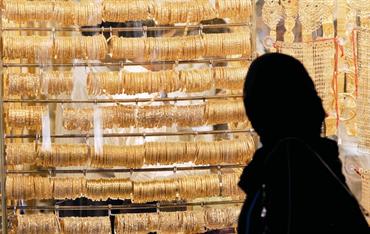
Agnico-Eagle Mines Chief Executive Officer Sean Boyd said gold prices may rise to about $1,250 (Dh4,591) an ounce as the metal gains increasing allure as a buffer against tough economic conditions and a worsening credit crisis.
Conditions in the US economy make the metal more attractive to investors, Boyd told investors in New York. Gold purchases are increasing among European, Asian and Middle Eastern buyers, he said.
"It's not a stretch to say that it could go up 50 per cent from these levels," Boyd said, without saying when. "The debt, the deficits, nothing has changed. The credit crisis has not gone away – in fact it probably will continue, so there are compelling arguments to own gold."
Gold has dropped by 19 per cent since credit-market losses and a weak dollar drove the price to an all-time high of $1,033.90 an ounce in March. Boyd's opinion that gold will gain is shared by Newmont Mining Corp. CEO Richard T O'Brien, who said this week he expects bullion to reach a record in the next year as investors seek protection against inflation.
Boyd said gold has dropped more than he expected in recent months as it was caught in the "downdraft" of declining prices for other commodities, including copper, which also fell from a record.
"I don't see anything to get worried about," he said. The "fundamentals" for bullion remain more favourable than those of base metals, he said.
Gold futures for December delivery fell $2, or 0.2 per cent, to $835.20 an ounce on the Comex division of the New York Mercantile Exchange. The metal has gained for each of the past seven years.
Agnico-Eagle fell 10 cents to C$60.95 in Toronto Stock Exchange trading. The shares have gained 12 per cent this year.
Meanwhile, Gold fell on Friday, capping the biggest monthly decline since April 2004, as the dollar climbed against the euro, eroding the appeal of the metal as an alternative investment.
The dollar headed for the biggest monthly gain since the European currency began trading in 1999. Gold generally moves in tandem with the euro.
The metal has tumbled 19 per cent from a record $1,033.90 an ounce on March 17, partly because the Federal Reserve ended a series of reductions in benchmark borrowing costs.
"Gold is cooked," said Leonard Kaplan, the president of Prospector Asset Management in Evanston of the US state of Illinois.
"Sell every rally. The Fed is not going to raise rates, but that doesn't matter. Rates in other countries are going to come down."
Silver futures for December delivery were little changed at $13.707 an ounce. In August, the price plunged 22 per cent, the most since April 2004. The metal climbed 0.9 per cent this week.
"Any pullback in the dollar is going to be seen as a correction and not a resumption of a bear market, so people are still going to sell gold," said Tom Hartmann, a commodity analyst at Altavest Worldwide Trading in Mission Viejo in the US state of California.
Gold traded as high as $844.20 before declining as crude oil pared gains.
Oil rose as much as 2.7 per cent to $118.76. The price reached a record $147.27 on July 11.