Robust earnings fail to woo foreign investments
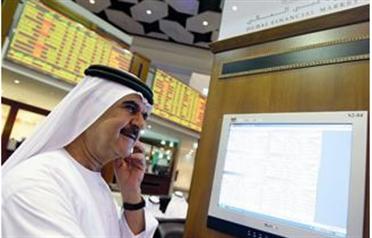
Foreign investments have been flowing out of Gulf stock markets in spite of robust earnings growth at the end of the first half of this year, research shows.
Companies in the UAE saw earnings increase 51.6 per cent in the second quarter year-on-year, comprising 58.1 per cent growth in Abu Dhabi and 40.8 per cent growth in Dubai. The next strongest results came from Oman at 42.8 per cent, while both Qatar and Bahrain delivered 26 per cent on year earnings growth, a monthly report by Cairo-based investment bank EFG-Hermes noted.
Saudi Arabia generated the weakest earnings growth at just 13.4 per cent, though earnings growth has steadily been on the rise over the past year.
In sharp contrast, the stock market has seen relatively weaker performance year-to-date (YTD). Based on the returns from the seven Gulf bourses, EFG has split them into three groups. The Outperformers comprise Qatar with 21.3 per cent growth YTD, Oman with 21 per cent and Kuwait with 18 per cent.
The Underperformers group comprises Saudi Arabia with negative returns of 22.9 per cent and Dubai with negative 17.3 per cent. The Non-Returners consist of Bahrain, which was stagnant at 0.5 per cent returns YTD and Abu Dhabi at 6.3 per cent.
"Although the returns for the Outperformers seems impressive, it is important to keep in mind that the bulk of the positive performance was generated in [the first quarter of the year]. Subsequently, second quarter of 2008 saw most markets range-bound [except Qatar] while in the third quarter of this year, to date, all markets have generated a negative return," EFG analysts Fahd Iqbal and Hanzada Nessim said.
This is echoed in foreign investor flows for the UAE and Qatar, where foreign investors have been consistently exiting the market for the past few months with little sign of a turnaround.
"We believe this is the main issue holding back much of the GCC. Foreign investors are key in setting the direction for GCC markets but sentiment remains weak due to global market turmoil. In addition, foreign investor limits and a muted turnout of IPOs so far this year [relative to expectations] has further muted returns," the analysts said.
"Theoretically, Saudi Arabia should be immune from concerns related to global markets. However, the highly speculative nature of the market has resulted in the Tadawul closely tracking the Dubai Financial Market. The IPO market remains robust in the kingdom though it has had the negative effect of detracting liquidity from the secondary market.
"Hence, while we do continue to see earnings growth and potential changes to foreign investor limits as being important drivers to stock market performance for the GCC, in short term, we believe these have taken a backseat to foreign investor sentiment.
"In our view this is unfortunate given the strong secular growth prospects for the region. However, over the next 12 months we expect to see local institutional players in a more vital role in setting the direction for the market, especially given the number of GCC- and Mena-centric funds launched by international asset managers over the past year."
With the summer kicking in, July was relatively quiet for the DFM. The Dubai benchmark slipped 0.7 per cent to 5,405.4. Liquidity was also muted, with average daily turnover sliding six per cent to Dh1.1bn and average daily volume rising three per cent to 285.7m shares.
On ADX, performance was muted last month, with first-half company results failing to ignite the market. The ADX Index edged up 0.5 per cent to 4,976.2. Liquidity declined, with average daily turnover falling 26 per cent to Dh1.1 billion and average daily volume tumbling 38 per cent to 203.9m shares.