Small investors create strong selling pressure on DFM
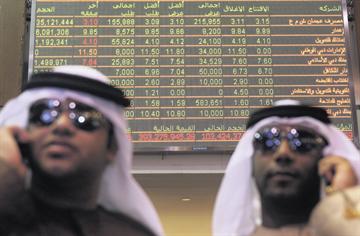
The current downward trend at the Dubai Financial Market (DFM) is giving indications to analysts that the market will start formulating its bottom very soon – probably by the beginning of September – despite the sharp decline in the index.
In yesterday's trading the DFM index lost 62.24 points, or 1.27 per cent of its value, and closed at 4820.91 points, which supported expectations that the index would continue declining to its next support level at 4650-4700 points. The turnover also declined during the strong downturn trend yesterday as 106.4m shares were traded at a total value of Dh431.1m. Leading stocks in the real estate and banking sectors continued their pressure on the index. Emaar, which closed down 1.82 per cent at Dh9.13, returned to top the list of most active stocks by value. Other leading stocks started to be more active, including Deyaar and Arabtec.
However, analysts said the current wave is projected to be the extreme decline in the downturn trend in the market and the market will start formulating its bottom during the coming few weeks.
Hosam Al Husseini, head of brokerage at Emaar Financial Services, predicted last week that the DFM would continue its downward trend on the short-term.
"What is happening this week is supporting the indication that the current sharp corrections in the market will be the last decline before the index formulates its bottom. Technically, when the market is preparing to change its long-term direction to the upward side, it gives mixed signals and creates surprise downturn trend and this is what is happening now," he said.
However, he voiced concern over the increasing losses in the current wave. "These losses will need a long time to recover. The next two weeks will be critical for the DFM because the rebound and recovery of the market after the current decline will give indicators to the DFM index throughout 2009. The increasing decline in prices of leading stocks may limit the recovery of the market."
Husseini said the current wave could drag the index to its next support level of around 4650 points. "Emaar's stock is project to go down in the short-term until it formulates a new support level. Emaar's stock will create more negative pressure on the DFM index in the near future. Other leading stocks also created new support levels at lower prices, such as Tamweel at Dh5.50 and DFM at Dh3.80.
"Despite these declines, leading stocks are giving reversal signals, especially through the pattern in their volume. All sectors have reached very strong support levels and the summer is nearly over," Husseini said.
He explained that the current wave was fuelled by spreading fears and lack of confidence among small investors and they are creating more selling pressure on the index.
"Indications for recovery are increasing, especially the sudden decline in turnover during the downslide. We expect the first strong indicator of recovery will be increasing turnover on leading stocks during rebound sessions. The level of turnover in the market will be a critical signal for all investors and analysts. Buy bids are not very strong but investors have became more sensitive to buying and this will encourage more liquidity and increase the turnover," he said.
Motaz Al Demerdash, CEO of Sharjah Islamic Services, agreed that turnover would be a critical indicator, which would reflect increasing interest by leading and institutional investors to buy.
"There is no new liquidity so far in the DFM. It is the same liquidity trading since the beginning of the month, despite leading stocks in the market reaching very encouraging and low support levels. Meanwhile results of the companies and the UAE economy are also very encouraging," he said.
Al Demerdash highlighted the strong psychological impact of sharp declines in the international equity market on regional markets. "The reaction of regional markets, especially in the UAE, to developments in international equity markets is very huge compared to the low level of correlation. Global markets are still creating high negative impact on investors.
"There is high liquidity outside and most investors are still hesitant to return to the market. This has created the current stability in the index and the market will start moving when this liquidity starts entering again, probably by the last quarter," Al Demerdash said. He added that the DFM needs to close on an upward trend for three consecutive sessions in order to establish firmly that the market has changed its trend and is recovering.
Emaar down
Emaar Properties' stock declined during intraday trading to Dh9.06, its lowest level in three years. The stock rebounded by the end of the session to close at Dh9.13. However, analysts said the current new low level could not be considered a new support level until the stock closes at this level for three sessions.