Emerging markets see ad revenues pouring in
Investment gurus may have their own formula to evaluate the commercial success of a region, but advertising seems to be the new mantra to evaluate the economic status of a market – especially emerging markets.
A peek at advertising trends in Dubai and China foretell and emphasise an economic shift towards emerging markets.
WPP, the second largest advertising group in the world, attributed emerging markets, including Asia and Middle East to be the major contributors in their increase in profits by 14 per cent. Emerging markets attributed 23 per cent to the sales of WPP Group worldwide.
The official statement declaring company's first half results said Asia and Latin America made up for slower growth in Europe and the United States as net income climbed to £208.2 million (Dh1.4 billion) from £181.9m, the London-based company said in a statement.
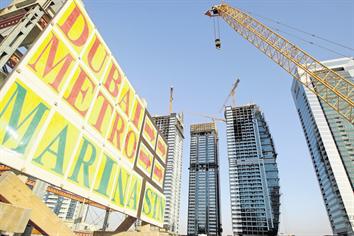
At home, Dubai is negotiating with international and local companies over naming rights for two dozen stations being built as part of Dubai's new mass-transit system. Industry officials are expecting anything between Dh10-12 m per station with a minimum commitment of 10 years. The brilliance of this advertising coup can be judged by the fact that more than 250 international and local companies have shown their interest.
To help offset the estimated $4bn (Dh14.6bn) in construction costs, the government is opening 23 of the 47 stops to corporate branding rights. This is prime advertising real estate: Much of the metro system will be above ground, running parallel to Dubai's main 12-lane highway offering the highest exposure to probably advertisers. The programme could generate Dh700 million or more for Dubai each year.
Advertising revenues, as Dubai shows to the rest of the world, can actually fund the infrastructure projects and keep them running.
China, sporting one of the most successful Olympics is emerging as another playground for advertisers who are seeing the large population of the country as a vast market. Taking a bold step, United Parcel Service said it's advertising only in China, a market the company calls "our next great frontier."
UPS is the official Olympic sponsor of express and logistics services. It wants so parlay that deal into a branding programme that reaches a new generation of Chinese entrepreneurs. The UPS slogan in China is "If UPS can fully assist the Beijing 2008 Olympics, they can fully assist you." A recent survey by UPS identified a trend among the country's growing affluent for high-end products ranging from beauty products to DVDs.
As advertising and marketing dollars flow into emerging markets, the top western fashion publications are seeing a cut in their revenues.
If the trend continues, hefty, glossy fashion and beauty magazines may become as anaemic as the models between their covers. Vogue, Marie Claire and two-thirds of the 16 top fashion and beauty magazines from the United States by number of ad pages are smaller than a year ago.
A direct comparison to their last year's editions show that magazines' core markets are luxury goods, clothing, jewellery and beauty products. Condé Nast has 18 per cent fewer advertising pages, Vogue is down seven per cent and Hearst's Cosmopolitan is 3.2 per cent lighter.
Reinstating his confidence in the emerging markets, WPP CEO Martin Sorrell said 2009 may be a difficult year, and the firm has made purchases in Brazil, Russia, India and China to spur sales to compensate downward fluctuation from the West.