'New media will surpass print'
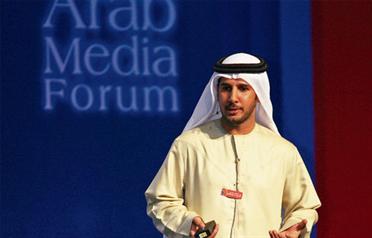
New media will surpass the print media in five to seven years, according to Abdullatif Al Sayegh, Chief Executive of Arab Media Group.
A session at Arab Media Forum 2009 titled "Daily Newspapers: Crisis in the West, Growth in the Arab World' did not find many supporters of print.
Othman Al Omair, Editor-in-Chief and publisher of Elaph, suggested forming a consolidated Arab fund to support online journalism, equivalent to $300 million. The fund would back new media projects and protect them from becoming a new victim of censorship and control, said Al Omair.
The head of the renowned e-newspaper called for mourning print media as a dying format. "Figures prove that readership of online media is much higher than print," said Al Omair.
Mohammad Al Romaihi, Editor-in-Chief of Kuwait's Awan newspaper, was the only one to speak against a demise of print media. He said: "It is true that a lot of Arabic newspapers and magazines are falling under the pressures of the global financial crisis, either reducing their pages or shutting down. Yet, I do not believe that this implies a future death of print media.
"Print will continue to live and flourish, because it is part of our culture." He described new media as junk food versus print, the healthier more sophisticated nourishment.
Firas Adra, Editor-in- Chief, Dpnews.com, Syria, responded in favour of electronic media. He noted that one traditional newspaper that has refused to admit to the growth of the new media, was later forced by the economic crisis to convert to an online version, which statistics showed it accounted for 80 per cent of its revenues.
Adra, however, explained that electronic version of a traditional newspaper is not considered as electronic media. "Electronic media require infrastructure. Such infrastructure is still underdeveloped in the Arab world, and could be covered up for by even more advanced technologies such as mobile media."
Abdulaltif Al Sayegh provided even further evidence to the future prevalence of new media. In his presentation, Al Sayegh gave various examples of well established publications such as The Washington Post, Readers' Digest and Tribune whose current financial problems have forced them to chose between converting to electronic media or battling with bankruptcy.
On the other hand, he said new media including search engines such as Yahoo and Google, in addition to social networks such as Facebook and Twitter are still seeing significant growth.
"Major events, election campaigns and news updates are finding huge responses online, stirring wide discussions and interaction among groups on Twitter and other social media," he said.
Al Sayegh said the media crisis in the Arab World became more prominent with the new media transformation.
Keep up with the latest business news from the region with the Emirates Business 24|7 daily newsletter. To subscribe to the newsletter, please click here.