Abu Dhabi housing shortage raises prices in Dubai
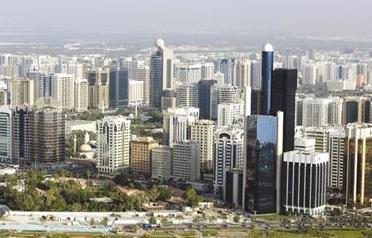
Housing shortage in Abu Dhabi is leading people to move to Dubai, pushing up prices, particularly in developments closer to the border that are now relatively cheap because they are less central, according to a recent report.
However, in the medium to long-term, the wealth of Abu Dhabi, coupled with its tight housing market could increase prices higher in the capital in comparison with that in Dubai, HSBC said in its latest report, 'A UAE real estate sector update'.
Residential prices in Abu Dhabi grew the highest at 61 per cent in the second quarter of 2008 in comparison to fourth quarter 2007
The report noted delays in project completion in Abu Dhabi are more apparent, with supply forecasts being revised downwards significantly. Additionally, increasing number of residential units in the UAE were being converted into office space.
"A conservative assumption of six per cent population growth in 2008 translates to 70,000 additional residents, excluding labourers, who will require at least 17,500 housing units if the household size is four people. Only 6,000 units are expected to reach the market this year. People literally do not have a place to live," said the HSBC report.
The report added: "The population growth shows no signs of slowing down in Abu Dhabi, although the capital had raised concerns of a supply shortage. In fact , a lack of housing has led more people to move to Dubai.
However, the HSBC report said: "Basic infrastructure was not keeping pace with developments in Dubai. In some instances, projects that are completed cannot be occupied because of delays in installation of utilities such as water, electricity, sewerage, telephone, internet, and cable lines.
Aggressive rate cuts and sustained oil price growth have fuelled liquidity in the UAE market along with rapid asset inflation. According to the report, the real estate sector has witnessed tremendous asset inflation owing to the liquidity provided by rising oil prices.
"Over the past six months, the UAE property market has seen acceleration in sales and rental prices have grow across the board. However, we believe prices in the UAE are not only reasonable but also affordable," said the HSBC report.
The value of the current proposed projects in Abu Dhabi is roughly estimated at $150billion (Dh551bn), of which about $100bn is residential. With foreign assets estimates at $1trn, if we assume risk-free return, the government will finance all in a couple of years.
The report said rental growth was accelerating just as well despite the rental caps in Dubai.
In the UAE, credit is becoming more widely available as the mortgage market matures. According to the report, mortgage lending in the UAE saw a growth of 90 per cent year-on-year in 2007 adding pressure on prices.
"In fact, the rental caps will prompt property owners to ask for higher rents that capture expectations of future appreciation today," said the report.
Land prices in Abu Dhabi have seen a steady incline. Last year, the real estate sector in Abu Dhabi was still in its infancy and the market sentiment was cautious, with residents waiting to see if the capital could execute its development plans.
"Plots of land were going for an average Dh2,000 per square metre and residential properties were selling at an average of Dh13,000 per sqm. In the second half of the year, the market gained credibility as mega projects started to take shape and sales activity picked up significantly. By end-2007, plot prices had almost tripled to Dh6,000 per sqm," said the report.
Sorouh has been granted additional 33 million sqm of land at Sheih Al Sedira on the border between Dubai and Abu Dhabi, which is just 20 minutes away from Jebel Ali. The plot was granted free because of its remote location and the high costs associated with connecting it to the infrastructure network.
"Property prices in Abu Dhabi too increased by 23 per cent to Dh 16,000 per sqm, lagging the appreciation of land prices, as they usually do. We believe there is still room for further property price appreciation in the UAE, considering growing wealth in the UAE will make prices look cheaper," said Majed Azzam Real Estate Analyst for HSBC.
According to HSBC: The nominal GDP in Abu Dhabi and Dubai is expected to grow by 40 per cent and 30 per cent in 2008 and GDP per capita is expected to reach $70,000 and $42,000, for Abu Dhabi and Dubai respectively.
"When we met Sorouh at the time of its planning to launch Al Ghadeer, it said it would sell at Dh11,000 per sqm, said Azzam of HSBC.
"However, owing to the interest shown by investors and buyers, the developer raised the said figure to Dh16,000 per sqm in May," said Azzam.
The 45 per cent price increase reflects strong interest and high demand. Said the report: "Although this is impressive, it raises some concerns. Al Ghadeer is meant to target the middle-income segment, specifically Jebel Ali employees, most of who live in Sharjah or Ajman and commute daily to work."
Abu Dhabi's secondary market gains momentum but moderately.
Although continued delays will sustain pressure on prices, the report suggested that the secondary market in Abu Dhabi was gaining momentum.
"Abu Dhabi has currently 500 listings on the secondary market in comparison to a mere 67 number of listing for the emirate at the end of last year" the report said.
It warded off 'speculative talk' in the market that increasing speculative demand in Abu Dhabi were keeping prices artificially inflated in the emirate.
The report added: "Out of roughly 6,000 units sold so far, we could only find 500 listings on the secondary market, which was less than 10 per cent of the properties resold. Rough estimates provided by Aldar showed out of the roughly 1,700 units sold this year, only less than six per cent of that number were resold (100).
"However, we don't believe the data is indicative that most buyers are end users; it only indicates owners were holding onto properties since they expected further price appreciation."
Rentals are the best indicator of demand and market tightness. The report further said buying or renting is just a financing decision. It does not matter as long as enough demand exists to ensure all available units are occupied.
Most of the developments on the outskirts of Dubai, such as Jumeirah Beach, Dubai Marina, Jumeirah Lake Towers, were cheaper to rent than in Abu Dhabi.
According to Aldar, about 40 per cent of its buyers are locals who were mostly holding their properties for investment and renting them out to expatriates.
For example, at Al Raha Gardens, which is not open to foreign buyers, out of 460 units delivered, roughly five are owner-occupied and the rest being rented.
According to HSBC, if for any reason expatriates are reluctant to buy, the government could step in, buying everything and then renting them out.
Concentration risk and cost inflation
Since all of Aldar and Sorouh's projects are in Abu Dhabi, their exposure to any downturn in the property market there is high risks.
Because of the extraordinary amount of construction activity in the region, supply bottlenecks are bound to occur, ranging from salary hikes to raw material costs increases. This would have a negative effect on Emaar's margins and their valuation.
The sheer scale of development at Emaar will stretch management and operational capacity, introducing the risk of delays and/or even project cancellation.
Emaar still operates in an underdeveloped regulatory environment, where minority interests can be overlooked. The shares-for-land-swap deal with Dubai Holding, which weighed heavily on the stock, was recently abandoned in favour of the 50/50 joint venture with Bawadi.
A currency revaluation will lead to translation losses, since contributions from foreign subsidiaries and value of foreign investments, will decline. However, part of the losses will be recouped by foreign investors.
WHAT DO YOU THINK? Were you forced to relocate to Dubai due to the tight housing market in the capital? Tell us your story by posting a comment below, or emailing us at online@business24-7.ae.