News
Kensington bullish on Dubai's real estate
img_07142008_e1e8536d-dc41-48ab-8551-dff31f1690bf.jpg
Kensington Real Estate plans to develop projects worth Dh19 billion by 2011. It already has more than Dh3.7bn of projects under way across Dubai and parts of Africa, including the Dh2bn Kensington Krystal commercial project in Dubai Maritime City.
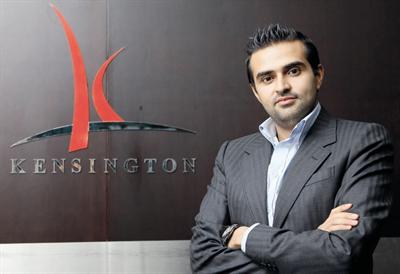
"We pre-launched the tower at the end of May with prices averaging Dh3,300 per square feet. Seventy per cent of the tower has been sold. In October, we will offer the rest of the tower at a formal launch, where we expect to achieve a minimum of Dh4,000 per sq ft," Kensington Director Ashish Thakkar told Emirates Business.
The company plans to develop projects in Abu Dhabi and Ras Al Khaimah and also internationally in Morocco, parts of East and West Africa and Gujarat and Mumbai in India. The developer is in the process of securing land at different master-planned projects in the UAE. Excerpts:
You have been in the market for more than four years. What new trends have you observed in that time?
Four years ago, we were involved in developments but did not brand and launch them ourselves. With Krystal it's different. It is our maiden venture in that respect since we are developing, launching and selling the project ourselves. The market has matured in the past four years, it is more competitive now. One positive trend is the fact that buyers now appreciate quality developments. This ensures that developers conduct their operations correctly. Also, with serious buyers in the market we are looking towards creating premium developments in the UAE.
Could you tell us about the Kensington Krystal project?
Kensington Krystal will be a 36-storey commercial tower with state-of-the-art amenities near the seafront at Dubai Maritime City. It will have in-house managers to operate the spa, fitness centre, swimming pool and other facilities in the building. It will be the first commercial tower in Dubai to offer such amenities to office workers.
What is the buyer profile for Krystal?
We have seen a mix of both investors and end-users. We invited the general buyer market to come and take advantage of everything Dubai Maritime City has to offer. The positioning of Kensington Krystal has helped us to spread our investor base.
Although we ran campaigns to encourage the general market to invest in the tower we were also clear that we wanted to attract end-user buyers such as shipping companies.
What is your strategy in respect of payment plans for your buyers?
As a rule our payment strategy will be attractive and fair to both the buyer and ourselves across both the commercial and residential sectors. We have both investors and end-users buying from us and it will have to be a practical plan from a cash-flow perspective. For Kensington Krystal we take a down payment of 10 per cent of the cost of the purchase followed by 15 per cent half-yearly payments.
How will you ensure an effective cash flow for yourself and how do you deal with the challenges arising from the current inflationary pressures?
Kensington Krystal has hired one of the top cost consultants from day one. We make sure we have sufficient contingencies as well as we do not want to undersell ourselves. Bottom line, you need a very practical approach to dealing with challenges. The introduction of escrow accounts is a comforting factor for us. We are happy with the escrow because it has created more serious developers with a long-term vision who have a strong capital base.
What criteria do you apply when you are looking for land in Dubai?
The master development is very important but on top of that the location within the master development is critical. If you are going the residential route in a certain area you want to make sure that your plot is strategically located on the residential side. We visualise a project as a completed building rather than looking at numbers and figures on an Excel spreadsheet.
How do the returns from your developments in Dubai and Africa compare – which are more lucrative?
Each has its own set of advantages and disadvantages. We are confident in the future of the UAE market but I think Africa is the next big thing. The political uncertainty in Africa is over hyped. For example, Uganda hosted the Commonwealth Heads of Government Meeting last year and 55 leaders visited. It is an emerging market and these markets are fresh and offer new opportunities. From our capital investment perspective, we would like to look at only hospitality and residential projects in Africa. In Dubai, however, the potential is great and we will look at a complete spectrum of developments here.
How is the dirham peg to the dollar affecting the property sector?
There are two sides to this. The downside is the escalating cost of construction as a lot of construction machinery is imported from Europe. However, the advantage is that there are a lot more investors coming from strong currency markets such as Europe. The value of their money is a lot higher in the UAE markets. Demand is growing and property prices are going up.
Would you consider offering other real estate services?
Development is our forte and will remain our primary business but we have been looking at becoming involved in complementary industries. But construction is something that we will not venture into.
How much direct selling do you do?
Our approach with Krystal has been to sell directly. We have a strong brokerage team and the initial selling was all taken care of by us.
More and more developers are selling directly – how do you believe this will affect the brokerage market?
The brokerage market offers its own advantages as it has a much greater reach. If a developer does not have a good in-house network it can be a good option to place projects with the broker.
PROFILE: Ashish Thakkar, Director, Kensington
Ashish Thakkar was born in the United Kingdom and has lived in Africa for 15 years and in Dubai for eight years.
He became an entrepreneur at the age of 16 when in 1997 he started a family-owned Information technology company called Raps in Uganda.
In 2000, he established a corrugated packaging business called Riley and set up a large manufacturing plant in Uganda. In August 2007, the company announced plans to build a $13 million (Dh48m) plant.
He formed Kensington Real Estate, a global real estate firm, in 2003 as a joint venture along with partners Brijesh Bakhda and Sawan Ravani.
Thakkar's youth was filled with adventure – he was a refugee from a civil war in Africa and had an encounter with a hurricane in Miami.
Yet he believes he has not seen enough of the world and plans to be onboard Sir Richard Branson's Virgin Galactic flight to space.
"We pre-launched the tower at the end of May with prices averaging Dh3,300 per square feet. Seventy per cent of the tower has been sold. In October, we will offer the rest of the tower at a formal launch, where we expect to achieve a minimum of Dh4,000 per sq ft," Kensington Director Ashish Thakkar told Emirates Business.
The company plans to develop projects in Abu Dhabi and Ras Al Khaimah and also internationally in Morocco, parts of East and West Africa and Gujarat and Mumbai in India. The developer is in the process of securing land at different master-planned projects in the UAE. Excerpts:
You have been in the market for more than four years. What new trends have you observed in that time?
Four years ago, we were involved in developments but did not brand and launch them ourselves. With Krystal it's different. It is our maiden venture in that respect since we are developing, launching and selling the project ourselves. The market has matured in the past four years, it is more competitive now. One positive trend is the fact that buyers now appreciate quality developments. This ensures that developers conduct their operations correctly. Also, with serious buyers in the market we are looking towards creating premium developments in the UAE.
Could you tell us about the Kensington Krystal project?
Kensington Krystal will be a 36-storey commercial tower with state-of-the-art amenities near the seafront at Dubai Maritime City. It will have in-house managers to operate the spa, fitness centre, swimming pool and other facilities in the building. It will be the first commercial tower in Dubai to offer such amenities to office workers.
What is the buyer profile for Krystal?
We have seen a mix of both investors and end-users. We invited the general buyer market to come and take advantage of everything Dubai Maritime City has to offer. The positioning of Kensington Krystal has helped us to spread our investor base.
Although we ran campaigns to encourage the general market to invest in the tower we were also clear that we wanted to attract end-user buyers such as shipping companies.
What is your strategy in respect of payment plans for your buyers?
As a rule our payment strategy will be attractive and fair to both the buyer and ourselves across both the commercial and residential sectors. We have both investors and end-users buying from us and it will have to be a practical plan from a cash-flow perspective. For Kensington Krystal we take a down payment of 10 per cent of the cost of the purchase followed by 15 per cent half-yearly payments.
How will you ensure an effective cash flow for yourself and how do you deal with the challenges arising from the current inflationary pressures?
Kensington Krystal has hired one of the top cost consultants from day one. We make sure we have sufficient contingencies as well as we do not want to undersell ourselves. Bottom line, you need a very practical approach to dealing with challenges. The introduction of escrow accounts is a comforting factor for us. We are happy with the escrow because it has created more serious developers with a long-term vision who have a strong capital base.
What criteria do you apply when you are looking for land in Dubai?
The master development is very important but on top of that the location within the master development is critical. If you are going the residential route in a certain area you want to make sure that your plot is strategically located on the residential side. We visualise a project as a completed building rather than looking at numbers and figures on an Excel spreadsheet.
How do the returns from your developments in Dubai and Africa compare – which are more lucrative?
Each has its own set of advantages and disadvantages. We are confident in the future of the UAE market but I think Africa is the next big thing. The political uncertainty in Africa is over hyped. For example, Uganda hosted the Commonwealth Heads of Government Meeting last year and 55 leaders visited. It is an emerging market and these markets are fresh and offer new opportunities. From our capital investment perspective, we would like to look at only hospitality and residential projects in Africa. In Dubai, however, the potential is great and we will look at a complete spectrum of developments here.
How is the dirham peg to the dollar affecting the property sector?
There are two sides to this. The downside is the escalating cost of construction as a lot of construction machinery is imported from Europe. However, the advantage is that there are a lot more investors coming from strong currency markets such as Europe. The value of their money is a lot higher in the UAE markets. Demand is growing and property prices are going up.
Would you consider offering other real estate services?
Development is our forte and will remain our primary business but we have been looking at becoming involved in complementary industries. But construction is something that we will not venture into.
How much direct selling do you do?
Our approach with Krystal has been to sell directly. We have a strong brokerage team and the initial selling was all taken care of by us.
More and more developers are selling directly – how do you believe this will affect the brokerage market?
The brokerage market offers its own advantages as it has a much greater reach. If a developer does not have a good in-house network it can be a good option to place projects with the broker.
PROFILE: Ashish Thakkar, Director, Kensington
Ashish Thakkar was born in the United Kingdom and has lived in Africa for 15 years and in Dubai for eight years.
He became an entrepreneur at the age of 16 when in 1997 he started a family-owned Information technology company called Raps in Uganda.
In 2000, he established a corrugated packaging business called Riley and set up a large manufacturing plant in Uganda. In August 2007, the company announced plans to build a $13 million (Dh48m) plant.
He formed Kensington Real Estate, a global real estate firm, in 2003 as a joint venture along with partners Brijesh Bakhda and Sawan Ravani.
Thakkar's youth was filled with adventure – he was a refugee from a civil war in Africa and had an encounter with a hurricane in Miami.
Yet he believes he has not seen enough of the world and plans to be onboard Sir Richard Branson's Virgin Galactic flight to space.