'Mega developments to dominate realty market'
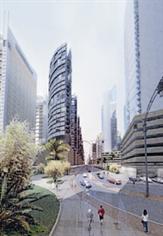
Awali Real Estate Investment, a member of the Al Nemer Group of the Kingdom of Saudi Arabia, yesterday said mixed-use 'mega developments' are likely to become the future standard for real estate development in the region.
"The growing trend towards larger, more comprehensive developments is a logical progression from the traditional, smaller projects whose purposes have generally been rather single-faceted. The mega projects we see being erected today, however, are of a far more diverse nature, with a tendency to include a great deal more than simply residential or office space. Instead, the inclusion of a variety of services and facilities in a single development provides a secure and convenient environment in which people are able to time-manage their lives, work and play," said Mohammed Hussein Abdullah Al Nemer, Awali Real Estate Investments board member and Chief Marketing Officer.
According to the developer, 'Mega-sized, mixed-use developments not only cater to the essential requirements for modern living, but also play a vital role in the sustained development of the region's economy, as the sheer volume of development required is not only indicative of the vastness of the market, but also a major contributor to its growth in terms of job creation.
"These days, even the single building high-rise developments, generally include retail and/or leisure facilities as well as the residential or office units they are primarily being built to provide.
"Furthermore, with the amount of development we're seeing across the country, more and more new projects are being developed in outlying areas. It makes sense, then, to provide these areas with their own infrastructure, not only for the sake of convenience, but also as a measure to alleviate the pressure on existing metropolitan resources and to avoid exerting additional pressure on the region's existing roads infrastructure," said Al Nemer.