UAE developers invest $7bn in Jordan
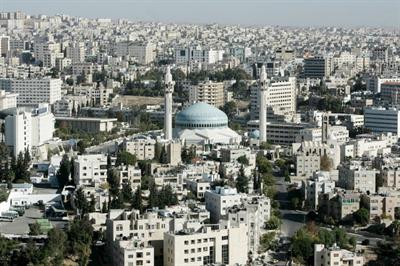
UAE-based developers have pumped more than $7 billion (Dh26bn) into Jordan's property market, making up a large share of foreign investments in the country, according to a top Jordanian official.
"Although in terms of numbers 70 per cent of the projects in Jordan are being developed by Jordan-based developers, in terms of value it is the international developers who are ahead," Omar Maani, Mayor of Jordan's capital, Amman, said.
He said it was mainly the "high-value projects" in Jordan that were being carried out by foreign developers. Abu-Dhabi-based Al Maabar International Investments, a jointly owned company comprising Abu Dhabi's four big real estate developers – Sorouh Real Estate, Aldar Properties, Al Qudra Real Estate and Reem Investments – have invested $5bn in a project in the Red Sea city of Aqaba that involves developing the town's port and building tourist, residential and commercial buildings in addition to a financial district.
"Tameer International, an arm of UAE-based property developer Tameer Holding has announced projects worth $800 million," said Samer Asfour, Deputy City Manager for Economic Development and Planning for the Municipality of Amman.
Investment from Tameer includes the $500m Madinat Al Majd housing project in Zarqa that will add 18,500 residential units and a $300m project of residential towers in Al Abdal.
Emaar's investment so far in Samarah, a mixed-use project, is $500m that involves the development of the Dead Sea Touristic and Real Estate Investment Company.
Limitless, the global real estate arm of Dubai World, has announced one project so far – a $300m development called Sanaya Amman, which is a freehold residential project comprising a 200-metre residential tower in the Jordanian capital.
The UAE's interest in Jordan is boosted by the initiatives of the Jordan authorities to redevelop and reconstruct the country. The Greater Amman Municipality has embarked on a re-development programme for the City of Amman and has prepared its first official Amman Plan that involves development of various residential and commercial projects in the city.
"Growth in Jordan is urban, with a lot of migration happening and people increasingly looking to move to cities. A lot of the migrated population is looking to buy second homes," Maani said.
"The demography of the population that wants to own houses of their own is much younger.
"They are keen on seeing Amman as a tourist destination as well," he said. The current population of Jordan is six million, and a little less than three million of Jordanians reside in Amman. According to Maani, Jordan will add 120,000 affordable housing units over the next five years, with half of that number to be built in Amman alone. Recent announcements in Jordan have been of niche projects tailored for the upper-end market. But the disposable income for many families in the country has not risen and therefore the government is seriously looking to developing low- to mid-income housing in the country," Maani said.
The current gross domestic product of Jordan is $16bn and the per capita income at PPP (purchasing power parity) is just under $5,000, said the mayor of Amman. Jordan will also see 30 towers being constructed in the next 18 months, he said.
"As regards absorption in Jordan, the market is segmented with current demand more geared towards low to mid-income housing schemes," he said.
The Amman municipality is also readying a proposal to submit to the Jordanian Government in the next six weeks to set up a rail network in the city.
"The proposal suggests developing a network of underground light railway and Metro, in addition to integration of the rail system with other modes of transportation," said Maani.
Meanwhile, inflation in Jordan is hovering at around 14 to 15 per cent, driven largely by soaring food prices. It is prompting developers in the country to find ways to tackle this.
"Inflation is a challenge today but there are many ways to deal with it. Reducing costs is one thing and added to that we would like to help people get a good finance option," said Saeed Ahmed Saeed, CEO of Limitless. "In our Sanaya Amman project, we are trying to manage this by pre-selling – but only a small part of the project in order to offset a certain amount of our initial investment. Lending is not a matured institution in Jordan as yet, so we will phase our sales process in Jordan," he said.
"Regarding buying options, we will try and offer a complete financing package solution to the buyer in Jordan," said Saeed.
Current realty prices in Jordan are averaging around $2,500 to $2,800 per square metre. Land prices have doubled, while three-bedroom apartments in middle-class neighbourhoods now sell at $140,000, or three times more than five years ago, media reports said.
"Sanaya Amman will start its sales from August this year. In the next four years, Limitless will sell parts of the project on an annual basis. Prices will be increased by 25 per cent every year," said Bahaa Abouhatab, Regional Director, Levant and Turkey.
"In our feasibility studies, we have made allowances for a 10 per cent cost escalation over our estimates when the project is completed," said Abouhatab.
Foreigners are allowed to buy property in Jordan if they have permission from the internal security department, which generally is not difficult for Westerners to obtain. However, they cannot resell properties for at least three years, a law designed to discourage speculation.