UAE rents to continue upward trend
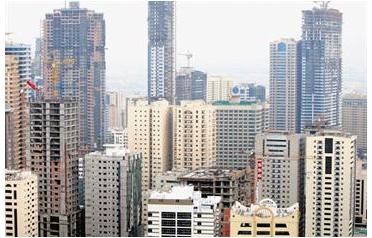
UAE rents leaped by more than 17 per cent in 2007 and are expected to swell further this year, because demand far outstrips supply, experts said yesterday.
Government caps on rent rises have failed to reverse the price surge as landlords circumvent the rules. And an influx of foreign workers, spurred by a construction boom, is only accelerating the upward trend in rents.
Official figures showed rents jumped by 17.5 per cent in 2007, the highest increase in the consumer price index (CPI) and they could even record a bigger rise this year.
"It is no longer a problem of how much but a problem of whether there is any," said Ahmed Magdi, an Egyptian real estate agent based in Abu Dhabi
"There are no apartments and most of my clients have to wait for months to get what they want and when they get it, the prices are exorbitant. Rents are climbing on a daily basis and I don't think this will stop this year."
Ahmed, in the market for more than 15 years, said rents had generally leaped by at least 30 per cent so far this year and are expected to record a 50 to 60 per cent rise during 2008. "I am not exaggerating… a studio flat that was rented for around Dh45,000 at the beginning of this year now costs Dh60,000-70,000."
Ahmed and other real estate dealers blamed what they called a surge in demand due to growing inflow of foreign labour, building supply shortages and malpractices by owners.
"For example, a landlord can evict a tenant and get a new contract to raise the rent and get round the law on increase caps," said another dealer.
Figures by the Ministry of Economy showed high rents and a surge in food prices were the main cause of inflation in the UAE in 2007.
Rents recorded the highest rise, followed by food and beverage, which increased by around 5.5 per cent. Furniture pricees jumped by 8.2 per cent, while there were modest rises in other CPI components. The 2007 report, released last week, showed other goods and services leaped by 16.8 per cent but it did not specify that category.
In a study on UAE inflation issued yesterday, the Saudi Arabian British Bank (Samba) expected inflation in the country to accelerate to 12.5 per cent this year from 11.1 per cent in 2006. The rate stood at around 9.4 per cent in 2005 and six per cent in 2004.
The study also blamed high rents and said the caps that were introduced early this year would backfire as they could discourage real estate investment. It said this could aggravate the supply bottlenecks and push rents further higher.
"Much of the inflation reflects shortages of housing, as the delivery of new real estate fails to keep pace with population growth of some six per cent a year," it said.
"In a bid to dampen rental increases both Dubai and Abu Dhabi have had caps on annual rent increases in place for some time. However, their efficacy is limited since landlords often simply evict sitting tenants and remarket properties at higher rents. In the longer term, government controls of this type work to discourage investment in new housing stock, thereby pushing up prices further."
But Samba said other factors contributed to high inflation in the UAE, including food prices, high public and private spending, excess liquidity and the weakening UAE dirham because of the peg to the ailing US dollar.
"The inflationary outlook in the UAE is one of concern, despite some positive recent developments. Abu Dhabi is now committed to a substantial medium term infrastructure expansion and upgrade, while Dubai's business model appears to call for near perpetual growth.