Luxury goods weathering economic woes in US
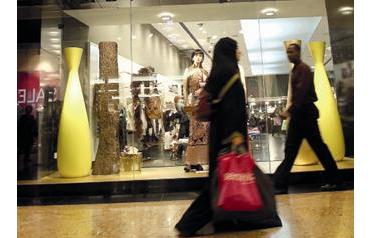
Luxury-goods manufacturers reported in recent days that worldwide sales of expensive jewellery, Swiss watches and French scarves are holding firm, helped by the fact that many brands now offer more entry-level items than in the past, and by foreign tourists who have money to burn because of the weak dollar.
In addition, a growing number of affluent people are still splurging on what they perceive as investment-grade luxury goods.
Resultingly, their branding communication is being re-worked with many of them willingly approaching the mass platforms, which were earlier not even thought of by these high-end luxury brands. Cartier just signed a worldwide deal with website MySpace.com for mass branding campaign and many more are following with their dedicated web sites or joining hands with other popular sites.
This week, Hermes International SA reported its sales between April and June climbed 10 per cent in the Americas. Compagnie Financiere Richemont SA, owner of Cartier and Montblanc, reported a six per cent sales increase in the Americas for the same period, and Burberry Group PLC's sales in the Americas climbed 27 per cent. Patek Phillippe SA, maker of wristwatches that start at $17,500 (Dh64225), is on track to sell out of its inventory for the year in the US, says the company's President Lawrence Pettinelli.
Industry behemoth LVMH Moet Hennessy Louis Vuitton SA reports first-half results on Tuesday, and analysts expect its Louis Vuitton label – the source of about half of the group's profit – to show resilience to the consumer-spending slump.
Luxury-goods manufacturers report a similar buoyancy to sales in Europe, another key market, and strong growth in developing nations such as China and Russia. Some industry analysts warn, however, that spending could turn down in the second half of this year as the US and European economic slowdowns drag on.
Offsetting the weakness in the West are fast-growing emerging markets, where the ranks of the newly rich are crucial sources of revenue for luxury labels. Russia's GDP is growing at a 6.8 per cent annual clip this year, and China's economy will grow by 9.3 per cent in 2008, the International Monetary Fund estimated in April.
"They have got the mad money there, and they are spending it," said Global Insight economist Brian Bethune. The world's largest luxury-goods firms, in particular industry leader LVMH, have expanded aggressively in emerging markets such as China, India, Russia and the Middle East.
US luxury sales may have weakened in many categories, including designer apparel, as consumers have cut overall spending.
The luxury market in big cities like New York and Los Angeles has been partially higher than the rest of the country as foreign tourists capitalise on the weak dollar.
However, the trend may not remain the same for long.
Many analysts expect a slowdown in the second half of the year. Accordingly, companies are trimming on the advertising spend and moving it outside America as emerging markets are showing promising results.
For now, sales are holding up for many makers, in part because luxury brands have broadened their audience.
In the US, brands have introduced more entry-level items and expanded to smaller cities such as Charlotte, NC, where Hermes, Burberry and other luxury brands have new stores.
In today's environment, these strategies are also providing a safety net that allows affluent people around the country to trade down but still buy a luxury label.
The recent earnings results also indicate some consumers are continuing to spend big on items with perceived long-term value.
Spending on jewellery among US consumers with incomes of $100,000 or more rose 17.9 per cent in the first quarter of 2008 compared with the same period last year, according to a survey of 1,258 consumers by Unity Marketing, a Stevens, Pennsylvania-based market-research firm. Apparel spending during the same period rose 1.7 per cent.
Another factor: Americans are travelling abroad less, and some are spending their vacation budgets on luxury items, says Hermes International's managing director for finance and administration, Mireille Maury.
It's not just the rich who are spending. Some middle-class shoppers' are selectively splurging on brands at the highest ends of the market.
At Hermes, so-called aspirational shoppers' continued to buy entry-level items like cuff links, scarves, fragrances and ties, said US Chief Executive Robert Chavez.