News
Dell Latitude notebooks pack plenty of attitude
img_08162008_a2cbf32e-0a33-4a7e-883e-fc28da919eca.jpg
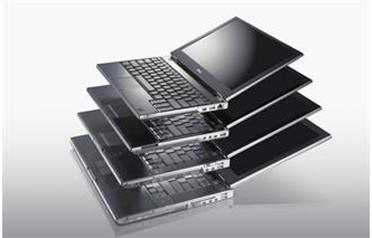
Dell is making a determined bid to gain a larger share of the notebook market with the launch of its new Latitude E-Family range.
The rollout is taking place simultaneously around the world, including Dubai, and is said to be the biggest product launch and the largest product development effort in the company's history.
In the next two weeks the Middle East will begin to see seven new Latitude lapbooks built for business customers. The notebooks, priced from Dh2,600, feature a number of industry firsts in terms of productivity, connectivity, practicality and design.
The new machines have a long battery life – with some system configurations, a single charge can last for up to 19 hours and users can charge the battery to 80 per cent of capacity in an hour, the feature most requested by customers.
But a laptop with good battery life does not mean much if you are not connected. Dell offers all kinds of options across the range – Wi-Fi, several mobile broadband options, WWAN, Ultra-wideband and Bluetooth 2.1. The Latitude E6400 and E6500 are both WiMAX-ready and can be ordered with optional GPS.
The chassis is made of magnesium alloy and there are robust metal hinges and a durable keyboard. USB PowerShare – which allows users to charge or power devices such as mobile phones through the USB port even when the system power is off – has been added.
Security options have been enhanced. No one plans to lose a laptop during their travels but it happens a lot. A recent study commissioned by Dell showed that more than 600,000 laptops are lost each year – 65 to 70 per cent of which are never recovered. Losing a notebook is bad enough but a bigger problem is protecting private data that it carries.
The Latitude series can be ordered with optional hardware such as a fingerprint reader or hard drives that feature hardware-based data encryption. And Dell offers a service that allows users to delete data remotely when a lost or stolen system is connected to the internet.
Regatta blue, regal red and quartz pink colour options are available in addition to matte black and silver. And the backlit keyboard automatically adjusts to ambient light levels.
On top of all this the new series is ultra-lightweight. The 12.1-inch Latitude E4200, for example, starts at 1kg, making it the lightest commercial notebook in the company's history. The 13.3-inch E4300 has a starting weight of 1.54kg.
"One of the things I am excited about is the new look," Michael Collins, Dell's General Manager for the Middle East, told Emirates Business. "Latitude laptops are already established among corporate customers. I came to the region six years ago and at that time Dell's products were a little bit boring – they didn't have a cool look but were second to none in quality and reliability.
"The notebook market in the region is booming, about seven out of 10 customers are buying notebooks. A lot of the things that we do are based on feedback from our customers. And this will be the coolest range available for corporate customers."
For three years, industry watchers have been predicting that laptops would soon outsell conventional machines – and the prediction has now come true.
During the third quarter of 2007 sales of notebooks overtook sales of desktop PCs for the first time in Europe, the Middle East and Africa, further demonstrating the rising popularity of mobile computing.
According to a report by analysts IDC, laptops are slated to overtake desktops globally as the dominant form of computer in 2011. It says the demand for bulky machines will continue to grow slowly but at a declining rate as portable machines become quicker and more efficient. The report predicts the laptop market will grow by 16.1 per cent year-on-year until 2011, compared to 3.8 per cent for desktop PCs.
A number of studies show that virtually everyone is getting in on the trend – organisations of all sizes are planning to retire their desktop infrastructure in favour of laptops that are easy to manage and maintain.
Notebooks are being mounted in service trucks and patrol cars. Doctors are making notes and writing prescriptions using handheld PDAs instead of clipboards. Students are abandoning binders in favour of tablet computing, while soldiers and workers in harsh environments such as oil and gas rigs are taking rugged laptops along so they can stay informed and productive when they are in the field.
To find out the core needs of its customers, Dell conducted more than 3,900 interviews with business IT managers and end-users. The interviews revealed that both groups ultimately share the same goal – to maximise productivity in the most cost-effective way possible – but had very different requirements in mind to achieve this objective.
For end-users, maximising productivity means having an easy-to-use laptop with excellent battery life and dependable network connections that can be used wherever they go. For IT staff it is more about providing and managing systems that are secure, reliable and robust and require the minimum servicing and maintenance.
Even though the arrival of the new machines is still days away the Latitude family is already gaining popularity.
"We strive to give our staff and business partners the technology that gives them an edge over our competitors," said Joe Martella, director of client-facing infrastructure in the Architecture and Engineering Group at Merrill Lynch.
"That means we need to give end-users the right devices and tools to help them do business and generate revenue, wherever they are physically located.
Martella said size and weight were major considerations when it came to working on the road.
"We're excited about what's happening with the new Latitude E-Family laptops. The compact form factors are what our users are asking for. Until now the majority of our purchasing has been in the 3.5lb to 4lb range. Our users have been demanding something smaller and lighter.
"The E-Family laptops certainly will meet those requirements. We've seen preproduction units and are looking forward to evaluating them as soon as they become available."
But while most of Dell's customers are excited, some analysts say the revolutionary changes have been merely prompted by economics.
Dell has been struggling because its belated response to fierce competition and changes in customer buying habits hit sales and profits. The Texas-based company is trying to turn around its flagging business model.
Plans include a new product design strategy, $3 billion of all-over cost cuts and a
renewed push into some of the fastest-growing segments of the PC business such as services, emerging markets and small- and medium-sized businesses.
"Dell's upgrades can be attributed to the company's financial troubles," an IT vendor, who did not wish to be named, told Emirates Business. "The firm needs to radically change its designs and features to be able to re-take its old position at the top of the market."
Dell was the largest seller of PCs and servers in 1980s and 1990s but it now holds second spot to Hewlett-Packard. Dell axed 8,800 jobs, or 10 per cent of its workforce, in 2007-2008. And in April the company hinted that more job cuts could be on the way as part of a plan to restore profits.
The Latitude E-family
- Ultra-portable – The E4200 is a 12.1-inch laptop that starts at 1kg, making it the lightest commercial notebook in Dell's history. The 13.3-inch E4300 has a starting weight of 1.54 kg.
- Mainstream – The E6400 and E6500 are 14.1- and 15.4-inch laptops that start at $1,399 (Dh5,138) and $1,444, respectively. The systems have been designed as desktop replacements for high-performance users.
- Essential – The E5400, a 14.1-inch notebook, starts at $922, while the E5500 is a 15.4-inch laptop. The systems include everyday features at a competitive price.
- Semi-rugged – The E6400 ATG is a 14.1-inch semi-rugged laptop that starts at $1,787. It is built and tested to meet military 810F standards.
The rollout is taking place simultaneously around the world, including Dubai, and is said to be the biggest product launch and the largest product development effort in the company's history.
In the next two weeks the Middle East will begin to see seven new Latitude lapbooks built for business customers. The notebooks, priced from Dh2,600, feature a number of industry firsts in terms of productivity, connectivity, practicality and design.
The new machines have a long battery life – with some system configurations, a single charge can last for up to 19 hours and users can charge the battery to 80 per cent of capacity in an hour, the feature most requested by customers.
But a laptop with good battery life does not mean much if you are not connected. Dell offers all kinds of options across the range – Wi-Fi, several mobile broadband options, WWAN, Ultra-wideband and Bluetooth 2.1. The Latitude E6400 and E6500 are both WiMAX-ready and can be ordered with optional GPS.
The chassis is made of magnesium alloy and there are robust metal hinges and a durable keyboard. USB PowerShare – which allows users to charge or power devices such as mobile phones through the USB port even when the system power is off – has been added.
Security options have been enhanced. No one plans to lose a laptop during their travels but it happens a lot. A recent study commissioned by Dell showed that more than 600,000 laptops are lost each year – 65 to 70 per cent of which are never recovered. Losing a notebook is bad enough but a bigger problem is protecting private data that it carries.
The Latitude series can be ordered with optional hardware such as a fingerprint reader or hard drives that feature hardware-based data encryption. And Dell offers a service that allows users to delete data remotely when a lost or stolen system is connected to the internet.
Regatta blue, regal red and quartz pink colour options are available in addition to matte black and silver. And the backlit keyboard automatically adjusts to ambient light levels.
On top of all this the new series is ultra-lightweight. The 12.1-inch Latitude E4200, for example, starts at 1kg, making it the lightest commercial notebook in the company's history. The 13.3-inch E4300 has a starting weight of 1.54kg.
"One of the things I am excited about is the new look," Michael Collins, Dell's General Manager for the Middle East, told Emirates Business. "Latitude laptops are already established among corporate customers. I came to the region six years ago and at that time Dell's products were a little bit boring – they didn't have a cool look but were second to none in quality and reliability.
"The notebook market in the region is booming, about seven out of 10 customers are buying notebooks. A lot of the things that we do are based on feedback from our customers. And this will be the coolest range available for corporate customers."
For three years, industry watchers have been predicting that laptops would soon outsell conventional machines – and the prediction has now come true.
During the third quarter of 2007 sales of notebooks overtook sales of desktop PCs for the first time in Europe, the Middle East and Africa, further demonstrating the rising popularity of mobile computing.
According to a report by analysts IDC, laptops are slated to overtake desktops globally as the dominant form of computer in 2011. It says the demand for bulky machines will continue to grow slowly but at a declining rate as portable machines become quicker and more efficient. The report predicts the laptop market will grow by 16.1 per cent year-on-year until 2011, compared to 3.8 per cent for desktop PCs.
A number of studies show that virtually everyone is getting in on the trend – organisations of all sizes are planning to retire their desktop infrastructure in favour of laptops that are easy to manage and maintain.
Notebooks are being mounted in service trucks and patrol cars. Doctors are making notes and writing prescriptions using handheld PDAs instead of clipboards. Students are abandoning binders in favour of tablet computing, while soldiers and workers in harsh environments such as oil and gas rigs are taking rugged laptops along so they can stay informed and productive when they are in the field.
To find out the core needs of its customers, Dell conducted more than 3,900 interviews with business IT managers and end-users. The interviews revealed that both groups ultimately share the same goal – to maximise productivity in the most cost-effective way possible – but had very different requirements in mind to achieve this objective.
For end-users, maximising productivity means having an easy-to-use laptop with excellent battery life and dependable network connections that can be used wherever they go. For IT staff it is more about providing and managing systems that are secure, reliable and robust and require the minimum servicing and maintenance.
Even though the arrival of the new machines is still days away the Latitude family is already gaining popularity.
"We strive to give our staff and business partners the technology that gives them an edge over our competitors," said Joe Martella, director of client-facing infrastructure in the Architecture and Engineering Group at Merrill Lynch.
"That means we need to give end-users the right devices and tools to help them do business and generate revenue, wherever they are physically located.
Martella said size and weight were major considerations when it came to working on the road.
"We're excited about what's happening with the new Latitude E-Family laptops. The compact form factors are what our users are asking for. Until now the majority of our purchasing has been in the 3.5lb to 4lb range. Our users have been demanding something smaller and lighter.
"The E-Family laptops certainly will meet those requirements. We've seen preproduction units and are looking forward to evaluating them as soon as they become available."
But while most of Dell's customers are excited, some analysts say the revolutionary changes have been merely prompted by economics.
Dell has been struggling because its belated response to fierce competition and changes in customer buying habits hit sales and profits. The Texas-based company is trying to turn around its flagging business model.
Plans include a new product design strategy, $3 billion of all-over cost cuts and a
renewed push into some of the fastest-growing segments of the PC business such as services, emerging markets and small- and medium-sized businesses.
"Dell's upgrades can be attributed to the company's financial troubles," an IT vendor, who did not wish to be named, told Emirates Business. "The firm needs to radically change its designs and features to be able to re-take its old position at the top of the market."
Dell was the largest seller of PCs and servers in 1980s and 1990s but it now holds second spot to Hewlett-Packard. Dell axed 8,800 jobs, or 10 per cent of its workforce, in 2007-2008. And in April the company hinted that more job cuts could be on the way as part of a plan to restore profits.
The Latitude E-family
- Ultra-portable – The E4200 is a 12.1-inch laptop that starts at 1kg, making it the lightest commercial notebook in Dell's history. The 13.3-inch E4300 has a starting weight of 1.54 kg.
- Mainstream – The E6400 and E6500 are 14.1- and 15.4-inch laptops that start at $1,399 (Dh5,138) and $1,444, respectively. The systems have been designed as desktop replacements for high-performance users.
- Essential – The E5400, a 14.1-inch notebook, starts at $922, while the E5500 is a 15.4-inch laptop. The systems include everyday features at a competitive price.
- Semi-rugged – The E6400 ATG is a 14.1-inch semi-rugged laptop that starts at $1,787. It is built and tested to meet military 810F standards.