Dell plans to expand Middle East operations by 80 per cent
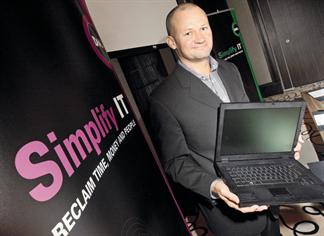
Computer manufacturer Dell plans to increase its workforce, infrastructures and IT partners by between 70 and 80 per cent in the Middle East in the next three years. This comes at a time when the world's second largest seller of PCs and servers is axing more than 8,800 jobs to restore sales and profit.
Michael Collins, General Manager of Dell Middle East, speaking to Emirates Business, said one of the company's main priorities was to penetrate the small to medium business sector (SMB) by including smaller retailers into its IT channels.
"SMB is our most immature segment," he said. "It also means this sector is our largest growth opportunity. The secret to success in SMB is getting the recommenders so in line with that, we are giving the second tier resellers the opportunity to be our partners."
Collins said notebooks, which have overwhelmingly overtaken desktop sales, will continue to take the lion's share of the PC market. This will remain the trend even if global corporations – which prefer desktop machines – open more offices in the region, he said.
What is Dell's position in the global and regional PC market?
We are number two in the global market. In Saudi Arabia, we are number one. Across the Middle East consolidated, we are number two in customer, client and enterprise. In total, Dell has 19 per cent market share in the Middle East. In the second quarter of this year, Dell was the fastest-growing vendor among the top three players in the region. Our growth in the first quarter across the Middle East was 87 per cent while the growth in the second quarter was 55 per cent.
Last year, the sales of notebook PCs overtook sales of desktop PCs in Europe, Middle East and Africa (Emea). How is your desktop portfolio faring?
The desktop market is slowing; it is not really growing. There is a large desktop market out there. There are a lot of commercial corporate customers, who are also using desktops for their clients for many reasons. Two things are happening naturally. Firstly, the new users, which are a big factor in the Middle East growth, are choosing notebooks. Secondly, the consumers in the mid-market have moved very quickly from desktops to laptops in all markets.
Some analysts expected that as more corporations open up offices in the region, the desktop – which is generally preferred by large companies – will catch up in the mid term. Will this happen?
No. You are right in that a lot of global organisations are moving or opening offices in the Middle East, especially in Dubai. But they could be clustered in the region as small customers. Yes, they are very big global customers but what they offer in the Middle East – in terms of number of IT users or number of employees or clients – is pretty small, with individual units usually comprising only 10 or 15 employees each.
How big is your small to medium businesses (SMB) market? Most IT companies are now wooing SMBs. Are you doing the same strategy?
Our corporate business is very well developed and we have a very solid market position in large customers and public customers across the Middle East. It's where Dell's classic corporate products have been most relevant. It is not difficult to speak to large customers because they are aware of the brand.
On the other end of the market is the consumer's space, which has also moved fast. In the middle it is our most immature segments.
We are very matured in the consumer as well as in the public and very large sector but less matured in the SMB. What does that mean? It means this sector is our largest growth opportunity.
SMB customers, the most important part of the equation, are not that different from our customers who want our corporate products because they are also looking for quality and reliability.
The difference is that you cannot directly deal with them. There are so many of them so in many cases you are dealing through a second tier channel, a smaller reseller and those resellers are, for those customers, their trusted advisors and IT partners. The secret to success in SMB is getting into these recommenders and that is the evolution of our business now.
Dell has been cutting jobs in the West. Approximately 10 per cent of the total workforce has been laid off. What is the situation here?
We are expanding rapidly. In percentage terms, we will increase the number of employees that work for Dell in the Middle East this year by 70-80 per cent. Last year we did the same so we are investing heavily on local resource in all areas. We are putting in a lot of infrastructures. Michael Dell has five priorities for the business globally. One of those five is the emerging markets and we are putting in significant investments whether that is human resource, support capability partners, trainings or education.
We have a three-year business plan – starting this year – which will see an on-going investment in the region.
PROFILE: Michael Collins, General Manager, Dell, Middle East
Collins joined Dell in 2002 and has responsibility for Dell's business across the GCC and Levant countries, reporting to Pim Dale, Vice-President and General Manager for Dell Emerging Countries in Europe, Middle East and Africa (Emea).
Prior to joining Dell, Michael worked for IBM for seven years where he held positions including General Manager for IBM's PC business in South Africa and Business Manager for IBM PCD Emea Large Enterprise Direct Business, based in Paris. Prior to IBM, Michael was the Regional Managing Director for a large PC distribution company in South Africa. Michael was born in Durban, South Africa, in 1966.