Fear of losing precious data drives hard profit
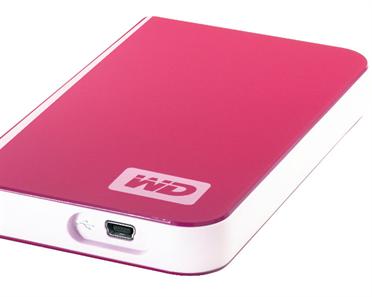
Choosing a hard drive can be like choosing a flavour of ice cream. Whether it’s cherry red, ultra mint or brilliant orange, the variety of designs and colours offered by data storage firms has flourished in recent years.
The industry, which sells nearly 3,000 drives a day on average in the Middle East, is expanding its product range to suit every digital back-up desire and every possible colour fantasy consumers may have.
By 2009, the Middle East’s hard drive market will double from today’s volumes to at least $240 million (Dh880m). And globally, the 500 million devices that currently fly off the shelves every year will also see a rapid rise.
But underpinning this colour expansion and dramatic success, there is still a fundamental fear of losing precious data, says Didier Trassaert of Western Digital, a firm that commands 50 per cent of the Middle East external hard drive market.
He tells Emirates Business that computer users often turn to disaster-recovery companies in times of trouble and are stung in the pocket, after receiving a bill up to 30 times the cost of their units.
Trassaert, senior director for branded products for Europe, Middle East and Africa, explains what new technologies Western Digital has in store for consumers in the Gulf, the fastest growing region globally. And how the days of buying just one hard drive to back-up the data of an entire family are over.
How is appetite for hard drives in the Middle East growing?
There are about 250,000 hard drives sold a quarter in the Middle East, generating revenue of approximately $26m. The average price is between $100 and $120, so the size of the market is about $30m per quarter. A year, this is currently $120m, and by 2009 it will double to at least $240m.
The worldwide number sold is approximately 500 million drives a year. On average, global growth is about 50 per cent a year, so the Middle East is well ahead of this.
In the Europe, Middle East and Africa region there were about 6.5 million units sold in the second quarter. This is expected to rise to more than eight million this quarter and in the fourth quarter, more than 10 million.
Our market share here is around 50 per cent, and in the Europe, Middle East and Africa, we are about 22 per cent. In the Middle East, you have Western Digital and Seagate that control around 85 per cent of the market. In Europe, market share is much more fragmented.
What underpins this growth?
When people discover that their internal computer hard drives crash, they call maintenance and the first question was always the same, are you sure I will recover my data? Not what is the cost? It’s one of the reasons why this market is booming today, because people want to secure their information. And the only way to do it is to have a device where you can store all the information you need. Also, within families we are seeing acquisitions of drives by the mother, father and children wanting to store their own data, be it photos or music.
How do UAE shoppers know Western Digital?
In the Middle East, we sell our products through retailers such as Jumbo, Sharaf DG, Plug-ins, Carrefour and Jacky’s. We offer external drive solutions, which means we want to address all the people with PCs or notebooks. Over time, we will make our products available for direct connection to the TV, video recorder, video camera and PlayStation.
These multi-media facilities are months away.
Our 2.5in mobile drives can be carried in your pocket, and because we are addressing a consumer market we have to be sexy so we offer our products in a large variety of colours, from red and white, to pink for the ladies.
The big retailers are keen to promote these devices because it is a market segment for them that’s showing outstanding growth.
What’s your latest technology breakthrough to hit Middle East shelves?
We have just introduced dual-drive devices that have mirroring facilities. This means when you record information you do this on two physical drives, so if one drive fails you have the data saved.
You can then replace the crashed drive. Our mission is to keep people informed about the fact that they need external drives, and generally back-up solutions.
And we have a large variety of drives. For example, if you are a professional and have a lot of graphics, we can offer the Office edition.
Or if you are at home and want to record a lot of movies, we have the Home edition dedicated for this.
What’s the extent of lost data in the region?
Disaster recovery companies charge a lot for their services. I had a friend whose drive crashed and wanted to recover the data. The drive itself cost $300, but the company wanted to charge him $9,000 to recover the data.
Also, as a company, Western Digital has the lowest warrantee costs in the industry, which means we have high reliability levels on our drives.
Have you considered adding an enterprise element to your hard drives, say, going after large businesses in the UAE to back-up their data?
If you look at our product range at the moment, we are not only selling to individuals but also small businesses. For example, you have businesses with one or two employees and want their own back-up solutions. And they don’t want to rely on an external organisation. We have devices to handle this, with much more capacity and the ability to encrypt data so companies are protected.
What are the most compact high-capacity devices one can buy?
The Passport product has a 2.5in disk drive inside and can store 320 gigabytes. This is the largest available capacity today on this size of device. If you look at the 3.5in disk, you can reach one terabyte, threes times the Passport. This is the largest size we currently offer.
Hard drive history
Since the end of 2001, external hard drives began to nudge out floppy disks, CDs and DVDs as the standard form of portable data storage.
The key to success was the ability to store a large quantity of different files in a compact, movable unit.
The increased threat of computer viruses from the internet also had consumers running to back up their information and files like never before.
Now, 500 million external hard drives are sold globally every year.
The main global manufacturers include Western Digital, Hitachi, SimpleTech, Seagate, CMS, RecoNdata, Maxtor and LaCie.
The largest hard drives on the market at the moment have a storage capacity of one terabyte or 1.5 terabytes. Three years ago, the largest was more than half of the present hard drive at around 400 gigabytes.