It's time to experience some monsoon magic
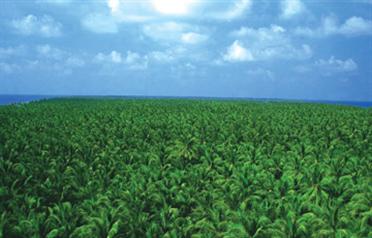
With its lush vegetation, tropical landscapes and beautiful backwaters, Kerala on India's southwest coast couldn't be more different to the daunting metropolises of many of the countries larger cities.
Sandwiched between the Arabian Sea and the forested Western Ghats, Kerala, also known by locals as 'Gods own country', stretches across 550km and is one of the greenest states in India. And with its small and relaxed towns, arcane rituals and spectacular festivals travellers with even the most jaded imagination will be stimulated by what it has to offer.
The most popular place to head is the port of Kochi (Cochin), where the state's long history of peaceful foreign contact is evident in the atmospheric old quarters of Mattancherry and Fort Cochin, hubs of a still-thriving tea and spice trade.
Kerala's capital, Thiruvananthapuram – far south, is the gateway to the nearby palm-fringed beaches of Kovalam, and provides visitors with varied opportunities to sample the state's rich cultural life and activities.
The moment you set foot in Kovalam – one of India's finest, most-popular beach towns – you find a once sleepy fishing village buzzing with life and natural beauty. The sheltered bay ringed by rocky headlines, crystal clear waters, secluded spaces for sun bathing and a lighthouse from where the view is magnificent are alluring. Although hippy travellers started holing up there three decades ago, it was only in the early 1990s, with the arrival of Kerala's first charter tourists, that the boom really kicked off. Today it can get very busy, especially in the high season from October to March.
However, I believe the place is at its best, and most beautiful during the monsoon season, which runs from June to September. OK so it rains, but for people living in the dusty and arid desert of the UAE, it is a welcome change.
Kerala is the entry point for the monsoon advancing into India and when it does arrive, the beach towns are treated to nature's orchestra of rain clouds. Visiting in this season has inspired ragas, poetry and lyrical excess and is sure to rejuvenate weary tourists.
I climb to the top of a lighthouse, which is open every afternoon and smell the monsoon approaching. Periodically the sunlight ignites the dark sea with wild flashes. The thunder booms. The sea foams like champagne. The once fleecy white clouds have morphed into a sombre shade of deep grey. Storm force winds sweep over lush green landscape. The operator manning the lighthouse says: "When you've had your fill of spectacular scenery, go for an ayurvedic massage. The monsoon is the best time to embark upon a course of treatment. This is the season when the body responds best as the pores are open."
The winding streets beneath the lighthouse are dotted with numerous massage parlours where locals schedule a treatment at this time of year. Inside I smell the herbs and oils being brewed on hot flame. Lying in an airy room, my therapist kneads my flesh with warm oil and tells me that this holistic and ancient science of ayurveda therapy can cure all ailments. An hour later, I emerge feeling fantastic and see exactly what she means. As well as it being a rejuvenating and relaxing experience, it is also a great way to escape the rain pouring down outside.
However, for people who want to embrace the downpour there is no better way than on a rickshaw though the sleepy fishing villages. Boats float lazily upon the harbour waters. Children make paper boats in rain-puddles. But when the rain gets heavy, I take the rickshaw to Thiruvananthapuram. Although Kerala is short on the historic monuments prevalent elsewhere in India, and the few ancient temples that remain in use are mostly closed to non-Hindus, there is much to see in the Kerala culture.
Following an unwritten law, few of Kerala's buildings, whether houses or temples, are higher than the surrounding trees, and from high ground in urban areas this often creates the illusion that you're surrounded by forest.
The oldest and the most interesting part of town is the Fort area in Thiruvananthapuram, where the ancient Shri Padmanabhaswamy temple is located. Also closeby is the Puttan Malika palace, the Shri Chitra Art Gallery and the Napier Museum. A red-and-black Indo-Saracenic structure, the museum houses a rare collection of bronzes, stone sculptures, exquisite ornaments and a temple chariot – all fashioned in the former kingdom of Travancore. The Natural History Museum is also an interesting spot to gaze at a replica of a typical Kerala Nair house. But the icing on the cake is the Shri Chitra Art Gallery, where the works of Raja Ravi Varma are on display. Inside the gallery, which is also a showcase of local architecture, a friendly guide [who is pursuing a PhD in Art] confides: "Ravi Varma was a pioneer of a unique style of painting in India. His mythological paintings have inspired the popular religious prints that are found in many Indian homes."
Following an afternoon spent in heady cultural pursuits, I head back to Kovalam for a refreshing dose of nature. I walk across the four beaches – Samudra, Ashok, Eve and Lighthouse – which are next to each other. Hungry from the exertion, I make tracks for one of the excellent nearby cafés. The German Bakery offers a spectacular view of the ocean and delicious world cuisine, including an abundance of rice and coconut, which form the basis of all South-Indian delicacies. Appam (steamed rice pancake) and avail (a mixed-vegetable curry cooked with coconut, turmeric and cumin) are my favourites and a must try for visitors.
Life floats by with no particular hurry. Payasam, a traditional dessert, made with rice and coconut milk, arrives at a leisurely pace. Locals are ever ready to stop and chat. They tell me how the monsoon is erratic – it comes and goes, but is always welcome.
Not just because it cools the place but also because it makes this green state even greener and rejuvenates the earth. Souvenir stalls selling painted shells and silver chains line the beach. Here too communication takes precedence over commerce. The storekeeper is eager to sell me his handicraft and beachwear but equally eager to find out where I come from and my views on the pouring rain.
As I get set to return to a life of fast cars and burgers, facials and multiplexes, I find myself envying the permanent association the locals have with Kovalam. It is a life closely entwined with nature, where "being" takes priority over "doing." I almost want to stay cocooned in this dream for ever.
ESSENTIAL GUIDE
Getting there
- Emirates and Etihad fly directly from Dubai and Abu Dhabi to Kerala. Thiruvananthapuram airport is 13km from the city.
- A 20-minute pre-paid taxi ride will get you to Kovalam and should cost about Rs250 (Dh22)
Staying there
- The Leela and Taj Green Cove are the best high-end options. One night's stay ranges between Rs5,000 and Rs23,000. Details on fo.kovalam@theleela.com;reencove.kovalam@tajhotels.com.
- If you're interested in experiencing the beach on a shoe-string, clean and cheap accommodation is also available
Contact Rockholm at 0471 248 0406/7. Rs1,125 to Rs2,000 per night. More information on rockholm@asianetindia.com
Pappu Kutty Beach Resorts Tel: 2480235. Rs1,000 to Rs2,500. Details on pappukutty2007@yahoo.com
Must see
- The fishing villages of Kovalam
- The Napier Museum in Thiruvananthapuram
- The Natural History Museum
- Shri Chitra Art Galley
Don't leave home without
- An umbrella and anorak – the monsoon is erratic, so be prepared
- A good book for when lazing around on the beaches
- A camera to capture every moment of the trip
Best time to go
- The rainy season is between June and September and temperatures average 36.7 °C. By December enjoy clear skies and cool temperatures.