Central Bank ups borrowing
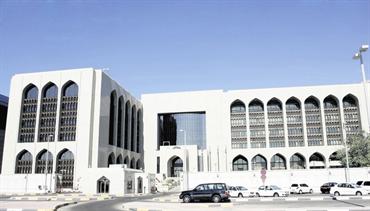
The UAE Central Bank has kept up borrowing from local banks through the issuance of certificate of deposits (CDs) to stem swelling domestic liquidity in the absence of other effective fiscal tools, the bank's figures showed yesterday.
From around Dh173.5 billion at the end of 2007, the total value of CDs issued by the Central Bank increased to nearly Dh185.59bn at the end of the first quarter of 2008, the Central Bank said in its quarterly report.
The value stood at only Dh32.3bn at the end of 2006 and bankers said the bulk of the CDs were issued during 2007 as the Central Bank was striving to absorb part of the soaring liquidity which is usually associated with inflation.
The figures showed the value soared to Dh183.9bn at the end of January before slipping to Dh175.8bn at the end of February apparently after some of those CDs matured. It picked up again to Dh185.59bn at the end of March. The increase in the Central Bank's borrowing from the country's 23 national banks and 28 foreign units was reflected in a growth in its assets, which swelled from Dh285.94bn at the end of 2007 to Dh307.3bn at the end of March.
A breakdown showed the Central Bank's deposits with other banks sharply fluctuated during the first quarter of this year, dipping from nearly Dh184bn at the end of 2007 to Dh177.8bn at the end of January. They largely recovered to Dh233.5bn at the end of February before diving again to nearly Dh185.1bn at the end of the first quarter of 2008.
The fluctuations were matched with changes in the Central Bank's held-to-maturity securities, which plunged from Dh98.8bn at the end of 2007 to around Dh64.4bn at the end of February before soaring to Dh89.3bn at the end of the first quarter, the figures showed.
An increase in the UAE banks' deposits with the Central Bank illustrated the continuation of its borrowing policy to curb rising money supply, which coincided with a surge in inflation rates to 11.1 per cent in 2007 from 9.4 per cent in 2006. From only Dh58.4bn at the end of 2006, those deposits leaped to Dh231.1bn at the end of 2007 and to a record Dh237.1bn at the end of March.
But the report showed the Central Bank's policy has so far failed to reverse growth in liquidity, with money supply soaring from Dh181.6bn at the end of 2007 to Dh221.8bn at the end of March. M2 and M3 also grew to a record Dh624.3bn and Dh754.5bn respectively.
"It is known that most GCC countries have limited fiscal tools at present to tackle inflation because of the peg between their currencies and the US dollar… matching the US in cutting interest rates will only aggravate their liquidity problem," the Kuwaiti-based Global Investment House said in a recent study. "Their only alternative now is to increase bank reserve requirements as was the case in Saudi Arabia or mop up liquidity through CDs, bonds or other instruments… freezing or introducing price caps is only a temporary solution."