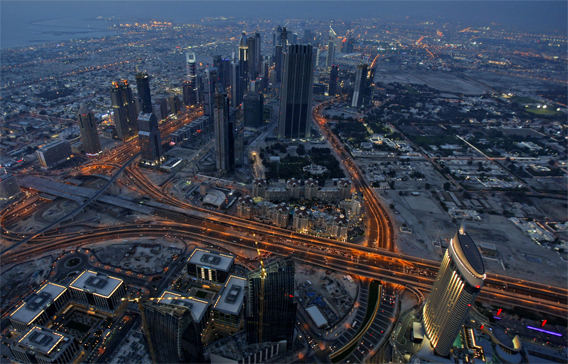
Declining rents in Dubai and Abu Dhabi have made the cities relatively affordable ones for expatriates compared to others around the globe, the latest Mercer Cost of Living Survey has found. While Dubai ranks 55 on the list of most expensive cities, Abu Dhabi is only slightly more expensive with a rank of 50, which it shares with Frankfurt in Germany, the survey said. It also threw up a few surprises: displacing Tokyo from its traditional spot at the top of the list, Luanda, Angola's capital, has emerged as the world's most expensive city for expatriates. Tokyo came in second, while, in another surprise, another African city completed the top three – Chad's capital ?Ndjamena. Moscow was in fourth position followed by Geneva in fifth. The rear was brought up by Karachi, which the survey found to be the least expensive city for expatriates to live in. The Mercer survey covered 214 cities across five continents and measured the comparative cost of over 200 items in each location, including housing, transport, food, clothing, household goods and entertainment. "While across the UAE, the cost of living has remained relatively stable, we are seeing that accommodation costs have continued to decrease in Abu Dhabi and Dubai, driving down the overall cost of living for expats," said Dr Markus Wiesner, who heads Mercer's Dubai office. He said Mercer increased the number of cities surveyed this year from 143 to 214, which means that the cities cannot be compared with their previous rankings. For the first time, the ranking of the world's top 10 most expensive cities includes three African urban centres: apart from Luanda and Ndjamena, Libreville in Gabon comes in at seventh place. The top 10 also includes three Asian cities: besides Tokyo in second place, Osaka at six and Hong Kong jointly ranked eighth. Moscow, Geneva and Zurich, which shares the eighth spot with Hong Kong, are the most expensive European cities, followed by Copenhagen at 10. Middle East The most expensive city in the Middle East is Tel Aviv, Israel's financial capital, which was ranked 19. Middle East next appeared on the list only at No50. At 186, Tripoli in Libya is the least expensive Middle Eastern location, preceded by Saudi Arabia's Jeddah at 181 and Muscat in Oman at I76. Analysing the Middle East market, the survey said that in Saudi Arabia, residential rents had fallen slightly since last summer, as the Jeddah real estate market noticed a slowdown in demand due to the global crisis. Rents in Riyadh have been more or less stable over the past couple of months as demand and supply are balanced. Dubai's residential rental market, however, continued its decrease at the end of 2009 and the beginning of 2010. Weakening demand and huge supply are the main reasons for the arrow moving downwards, the survey said. "Many tenants have been moving from larger units to smaller ones due to a reduction in household income and adoption of a more cautious approach towards household expenditure. Moreover, there has been an increase in available accommodation for rent, as many investors, unable to sell their properties, have been placing those units on the rental market," it said. This, however, is the very reason why expats now find it cheaper to live in the UAE's most important cities and have more options to pick from. Asia-Pacific In the Asia-Pacific, two Japanese cities, Tokyo and Osaka, are the most expensive. Other Asian cities ranked high are Hong Kong (8), Singapore (11), Seoul (14), Beijing (16), Nagoya (19) in Japan, Shanghai (25) and Taipei (78). A total of seven Chinese cities appeared on the 2010 rankings, highlighting the increased commercial importance to multi-nationals of locations other than just Beijing Shanghai and Hong Kong. New Delhi (85) is India's most expensive city followed by Mumbai (89) and Bangalore (190). Elsewhere, Jakarta in Indonesia ranks 94, followed by Vietnam's Hanoi and Thailand's Bangkok (both at 121) and Kuala Lumpur (138) in Malaysia. Pakistan's Islamabad (212) and Karachi (214) are the region's two least expensive cities. Taking stock of prices in India, the survey said the price increases in Mumbai are relatively stable in comparison to other Indian cities. The energy bill for a resident in New Delhi has increased because of the increase in water tariffs as well as more extensive usage of generators due to power cuts, which started in June 2009 and accelerated in November 2009. The cuts are mainly due to the ongoing construction works for the Commonwealth Games that will take place on October 3-14 this year, it said. "The residential rental markets in India have not recovered yet and demand is still quite low in Mumbai, New Delhi and Bangalore. Property rental prices have remained pretty stable since the last survey. The rising number of expatriates coming back to India should have a positive impact on the real estate market and, as a consequence, a slight increase in rental rates is expected during the coming month