Economy top plank in presidential race
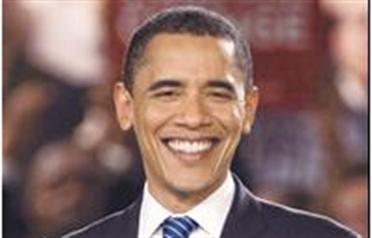
The US economy has become the number-one issue of November's fast-approaching presidential election, and whoever ends up controlling the White House will face pressing budget and fiscal challenges.
Some analysts say a flailing economy can benefit a challenger from the party that does not control the White House as voters can assign blame for a downturn to a president's party, as occurred in the 1992 failed re-election bid by then-president George Bush, President George W Bush's father.
"When it comes to voting, unemployment doesn't matter. Inequality doesn't matter [in the United States]. Growth of real after-tax income does matter. The stock market does matter," said Alan Reynolds, a senior fellow at the Cato Institute, a free-market think tank.
Reynolds said a rising stock market can boost the reputation of the party in power, but he said the perceived weakness of the US economy at present could benefit the Democratic presidential hopeful, Senator Barack Obama.
In such a climate, it is not surprising that Obama and his Republican rival, Senator John McCain, have sparred hotly over economic matters, taxes and petrol prices.
Obama has called for a second economic stimulus package, while McCain says he favours fresh tax cuts. Each candidate insists his plans would help fire up rocky economic growth.
Americans are very troubled about their economic well-being, according to the results of a Pew poll published in late July, which showed that 54 per cent of respondents think the US is in recession, while 18 per cent view it as a depression.
A persistent housing downturn, a credit crunch in the banking industry, rising unemployment and high energy costs have all taken a toll on consumer sentiment.
That leaves the Federal Reserve walking a policy tightrope. The central bank is trying to engineer an economic rebound, but it does not want to be accused of bending its policies to favour either Obama or McCain.
Although Fed Chairman Ben Bernanke is a moderate Republican appointed to office by Bush, he has gone out of his way to underline the central bank's independence and held a meeting with Obama last month.
Luckily for the Fed, the economic climate does not favour interest rate changes.
Boxed in by sluggish growth and roiling inflationary pressures, the central banking has adopted a wait-and-see approach and left its main rate unchanged at 2.0 per cent for it last two meetings. The central bank's next policy meeting is scheduled for September 16 and analysts say there is little chance the economic winds will change dramatically between then and now.
Most economists expect the Fed to keep rates on hold for some time.
"There won't be any reason to change anything at this meeting," said John Lonski, the chief economist for Moody's Investor Service.
While rates will likely be left unchanged, calls are mounting for a second economic stimulus, as the effect of a giant $168 billion (Dh616.5bn) government stimulus this year has been relatively disappointing.
Not all economists are in favour of a second stimulus, however, saying it could swell an already bulging budget deficit.
A second stimulus likely would be different from the first which was stuffed with one-off tax rebates for tens of millions of Americans, aimed at firing up consumer spending.