GCC corporate loans strong
For 2008 in the GCC, there are more than $1.5 billion (Dh5.5bn) of bonds falling due, with a further $6.8bn to mature in 2009.
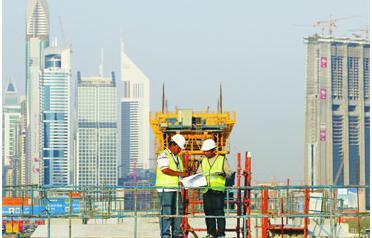
The growth in corporate borrowing in the Middle East and North Africa (Mena) region is fuelled mainly by infrastructure projects in the GCC and met by the huge lending appetite of banks in the region.
However, the capacity to finance more than an estimated $1 trillion in future projects is finite, forcing lenders and borrowers to increasingly look to new sources of finance such as Islamic bonds.
In an overview of the credit sector in the GCC, investment bank Merrill Lynch said in terms of supply, a continued trickle of deals is expected over the coming months, rather than the deluge seen recently.
"New issue premia would remain quite good, meaning that we would generally anticipate better tightening prospects for investors in new deals than in secondary right now," it said.
"In terms of fundamentals, our view is still generally upbeat across the region – we are confident that corporate credit quality should remain generally strong as we move into the next phase of the credit crunch, where links to the US/Anglo-Saxon real economies are in our view likely to be most important," the report said.
According to the report, there is increased concern about inflation (potential aggressive monetary response, growth impact, even civil/political stability), but many issuers in this region have actually been a beneficiary of the current inflation episode (commodities, etc), and current forecast expect a moderation in inflation next year. "These concerns are therefore not enough to make us outright bearish, thus underpinning our overweight 30 per cent.
"This contrasts with the earlier stages of the credit crunch, including the first quarter, when a general lack of liquidity in the credit markets led to indiscriminate forced selling of bonds, including in emerging markets. Further weakness from here in credit is likely to be more orderly and focused on names where fundamentals are most problematic, which should not be in GCC corporates," the report added.
"Looking at GCC credits, spread performance has been strong, faring well versus our corporate and sovereign indices. This trend will continue given the corporates' strong links to the sovereigns and therefore the credit market valuations for GCC corporates are attractive at present – these solid investment grade companies are clearly more insulated from a general market widening than more troubled stories such as Kazakh banks, private sector Russian corporates, to name a few," Merrill Lynch said.
Issuance out of the GCC has shown stellar growth over the past five years, averaging 89 per cent annually from 2002-07. In 2002, total bonds issued out of the GCC countries totalled only $1.3bn, but by 2007 this had reached $27.4bn.
Historically, Qatar and the UAE have been the biggest players in the field, but recently we have seen a substantial pick-up in the Saudi Arabian market, particularly so in 2007, when issuance was higher than over the past five years combined.
While there was record issuance from the Gulf in 2007, reaching $27bn, most of this was printed as Sukuk (68 per cent, up from 54 per cent in 2006).
The report said sukuk or Islamic bonds will again dominate issuance in 2008. This phenomenal growth will mainly be driven by the strong surge in infrastructure spending (including transport, tourism and energy), real estate (including land banks and construction) and mergers and acquisitions.
To estimate the future pipeline, one indicator is to look at current outstandings/bonds coming due near term (which thus usually needs to be refinanced).
There is $75bn in bonds outstanding from 2008 to 2018 in the Gulf countries; a low amount versus $86bn due to mature in Russia in 2008 alone.
For 2008 in the GCC, there are more than $1.5bn of bonds falling due, with a further $6.8bn to mature in 2009. The majority of this is expected in Bahrain (2008), Qatar and the UAE (2009), with more than half coming from banks, most of which we expect to be rolled over.
Looking at the total public bonds outstanding in the GCC, the UAE ranks the highest, taking 57 per cent of the pie, followed by Saudi Arabia at 18 per cent and Qatar at 15 per cent. Only 15 per cent of this total $75bn, however, represents local currency issuance.
If further broken down the outstandings into types of issuer, only eight per cent of the bonds due are from government entities.
Banks and corporates equally share the remaining 92 per cent, but have different maturity profiles – just more than $11bn of these bonds issued by corporates mature from 2018 onwards.
"While we anticipate a difficult and challenging year for issuers globally, sukuk market supply since the credit crunch began in August of last year was more than $30bn (August to July).
"We expect Islamic bonds to help drive growth in the second half of the year," the report said.
Further signs of recovery were exemplified by the recently announced $1.3bn Islamic bonds sale in Saudi riyals planned by Saudi Basic Industries Corp, S&P estimates that approximately $10bn of supply was postponed due to the credit crisis in the fourth quarter of 2007.
GCC prudent in spending
Despite the recent easing in fiscal policy to fight inflation through unorthodox policies (higher wages and subsidies, and lower import tariffs), GCC countries are still prudent in their fiscal spending, saving almost 70 per cent of their oil windfall.
The lowest breakeven oil price that will bring 2008-09 budgets in to balance is in Saudi Arabia ($36/bbl), followed by UAE ($40/bbl) and Qatar ($49/bbl). Saudi Arabia, can maintain the current level of budget spending even if the oil price were to fall to $36/bbl from the current $140/bbl.
The highest breakeven is in Kuwait ($75/bbl), but that is mainly due to the one off-budget transfer of $20bn to capitalise the social security system in FY08/09. All in, the chunk of oil revenues is still feeding into SWFs and official reserves, the total amount of which is expected to reach $2trn at the end of 2008.
This lowers the dependency on oil revenues. Assuming future budget surpluses will remain channelled into SWFs, investment income is likely to account for 55 per cent of budget spending in the next decade. The spending programmes are mostly supportive of medium-term growth potential, and some 70 per cent of total projects of $2trn are in infrastructure.
Equity markets positive
In the first half of 2008, equity markets in the Gulf (MSCI GCC ex Saudi) rose by 3.2 per cent, outperforming the MSCI Emerging Market index (-12.7 per cent) and thus validating the view of non-correlation. The macro backdrop remains excellent in the Middle East thanks to high oil prices (note that energy represents just 2.4 per cent of the regional equity market, as the sector is mostly state-owned).
GCC outperformance means markets no longer trade at a discount to EM; in trailing PE terms, both are at around 14x. GCC industrials trade at a 24 per cent premium, GCC financials are trading at par, and GCC telcos are at a 7 per cent discount. New catalysts are required for fresh money inflows to the region; foreign investors already heavily own blue chips, inflation is hindering further rerating of financials, and the positive macro story is impeded by the restrictive micro/regulatory backdrop.
Positive (micro) catalysts: the opening up of the Saudi market; renewed speculation of FX revaluation; an increase in foreign ownership limits (ie, investable market cap of the region).
Downside (macro) risks: a big decline in oil prices (ML thinks this is more likely in 2009 than 2008); a deterioration in the geopolitical situation; a significant rise in inflation. The investment universe for foreigners remains very small in Gulf markets: the MSCI GCC ex Saudi Arabia free float market cap = $126bn, versus $3.3tn in Emerging Markets and $25.1tn in Developed Markets.
According to the Merrill report, the preferred market is Kuwait, which stands out for its liquidity. Qatar stands out as the best macro story but is an expensive market. We advise investors to be more stock-specific elsewhere in the region.