High yielding currencies have finally peaked
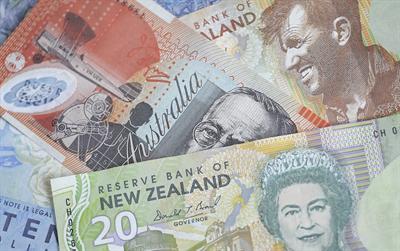
The well-traded Australian and New Zealand dollars, some of the best performing currencies globally over the last couple of years, have peaked in the current cycle and look set to decline over the next six to twelve months.
On the back of high domestic interest rates in both countries which stimulated a carry trade with lower yielding currencies, and the strong economic performance particularly in Australia through the resource boom, both currencies have seen strong performances for some time.
However, as the economies in both countries start to face more challenges as global growth recedes, and, specifically for Australia as domestic banks start to ratchet up higher write-downs, the sell off has started. Over the last couple of days, the Australian dollar has fallen to its lowest in more than two weeks and the New Zealand dollar approached a six-month low on concern global credit-market losses will weaken growth in the Antipodean nations.
The Australian dollar weakened after Australia and New Zealand Bank joined National Australia Bank in significantly raising provisions for impaired and non-performing loans. Deteriorating credit conditions will also prolong a global slowdown.
New Zealand's dollar extended this month's decline to 2.7 per cent after home-building approvals slumped to the lowest in almost 22 years and the outlook for the housing market remained extremely weak.
The kiwi traded near it lows for the year last week after the Reserve Bank of New Zealand cut interest rates for the first time in five years to boost growth. New Zealand's economy contracted in the first quarter, putting the nation on the brink of recession.
Long regarded as one of the pillar economies in the world through strong growth for some years, bank problems in Australia are beginning to focus traders on the potential impact on its economy.
Its risk profile is increasing and hence the high value of the Australian dollar against benchmark currencies such as the US dollar, the pound and the Euro rate starting to look too lofty.
Rising bad debts for Australian banks mean their credit expansion will be curtailed which will effect financing activity and hence the economy.
On touching near parity a few weeks back, the Australian dollar has fallen to just above 95 cents and is expected to fall back to US 90 cents by the year-end. Some predict 85 US cents as commodity prices fall and losses linked to sub-prime mortgage defaults slow global growth.
The New Zealand dollar has weakened to below 73 US cents.
Currently, yield differentials between the two currencies and others are still very attractive.
The difference in yield between 10-year Australian and Japanese government bonds widened to 4.75 per cent points from 4.68 per cent. Benchmark interest rates of 7.25 per cent in Australia and 8 per cent in New Zealand compare with two per cent in the US and 0.5 per cent in Japan.
These fundamentals are still supporting the two currencies but going forward risk and growth factors may soon outweigh yield differentials and hence carry trade positions may be unwound.