Remittances on track as mega projects absorb workers
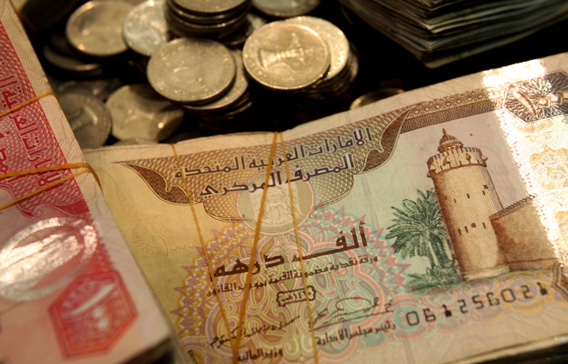
The money exchange sector of the UAE, which witnessed a dip in remittances in 2009 due to the slowdown in the construction industry, expects to be back in business with renewed vigour, thanks to the redeployment of the blue-collar workforce in the government sector and in Abu Dhabi mega projects.
According to Abu Dhabi Chamber of Commerce and Industry figures, global remittances from Abu Dhabi alone were Dh56 billion last year and the forecast for this year is Dh70bn, about 25 per cent more. The UAE overall will see a 10-12 per cent growth this year, they predict. Remittances may be 'visible' or 'invisible', and market analysts say the volume of invisible remittances from the UAE is about as large as visible remittances
According to leading exchange houses, their businesses were affected because of a huge decline in the number of people coming into the country as a fallout of the construction slowdown, particularly in Dubai. They also maintain that there has been a decline in their foreign exchange reserve due to the downturn. "For remittance as an industry, 2006, 2007 and 2008 were exceptional years because the construction activity was in full swing," Sudhir Shetty, COO of UAE Exchange Global Operations, told Emirates Business. "The number of people coming into the country – especially the blue-collar workforce – went up sharply in those three years. The demand for the blue-collar workforce was at its peak during this period."
The remittance business registered "unprecedented growth" in those three years, said Shetty, estimating it was more than 30 per cent year-on-year.
Al Fardan Exchange General Manager Osama Al Rahma agreed with Shetty that there was a sharp rise in the growth curve in remittances from the UAE in that period. According to Al Rahma, his company posted a 15-25 per cent rise in those three years. The last year was, of course, lean, and the first quarter of this year has also not been strong, but things are getting better, he said. The growth graph, which had fallen sharply, is rising again, though not shooting up yet.
"There was a decline last year and [Q1 of] this year, but the decline is not negative, as the growth is there, though less than that of past years," said Al Rahma.
Arbab Ali Narejo, General Manager of National Exchange, which has its largest remittance market in Pakistan, said the firm's remittance growth was 16 per cent last year. "In this fiscal year that will end in June, we expect to see further growth," he said.
Shift from private to public
Narejo has reasons for optimism. "The public sector is absorbing skilled workers from the private sector. For example, the country's $20bn (Dh73.46bn) nuclear project requires massive manpower – that is available here and can always shift from the private to public sector. So, the slowdown in the construction industry has not made such a big difference when it comes to remittances. We see a big boom in our remittance business with new mega projects coming up."
According to the money changers, though there has been a decline in remittances, the figures have not gone into the negative zone. Growth, they say, has always been there and they expect booming business in future with mega infrastructure projects coming up.
Shetty said: "The decline (in both 2009 and Q1 2010) is due to the slowdown in the construction industry of Dubai, but that is being compensated for by the construction boom in Abu Dhabi, as the workforce is being redeployed here with mega projects under way in the emirate. People are also being deployed in Sharjah and other emirates, so we still see growth happening in these emirates."
He expects their overall UAE growth to be 10-12 per cent this year, which, he added, is fairly good. "In a normal year, if you achieve eight to 10 per cent growth, it is considered quite acceptable," he said.
Shetty also hopes for a big boost to the remittance business because of federal and local governments' spending on infrastructure projects that require manpower, who, he said, are the core clients for remittances.
"Lots of investments are coming in, not only to the UAE, but to the entire GCC region," he said. "There is a reversal happening now, and it is only a matter of time [before remittance volumes increase greatly]."
A positive Q2 expected
Al Rahma pointed to the revival in the hospitality industry as a signal of economic recovery. "The indicators show that business is picking up, with the opening of an increasing number of hotels in the country. We expect to a see a positive second quarter this year."
Asked if the construction slowdown, particularly in Dubai, affected the remittance industry's bottom line, he echoed Narejo, saying it was being aided by the redeployment of workers from private sector projects to public sector ones. "The workers continue to remit money to their families," he said.
Hawala curb a big help
According to market sources, another factor that has helped the remittance industry sustain and revive itself is the inter-government co-operation on curbing hawala, which is an informal form of remittance – not considered above board – through a network of people in the sending and receiving countries. To keep the hawala network in check and to compete with it, banks and exchange companies have spruced up their services, bringing customers back to their counters.
A hawala operator, talking to Emirates Business on condition of anonymity, agrees with this fact, saying that the improved services by banks and money exchange houses have limited their business in big cities, from where most of the remittances are made.
"These measure have eaten into a lot of our businesses in cities such as Karachi and Lahore," the operator said. "Now, most of our business is in remote areas where banks and exchange houses have no services."
Money on the go: Mobile remittance
With the remittance business piggybacking on the economic recovery, service providers are trying to find faster, simpler ways to let people send their money overseas.
The UAE Ministry of Labour has covered 1.8 million workers under its Wage Protection System, and many of these workers are paid through moneychangers. One such company, Al Fardan exchange, has issued an e-money withdrawal card that allows a worker to directly transfer his salary to any country.
Local telecom major etisalat announced in January that it was introducing a scheme for sending money overseas from home through mobile phones – a move aimed at the 1.75 million Indian population living in the UAE. The telecom company tied up with Citibank to start the programme in India, and planned to extend the services to Bangladesh, Pakistan and Egypt, according to etisalat Chief Marketing Officer Essa Al Haddad.
Among other Gulf countries, Qatar's Qtel has also been eyeing the mobile remittance pie. The company predicted in February that global remittance figures would go up to some $500 billion (Dh1.87 trillion) this year from about $401bn in 2008 – a market too lucrative to pass by.
Western Union, one of the major players in the money transfer business, has an arrangement with some cellular service providers. This is how it works: a person uses his phone to send a cross-border money transfer to a receiver whose mobile operator also offers a transfer facility in partnership with the agency. The funds go directly into the receiver's mobile 'wallet', an account connected to the mobile phone.