Cleanup begins in Florida after Fay
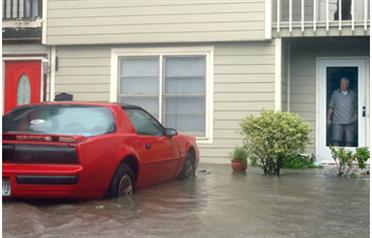
The fickle storm that stuck around for five days and carved a dizzying path that included three separate landfalls dumped more than two feet (0.61 meters) of rain in some places. But to the relief of Floridians, it finally veered west on a path that should take it away from the state for good later this weekend.
By Friday night, the storm had crossed into the Gulf of Mexico, and it was poised for a likely fourth landfall over the Panhandle the next day.
Officials in Melbourne, one of the hardest-hit areas on the central Atlantic coast, carried boats down streets where just a day earlier four feet (1.22 meters) of water made roads look like rivers. Water several feet high remained in some neighborhoods, but most of the area had drained, leaving behind a half inch (1.27 centimeter) layer of muck and mud.
The storm’s death toll rose to six in Florida and nearly 30 overall since it first struck in the Caribbean. Florida officials said four people died in traffic accidents in the heavy rain and two others drowned in surf kicked up by the storm. Before the storm ever blew through the state, a man testing generators as a precaution also was killed.
Tens of thousands of people were still without electricity, and residents of Florida’s storm-stricken Atlantic coast faced a weekend of cleanup after chest-high flooding. Florida Insurance Commissioner Kevin McCarty said so far nearly 4,000 flood claims from Fay had been filed.
“The damage from Fay is a reminder that a tropical storm does not have to reach a hurricane level to be dangerous and cause significant damage,” said Florida Gov Charlie Crist, who toured flooded communities this week.
On Friday, Crist asked the White House to elevate the disaster declaration President George W Bush issued on Thursday to a major disaster declaration. County officials put preliminary damage estimates at $53 million (Dh195 million).
Counties in the Panhandle – including Bay, Escambia and Walton – opened their emergency operations centers in preparation for the storm’s expected arrival there. At 11pm (0300 GMT) on Friday, the center of the storm was offshore, about 50 miles (80 kilometers) south of Tallahassee. It was moving west near 8 miles per hour (13 kph), with sustained winds at 50 mph (80 kph). The storm was expected to slowly weaken over the weekend.
A tropical storm warning was issued from the area west of Destin to Alabama’s state line with Mississippi.
Florida state officials and farmers were concerned that Fay had hurt tomato, peanut and citrus crops. Damage estimates aren’t yet available.
Some 400 acres (162 hectares) of tomatoes were flooded in the southeastern portion of the state and one county on the Atlantic coast suffered some $20 million in losses, mostly to cattle, citrus and nursery operations. There also were reports of grapefruits blown off trees in southeastern Florida and some areas where sugar cane was bent over from high winds.
Two tropical fish farms on the central Atlantic coast were decimated, state officials said. In Georgia, where Fay blasted the coast with heavy rains, the Department of Natural Resources said a considerable number of nests of the threatened loggerhead sea turtle were washed away by the rains.
Fay has been an unusual storm, even by Florida standards. It first made landfall in the Florida Keys on Monday. The storm then headed out over open water again before hitting a second time on the southwest coast. It limped across the state, popped back out into the Atlantic Ocean and struck again on the central coast. It was the first storm in almost 50 years to make three landfalls in the state, as most hit and exit within a day or two.