Strengthening Hurricane Gustav threatens Caribbean
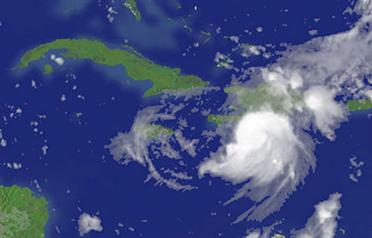
Packing 145kph winds, the category one hurricane's west-northwest trajectory also raised oil traders' fears about its potential impact on oil installations in the Gulf of Mexico later in the week.
At 1500 GMT, the center of Gustav was located about 80 kilometres south of the Haitian capital Port-au-Prince, and was moving at around 15kph, the National Hurricane Center said in its latest advisory.
The hurricane was expected to dump 10 to 20 centimetres of rain over Hispaniola – the island shared by the Dominican Republic and Haiti – and Jamaica, with isolated maximum accumulations of up to 38 centimetres possible.
Flash floods and mudslides also are possible, according to the hurricane center. The NHC forecast that Gustav by Wednesday would make landfall in Cuba, which has issued a hurricane watch to its inhabitants, urging them to take "protective measures."
Bracing for disaster, the Haitian government alerted its population to take precautions and appealed for international help to deal with the storm's aftermath, some 10 days after Tropical Storm Fay left about 47 people dead or missing on the island.
"In the face of the danger threatening Haiti, I ask national civil protection committees and our friends in international cooperation to help the government manage the risks and disasters," Interior Minister Paul-Antoine Bien-Aime said on national television.
The Dominican Republic, which shares the island of Hispaniola with Haiti, also issued a hurricane warning for the southwest of the country.
The NHC said "additional strengthening is possible before the centyer moves over land today. Some weakening is likely when Gustav moves over Haiti, however restrengthening is forecast as the center approaches eastern Cuba on Wednesday."
Gustav formed over the Caribbean Sea on Monday, becoming the seventh tropical storm of the 2008 Atlantic hurricane season.
It comes just days after the arrival of Fay, a slow-moving, long-running tropical storm which left dozens dead after creeping through the Caribbean and southeastern United States.
Oil prices climbed, erasing earlier losses as attention turned to the potential threat to US energy facilities in the Gulf, traders said.
New York's main contract, light sweet crude for delivery in October, jumped $1.72 to $116.83 per barrel, after earlier reaching $117.89.
London's Brent North Sea crude for October added $1.23 to $115.26.
"Gustav continues to represent a potential threat to oil and gas installations in the Gulf region and will be watched with vigilance," warned Barclays Capital analysts in a note to clients.
Anglo-Dutch energy giant Royal Dutch Shell meanwhile said it was planning to evacuate some staff from its Gulf facilities because of Gustav.
"Given the current track for Gustav and the expectation that it might enter the Gulf of Mexico this weekend, we are making logistical arrangements to evacuate staff who are not essential to production or drilling operations," Shell said in a statement.
"Evacuations could begin as early as Wednesday. There is no impact on production at this time."