Curfew in Kashmir ahead of separatist's funeral
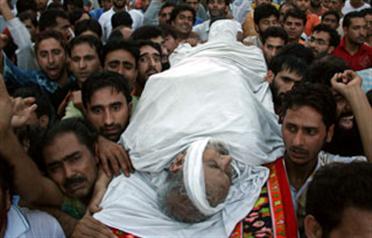
Tens of thousands of people marched to the de facto border with Pakistan to try and sell goods there, in one of the region's biggest protests on Monday since a separatist revolt against New Delhi broke out in Kashmir in 1989.
On Tuesday, Kashmir's main separatist alliance, All Parties Hurriyat (Freedom) Conference, prepared to bury senior leader Sheikh Aziz, among four people killed by police as he led the march.
"Sheikh Aziz's death is big loss to Kashmir nation, we will take his mission to its logical end," Mirwaiz Umar Farooq, chairman of Hurriyat said.
A land dispute has polarised Indian Kashmir, split between the Muslim-majority Kashmir valley and the Hindu-dominated region around Jammu city, severely curbing trade between the two areas.
As a result, traders in Kashmir are trying to sell their goods in neighbouring Pakistan.
Hindus in Kashmir's winter capital of Jammu, demanding the state government transfer forest land to a Hindu shrine trust, have attacked lorries carrying supplies to the Kashmir valley.
The land row has sparked some of Kashmir's worst religious riots. More than a dozen people have been killed and hundreds injured.
Indian authorities denied any "economic blockade" and say lorries, guarded by policemen and soldiers, were plying the region's main 300-km (185 mile) highway, the only surface link between Kashmir valley and the rest of India.
"Curfew has been imposed in Srinagar city and other towns of the valley as a precautionary measure," said state police chief Kuldeep Khuda
The state government said in a statement that 972 trucks had arrived in the Valley, and 96 trucks carrying fruit crossed Jammu on their onward journey
The dispute began after the Kashmir government promised to give forest land to the trust that runs Amarnath, a cave shrine visited by Hindu pilgrims. Many Muslims were enraged.
The government then backed down from its decision, which in turn angered many Hindus in Jammu.