Electricity shortage to hit GCC real estate
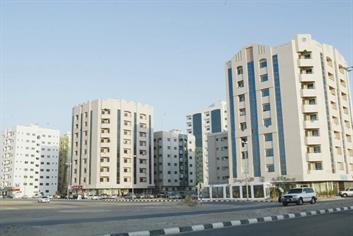
A shortage of electricity in the Northern Emirates and other GCC states will bankrupt many real estate developers if they fail to introduce private generation, says a top energy analyst.
Economist Dr Anas Alhajji, who toured the Gulf recently to determine the effects of power shortfalls in region, told Emirates Business the problem was likely to worsen and alternative measures would have to be taken to deliver projects.
"Developers have borrowed hundreds of millions of dollars from local banks to build these towers," said Dr Anas Alhajji, who holds the George Patton Chair of Business and Economics at the College of Business Administration, Ohio Northern University. "They can make monthly payments only if they have paying tenants. No power, no tenants, no money, no payments. In fact, some banks have already written off hundreds of millions of dollars in the first quarter of this year as landlords have defaulted on their loans for lack of electricity. Even if the bank forecloses on the building, what it can do with it? It cannot sell it. It cannot rent it. Private generation is the only solution."
Some parts of the Northern Emirates are reeling from electricity shortages though so far they have not caused massive blackouts.
The strain on generation capacity has been causing delays in connecting new developments to utilities. The issue of shortages is leading to tension between the authorities and developers.
Al Salam City, a Dh30 billion project by Dubai-based Tameer, was placed on hold in May. The city, which was set to house up to half a million people, was due to be built in Umm Al Quwain. Tameer claimed a shortage of water and electricity meant that, for the time being, it could not proceed with the project.
The delay in such a high-profile development – which according to some sources was 70 per cent sold – was a major blow to Umm Al Quwain. Given the degree of off-plan selling that has already taken place it is a headache for Tameer too.
Tameer's statement prompted a quick response from the emirate's government, which took the unusual step of publishing a private clause from the project contract showing liability for providing power and water lay with the developer.
Ajman is also suffering from uncertainty over future power supplies. The Federal Electricity and Water Authority (Fewa), which is responsible for securing the provision of power for most of the Northern Emirates, has been stretched to capacity keeping pace with galloping demand from new construction projects.
It has accused local governments of failing to adequately plan for the strain these developments and mega-projects are placing on infrastructure.
Hassan Abdullah Al Ghasyah, Fewa's executive director of supply, underscored this, saying: "Local government authorities have not co-ordinated on precise water and power requirements with Fewa." He said this had resulted in shortages and the need for independent generating capacity.
The power shortage stems from the increasing difficulty in sourcing feedstock for generation as most of the emirates have either limited or no fossil fuel resources, relying instead on either natural gas sourced from neighbouring states such as Qatar or diesel from Abu Dhabi.
Alhajji, a former energy programme manager at Dubai-based Gulf Research Centre, said: "The worst is yet to come. Some cities in the Gulf will experience power shortages, brownouts and blackouts during the summer months in the next few years."
He highlighted two factors that contributed to the power shortages. "The first is that investment in generation and infrastructure has not kept up with the expected growth in demand. Nothing can be done at this stage to meet the unexpected growth of recent years. In some cities the increase in demand for power has more than doubled to 15 per cent from seven per cent annually.
"Second, the demand for water also increases during summer. Desalination plants are under pressure to produce more water and therefore have less power to divert to the grid."
According to Oxford Business Group, Ras Al Khaimah produces only 30 million cubic feet per day (cfpd) of gas and is forced to import 40 million cfpd from Oman via the Dolphin pipe network, and a further 80m cfpd from Umm Al Quwain, one of the few Northern Emirates with the capacity to export fuel.
Soaring prices have led Ajman to look towards coal for its future energy security. The emirate has recently signed a Dh7.3bn deal with Malaysian power company MMC to build the Gulf's first coal plant, which is due to come online in early 2012.
The UAE and neighbouring Oman have embarked on coal-powered projects to boost electricity capacity.
Abu Dhabi National Energy Company (Taqa) is studying a scheme to build a Dh3.67bn coal-fired power plant in the capital.
Bonyan Group, the developer of Dh3.5bn Eye of Ajman, for one, will be investing up to Dh300 million in power generators in case electricity does not flow to its property project by early 2011. Engineer Abdulla Atatreh, Chairman of the Bonyan Group, told Emirates Business: "Electricity is a problem of everybody, not only Ajman, except I think Abu Dhabi. Everybody is facing this problem.
"We feel we'll be able to solve this problem by providing generators for each building. So we have obtained permission from the Ajman Government and in Shaalah we'll solve this problem in the short term until electricity comes."