Lawlessness hampers aid effort in Georgia
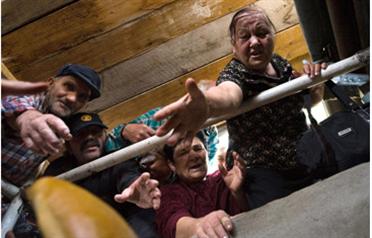
An estimated 118,000 refugees have fled conflict around the Georgian separatist regions of South Ossetia and Abkhazia, which now are under rebel and Russian control.
"Access is the number-one priority right now," the United Nations' resident coordinator for Georgia, Robert Watkins, told AFP. "There's no point having all this aid if you can't take it where it needs to be distributed."
Watkins identified the Georgian city of Gori, under the control of Russian forces, as being of critical importance but said the UN High Commissioner for Refugees (UNHCR) also hoped to be able to distribute aid in other towns and in South Ossetia.
"Paramilitary and criminal groups are taking advantage of the uncertainty and the lack of administration and police," he said. "In terms of security it is very similar to what happened after the invasion of Iraq."
On Thursday, a visit to Gori by UN security officials on a mission to assess the security situation ended in disarray when they were held up at gunpoint and had two of their UN-marked vehicles stolen.
Watkins said another attempt to evaluate the situation would take place on Friday, but he stressed the need for police on the ground to guarantee the safety of aid workers.
An AFP reporter travelling with Russian forces and rebels near Gori on Wednesday saw scores of houses ablaze and reported looting by soldiers and volunteer militiamen.
People fleeing the conflict zone have told AFP of widespread looting, arson and murder, and several journalists in Gori have been robbed at gunpoint.
"We have access to everywhere except the neediest areas," Daniela Cavini, a regional spokeswoman for the European Commission's humanitarian aid department, told AFP.
"We don't know how many people are there (in the conflict zone). All those that were able to leave have left, but the ones that stayed behind are the most vulnerable," she said, adding that mostly elderly people had stayed.
In South Ossetia, Russia's emergency situations ministry and health ministry have begun setting up facilities, but an AFP reporter in the bombed-out capital of Tskhinvali said Thursday he had not seen any aid being distrbuted.
At the International Committee of the Red Cross (ICRC), security concerns are also hampering relief efforts outside the capital Tbilisi.
"In principle we should be able to get access, but the security situation doesn't allow us to go in at the moment," said Jessica Barry, a spokeswoman here. "We are pushing to have that access."
Aid efforts have so far been concentrated around the capital Tbilisi where 28,000 have sought refuge and are being helped by the UN refugee agency, Watkins said.
He underlined that other Georgian cities required attention, such as the western cities of Poti, Senaki and Zugdidi where Russian troops and tanks have moved.
A huge international campaign has been launched to deliver aid to Georgia, with the United States flying in two huge C-17 military cargo planes already, and another eight plane-loads of aid are expected in the next four days.
Among others, Turkey, Italy and France have sent aid by air or road and the ICRC said it had flown in almost 100 tonnes of supplies to the region and more than 40 extra staff.