New system to set drug import prices
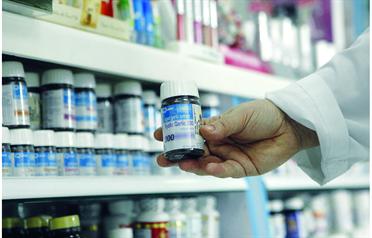
Rules that force pharmaceutical agents to price products imported from Europe according to fixed exchange rates set by the Ministry of Health are to be scrapped.
From October, prices will be calculated using the exchange rate issued by the Central Bank under a system to be introduced by the ministry. The import prices of drugs will be fixed under the new arrangements.
Agents say they have suffered huge losses because the ministry set the rate at Dh4.3 per euro but the market rate soared to Dh5.7. They had to pay for drugs from European suppliers at the higher rate and sell them to pharmacies at the lower one.
The pharmaceutical agents say they are satisfied with the new system, which will also cover medicines priced in other European currencies. They view the move as a positive step that will curb the financial hardships they have been suffering and boost profits.
Under the two-year price structure the increase in the cost of drugs for chronic diseases and antibiotics imported from Europe will be limited to 5.85 per cent. Other drugs will go up by 21.4 per cent.
The increase would have been 32 per cent across the board if the appreciation in the market price of the euro had been applied in full without the new controls.
Agents will be able to make up for losses on some medicines by increasing their profit margin on drugs for non-chronic conditions.
In another move the cost of drugs priced in United States dollar will be reduced by between one and 10 per cent.
"The new pricing system will greatly benefit patients, drug agents, pharmacies and the pharmaceutical market in general," said Humaid Mohammed Obaid Al Qattami, Minister of Health.
"The ministry's higher committee for the registration and licensing of drugs will hold several meetings this month to price each drug separately according to the new system that will free the exchange rate of drugs imported in European currencies.
"The changes will cut the import price of European drugs at the port by 15 per cent, the agent's profit margin from 20 per cent to 15 per cent and pharmacies' margin from 24 per cent to 18 per cent.
"The reduction in import prices and profit margins will help to absorb the big price increase arising from the adoption of Central Bank exchange rates."
Al Qattami said his ministry would enforce the new prices for two years and then review them periodically. Prices at the port would be set in line with lists of reference prices in the countries of origin and neighbouring countries and in co-operation with drug makers, importers and agents.
Al Qattami said the ministry would set up an integrated control and inspection system to check whether pharmacies were observing the new prices. Price lists would be sent to companies, importers and pharmacies.
"The new system will strike a balance – it will control prices and make sure that drugs are available in the country's pharmacies. The decision to free the rate of exchange of drugs imported in European currencies followed studies that took a long time to complete.
"We have been careful to make drugs for chronic diseases available to avoid placing an additional burden on patients. The system will alleviate the financial difficulties faced by agents, distributors and pharmacies over the past few years."
Agents who attended a meeting with the minister and Dr Amin Al Emery, Executive Director of the Medical Practices and Licences Department, expressed satisfaction with the new system. They said it would put an end to the losses they were suffering that had forced them to stop importing some essential medicines.
AstraZeneca Director-General Dr Taha Yassin, who attended the meeting, said: "No drug agent in the UAE has objected to the new pricing. Everybody was in support, without exception. Undoubtedly the agents will make profits and none will lose out."
Dr Abdul Qawi Al Banna, Director-General of Modern Pharmaceutical Company, said the new scheme would put an end to the losses suffered by agents over the past four years. The gap between the exchange rate set by the ministry and that of the Central Bank had cost agents 32.5 per cent of every euro they paid out to suppliers.
"The freeing of the exchange rate was urgently demanded by agents and pharmacists as the cost of getting drugs to patients rose considerably because of the increasing cost of treatments, salaries of staff working for agencies and pharmacies, storage, air-conditioning and residential and commercial rents," he added.
Nidal Fakhouri, Chairman of the Gulf's Federation of International Producers and Manufacturers of Drugs and General Manager of Merck Sharp & Dohme, said the new system was a positive step for market stability and would end the hardship faced by the drug agents.
But he warned that increases in the cost of drugs imported from Europe, particularly those priced in euro, were inevitable because of the high cost of shipping and insurance.
Medicines are the only items that have not increased in price over the past few years because the Ministry of Health set exchange rates for European currencies. The price of food as well as rent, labour and operating costs have all soared.
Raphael Kandalaft, General Manager of Roche in the Gulf, said the ministry should not have set rates.
"The determination of exchange rate of foreign currencies is not one of the ministry's functions, it is one of the Central Bank's functions," he said.
"The ministry's role includes making sure that drugs are effective and genuine and sold at a fair price.
"The 5.85 per cent increase in the price of drugs for chronic diseases and antibiotics imported from Europe is not high considering the prices of basic food commodities, especially rice and lentils, have risen by more than 50 per cent."