Staycationers challenge summer campaigns
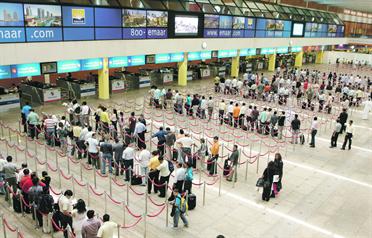
Summer in the GCC means travelling abroad either back to the home country or to an exotic location. For others, staying in the country is a compelling option due to the escalating cost of living and rising cost of travel. This has forced many GCC residents to be part of the growing trend called “staycationers”.
In fact, the at home vacation option is not just limited to the region but has become common all over the world due to the rising costs. Inflation has become a topic of discussion with the UAE and Saudi Arabia showing high inflation of 11 per cent. The rising cost of living and the pressure of having got used to a certain high standard of living in the UAE (on an average UAE residents spend – or are forced to spend – 60 per cent of their monthly income) has left many to stay put in the country during the summer months.
Let’s take a look on who are those who are expected to travel during summer out of the region. We look at two key markets in the region – the UAE and Saudi Arabia – to understand the change in media consumption habits taking into account that most people (expats as well as nationals) travel out of the country during summer.
Summer vacations are most likely to interest families with children and consumers who have families back home.
More than 33 per cent of the population in the UAE and Saudi Arabia have children less than 14 years of age, which shows that 51 per cent in Saudi Arabia and one-third population in the UAE have pressures of planning summer holidays each year.
According to a TGI study done by Parc, 12 per cent in the UAE and 15 per cent in Saudi Arabia travel out of the country on holiday during the months of June, July and August. However, not all travel at the same time. The figure does not exceed more than six per cent for Saudi Arabia and five per cent for the UAE for any single month during this period.
The dip in advertising investments is more pronounced during the summer months and shows nine to 12 per cent decline in the UAE and four per cent in Saudi Arabia as compared to other months. However, year-on-year the advertising volumes have increased during summer (UAE: July-August 2007 compared to 2006 plus 14 per cent; Saudi Arabia: July-August 2007 compared to 2006 plus nine per cent). This proves though overall advertising investments have increased each year, summer months have consistently performed poorly compared to other months.
Assuming each year a significant number of residents travel out of the UAE and Saudi Arabia during the summer months, it is normal to expect that media consumption declines as compared to other months.
There is a 14 per cent drop in television viewership in the UAE while the drop in Saudi Arabia is very insignificant. The very small decline is not in proportion to the 15 per cent residents travelling out of Saudi Arabia.
Thousands of tourists visit the UAE to enjoy Dubai Summer Surprises (DSS), Abu Dhabi Summer Surprises and Sharjah Summer Surprises. In 2007, DSS placed visitor numbers at 2.16 million with consumer spending of Dh3.2 billion. Hence, if 12 per cent of the 4.1 million UAE residents are away during summer, the 2.16 million visitors to Dubai more than compensate the outgoing residents. Visitors to the UAE as well as residents capitalise on the special summer offers by most hotels that otherwise are very expensive.
According to organisers of DSS 2008, visitors to the UAE are expected to rise by eight to 10 per cent over the total 2.16m visitors in 2007. It is also expected that the total consumer spending will exceed last year’s figure of Dh3.2bn by 20 to 25 per cent. In such a case it is only prudent for advertisers to consider connection points like in-mall advertising, online and cinema to engage with the visitors as well as the “staycationers” in the UAE.
According to Avinash Udeshi, general manager of Motivate Val Morgan, one of the leading cinema concessionaires in the UAE: “July-August is a peak period in terms of traffic in cinema halls. Outdoor activities are not an option when the temperature soars above 45C, thus making cinema an even more alluring entertainment avenue. Also, the line up of blockbusters such as Dark Knight, Wanted, Mummy – Tomb of the Dragon Emperor etc, coinciding their releases during this summer, generates higher traffic in cinemas delivering both quality and quantity viewers to the advertiser.”
Online usage will not change significantly as people who travel out of the country could still access the sites they regularly visit.
Thus, media campaigns during summer warrant a little fine tuning according to the change in consumer’s media consumption habits. The change is more obvious in the UAE due to the dual role of media to target residents as well as visitors.
Online, in-mall and cinemas become very important to connect and engage with these consumers.
In Saudi Arabia the change in media consumption habits is not very significant during summer. However, due to the lack of other entertainment avenues, in-mall and online media could complement other mainline media. (there are no cinema halls in Saudi Arabia).
- The writer works in mediaedge:cia as account director