Commodities may surge after US presidential polls
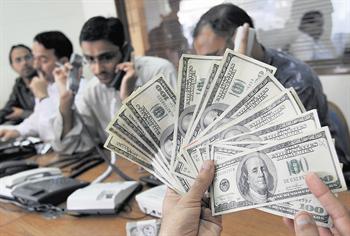
In the first week of June, we said if the US dollar extends its slide, many economies will face high inflation coupled with static growth rates (an economic situation termed "stagflation"). The solution was to let the US dollar get stronger and cool the global inflation.
Within just three months, the pendulum has shifted in favour of the dollar. Suddenly, global financial markets are seeing the dollar as the better amongst the worst. The euro has tumbled by almost 10 per cent from its peak of $1.6038 and the sterling has witnessed its worst slide since 1992, when Britain came out of the Exchange Rate Mechanism. It is now trading around $1.83 from its peak of $2.0153 mid-July.
Oil prices have receded by almost 24 per cent from a high of $147.27 reached on July 11 and gold is struggling to hold above the $800 mark.
In August, we see that the same credit crisis that once threatened to force the US economy to its knees has been strangling the other two major economies. Talk of recession is encircling the UK and the Eurozone.
Almost all the economic data that is now coming out of the US is better than expected, while those from the UK and the EU have been hitting rock bottom. US gross domestic product growth for the second quarter is expected to be revised to 2.8 per cent from initial estimates of 1.9 per cent, reflecting the stronger-than-expected exports in June.
The sliding oil prices, stabilising home sales and investor optimism is likely to contribute to this revision. The National Association of Realtors reported that US home sales rose 3.1 per cent to a seasonally adjusted annual rate of five million units, up from June's downwardly revised rate of 4.85 million units. Sales were expected to rise 1.6 per cent.
In the same time period, data revealed that German corporate morale fell by more than expected to a three-year low in August 2008. The widely tracked IFO business climate index, based on a monthly poll of some 7,000 firms, fell to 94.8 from 97.5 in July, the lowest since June 2005.
This was in addition to the confirmation that German GDP contracted by 0.5 percentage points on the quarter in the April-June period. These data increase the possibility of recession in the Eurozone, which could force the European Central Bank to cut interest rates in its coming meetings.
The case of the UK's economy is similar. It now seems more likely that the Bank of England will cut UK interest rates this year – maybe more than once – to protect the economy from recession even as inflation breaches the government target by the widest margin ever.
But what made the US dollar so favourable to investors in just two months? How did the markets miss the coming economic crisis in the UK and the EU?
The answer lies in the approaching US elections in November. The officials steering the US economy would need to ensure lower oil prices before the votes are cast. This has been a trend before every US election. In December 2006, oil prices fell from $80 a barrel to a level below $50 and this coincided with the mid-term polls in the US. The same slide in oil prices was witnessed prior to the 2004 elections.
Almost all oil trade is in US dollars through exchanges in London and New York – which are both US-owned. With more than 90 per cent of crude trades being financial with no physical deliveries, it is possible to temporarily nudge the market to one side using media and other sources.
This is largely done by changes in the dollar value. But as the market recognises the arbitration, prices quickly respect the true supply-demand dynamics. Rallies in crude prices have been quite strong after every US election. The current slide in oil and most commodities due to dollar strength is unlikely to last beyond the US elections. Commodities may be struggling to base out after a steep fall, but remember: that seldom do we get an opportunity to enter a bull market 20 to 30 per cent below a recent high. Remember Warren Buffet's words: "Be greedy when others are fearful and be fearful when others are greedy."
The writer is Chief Executive of www.Safetradeadvisors.com