Syndicated deals to stage return by Q4
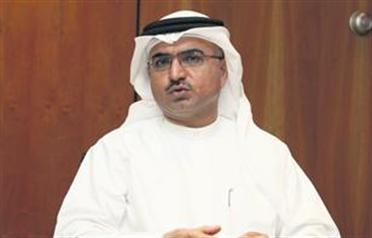
Banking industry in the UAE is going through one of its toughest phases in at least a decade. On the one hand, tight liquidity is driving up the deposit rate to unprecedented levels and on the other asset growth has become a pricey option as the banks will be forced to bring in place the necessary deposits and capital to support that.
Talking to Emirates Business, Abdul Wahed Al Fahim, General Manager, Wholesale Banking, Emirates NBD, said he is not very optimistic about the period ahead, at least for the next two years. "But things are manageable, provided we are prudent about what we do," he said. He also said it will not be before a while the syndicated loan market would recover and hence most of the activities we see currently are on refinancing.
How do you view your performance in 2008?
Given the current circumstances when the whole world is facing one of the harshest financial crises, I would say our results were good. The financial institutions the world over witnessed one of their toughest years in 2008. Even compared with other institutions in the region, ours was good performance.
What are your expectations for the current year?
I don't want to comment on the first-quarter results, as they will be announced soon. I don't want to speculate on the figures.
Banks have been growing very fast, with their asset book expanding at 30 to 40 per cent annually during the past couple of years. It was in this context the UAE Central Bank governor instructed that the banks confine the asset growth to 10 per cent in the current year. How do you view this?
The Central Bank advice was very right, especially because banks have been growing very fast in the past three to four years. The prices of almost all commodities, including crude, have posted very high growth during the past three years. No one really wants the growth to go on unchecked for long periods. These are difficult cycles and we have to be realistic. A moderate growth is desirable in these circumstances.
How many years, do you think we need to live with moderate growth?
It is a very important question, but I don't know whether I should venture to find an answer to this. Even experts are struggling to find whether this difficult phase will get over in one year or five years. I can undoubtedly say that in the coming three years, the growth will not be comparable to the growth we saw in the past three years when it was abnormal. This is the period when we would be focusing on consolidation and shoring up quality rather than focusing on sheer growth.
Compared with other banks, Emirates NBD has more challenges to face – you need to rectify your high lending-deposit ratio; you have to raise your tier 1 capital ratio to 11 per cent from little more than 9 per cent. How do you plan to address these challenges?
The government bodies (the Ministry of Finance and Central Bank) have done a commendable job by making available sufficient funds for the banks. Together they have committed Dh120 billion, and we also got our share of deposits from the ministry pool. One thing is for sure – in the coming few years, we will not be growing the way we were growing in the past three years. We have got the shareholders approval to convert the government deposits into tier 2 capital and this will, to a good extent, take care of the overall capital adequacy ratio (CAR). By growing slow we will be able to address both the issues you just mentioned – capital ratio as well as the lending-deposit ratio.
Any other plans to boost fund base?
We have various other plans under discussion. If needed we will be using our good relations with the international banks with whom we have been dealing with, to raise funds.
Is it still possible to raise funds from the domestic markets?
The market is in the process of stabilising, of late. You see the deposit rates in the market have been falling steadily. The rates may have dropped by two to 2.5 per cent during the past three months. Even we used to pay rates as high as six per cent for deposits as part of deposit mobilisation programmes. But the market trend has changed a lot in the past few months. What happened was that the Central Bank initiatives have brought in a lot of confidence and comfort to the market.
What is the status on the EMTN [euro medium term note] programme? When will you go to the international market again?
It depends on more than one factor. We will look at raising funds from the international market when the situation improves and the pricing becomes acceptable to us. We are looking at various options to raise funds and EMTN could be one of these options.
When do you think the syndicated loan market will make a comeback?
It's true that there are not many new deals coming up now. But we have been playing a major role in several refinance deals. We have been seeing several such deals taking place in the market during the past four-five months. They include, the Dubai Civil Aviation deal, Borse Dubai, Dewa's Ijara facility, etc. I think a couple of other issues also may come up towards the last quarter. This doesn't mean there are not many original deals taking place in the market. Though we also look outside the UAE, especially within the region, our priority will remain in the UAE itself.
Have you put a cap on the size of the deals given the hard times we are in?
We are selective on the deals – on size, tenure and sector, as we always have been. We are keen to participate in infrastructure projects, especially for governments. We are not there for very long-term projects that span 15 or 20 years.
It is heard that Emirates NBD has exposure concentration to real estate and government sector?
No. It is not true. Our exposure to real estate is less than 13 per cent. We have slowed down, and become very selective on this sector.
On the refinance deals, the pricing has risen drastically compared with the original deals signed earlier. Can you comment?
This is purely because of the market conditions. Maybe after a few months down the line, these rates may come down. Moreover, the clients will have the opportunity to go for refinance once the market eases.
Do the banks have the right to change the "spread" agreed upon in the agreement during the course of the loan?
The loan document usually has the clause allowing the financial institutions to change the pricing depending on the market conditions.
Is it unique to GCC or the UAE?
These clauses are very normal in loan agreements, maybe in different degrees.
Do you think the delinquency rate will increase in the UAE's banking industry?
There is no denying the fact that things are getting difficult here as elsewhere. Business margins and volumes have been affected; real estate prices have fallen substantially and there is no sector, which is not affected by the ongoing financial crisis. The new trend is that the clients have started seeking deferment on loan payment. But this cannot be called delinquency, as the banks need to be sympathetic towards businesses during such difficult times.
What about the provisions against loans?
Certainly they have been increasing, but have not gone to alarming levels. The year 2008, though was worse than 2007, was OK as only the last quarter was affected hard by the recession. But I think the delinquency levels in 2009 are likely to be higher than 2008.
And 2010…?
I am not so optimistic to state that things will go back to normal by 2010. But given the government support the different economic sectors in the UAE are receiving, I think we will recover faster than many other countries.
Will you insist on rating for the corporate houses as a condition for borrowing?
Though several entities are said to be working on rating processes, I don't think we can yet adopt rating as a criterion for lending. We have very few companies in the UAE that have got rating from international agencies. So here in the UAE it is more important to understand the business model and the risk management system adopted by these corporate houses before taking such decisions.
There were rumours that your [Emirates NBD] exposure to CIS is not that comfortable. Can you comment on this?
There is no single problem exposure to CIS countries. Each single dollar is coming back to us as per the repayment schedule.
The growth areas are very limited during these times. So what will be your new growth strategy now?
Expansion into unrepresented international markets will be one strategy. We are working on plans for stronger presence in India, Singapore, China, etc.
Outlook for the future…?
Things are going to be difficult, but I am confident that we will manage them. There is no single answer to how I will manage the situation during difficult times like this.
PROFILE: Abdul Al Fahim, General Manager, Emirates NBD
Keep up with the latest business news from the region with the Emirates Business 24|7 daily newsletter. To subscribe to the newsletter, please click here.