Bollywood reads the patriot act
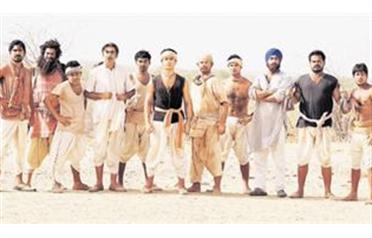
From the street plays of pre-Independence India to the silver screen of the potential superpower, the theme of nationalism has inspired, encouraged, dazed, annoyed and irked lovers of Indian art and cinema over the decades.
There were days when the entire audience in a cinema stood up to show respect for India's national anthem, which used to be an inseparable part of patriotic films; now, many question the need to stand up at all. These days, a film meant to inspire the patriot in you is a perfect backdrop to witness missionary nationalism turn into popcorn patriotism.
The Indian entertainment industry on its part, though, never runs out of ways to remind citizens how great their country is around Independence Day, and Republic Day on January 26. The radio stations in India, and even the Asian stations in the UAE, play their part by airing such songs as Mere Desh ki Dharti (My Country's Soil) and Yeh Desh Hai Veer Jawanon Ka (This Country Boasts Brave, Young Men) to inspire nationalistic spirit. Indian TV channels hop on the bandwagon too to tap the patriotic fervor by broadcasting love-thy-nation programmes with glee.
But if radio and TV stations are in on the game, Bollywood can't be far behind.
Even before India gained Independence, the film industry produced several incarnations of patriotic films. While the content was euphoric in the decade leading up to independence from the British rule in 1947, the ever-changing face of the enemy has kept the industry and its many fans entertained through the decades since.
Delve back to pre 1947 cinema, and patriotism was the subject of the average song and dance routine. Door Hato Ae Duniya Walon, Hindustan Hamara Hai (Beware World, India Is Ours) from Kismet released in 1943 was apparently a message for the British Empire to move out of India. Analysts say the song was inspired by Indian spiritual leader Mahatma Gandhi's Quit India Movement of 1942.
But 1947's formation of India and Pakistan and the bloodshed that it caused changed Bollywood's perception of the enemy. By the 1960s, films found a new villain in Pakistan and China, following the wars India fought against them. Unfortunately, that trend lasted well into the 1990s as Bollywood couldn't seem to move beyond its "across the border" fixation. Of course, this does not mean many didn't still try.
Bold Indian filmmakers gave the outside enemy a miss, to turn the tables on the establishment with scripts that saw our hero battle within the country to weed out corrupt politicians and government officials.
Khwaja Ahmed Abbas's Shree 420 (Mr 420) does not strictly fall into the patriotic group but was loaded with Indian cultural and social values. Mera Joota Hai Japani (My Shoes Are Japanese) from Shree 420 has become one of the greatest patriotic film songs in Bollywood's history.
However, nobody used national pride as a successful genre in cinema more than producer, director and actor, Manoj Kumar. Starting his patriotic-themed films with Shaheed (Martyr) in 1965, Kumar went on to use nationalism in Upkar (Good Deed), 1967, Purab or Pacchim (East or West), 1970, Roti, Kapda Aur Makaan (Bread, Clothing and Shelter), 1974, and Kranti (Revolution). Kumar even chose to name his characters Bharat (another name for India) in four of his films and, as a result, even today he is referred to as Bharat Kumar.
Taking their cue from Kumar, many top Indian stars jumped into the game to further their careers. Dilip Kumar played Bhagat Singh in Shaheed (1948) and an upright cop in Karma (Action), 1986. In 1964's Haqeeqat (Reality), based on the 1962 Sino-Indian war, muscleman Dharmendra donned an army uniform. Even the legendary Amitabh Bachchan was not to be left behind, starting his career with Saat Hindustani (Seven Indians), 1969, which tackled the story of a group of Indians who unite to free Goa from the Portuguese.
Yet, even while some followed in the footsteps of Manoj Kumar's nationalism, others such as Sunny Deol turned this passion into jingoism, or extreme patriotism. The fiery actor-son of Dharmendra went through a string of over-the-top roles, starting off with 1997's Border where he played a Sikh army man whose response to any threat was shoot first, think later.
Gadar: Ek Prem Katha (Love In Time Of Mutiny), 2001, may have become one of India's most successful films to date, but pointed to a whole new low for cinema as Pakistan was all but declared a terrorist state.
Thankfully, Deol's exploitation of the theme in Indian (2001), Maa Tujhe Salaam (O' Mother I Salute You), 2002, and Hero: Love Story of a Spy (2003) did not go down well with the audience and his fanbase took a hit.
Possibly learning from Deol's mistakes, actor-producer-director Aamir Khan tried his hand at a modest dose of patriotism, to great success. He first assembled a cricket team of Indian villagers to take on the British in the Oscar-nominated pre-Independence drama, Lagaan (Tax), 2001.
Five years later, his Rang De Basanti (Paint It Saffron) saw Khan and a group of college graduates battle against corrupt politicians and businessmen. The landmark film proved to be a turning point in Bollywood, highlighting the disenchantment of young India with those in power and its fight against the enemy within.
Shah Rukh Khan took up his own cause by saying no to Pakistan-bashing in Bollywood and changing the perception of old India. In 2004's Main Hoon Na, he played an Indian army man who tries to bring peace between the two nations.
In the same year, Swades saw him play a Nasa scientist who returns to India and sets up a small hydroelectric unit for a village.
At the time, the actor was quoted by news agency Ians as saying: "In Main Hoon Na when Zayed Khan and I put our differences aside to fight the common enemy, it becomes symbolical of India and Pakistan being two brothers that need to come together as one to be strong."
According to film critics, this phase in Bollywood is its most mature yet. Topic's such as the one tackled in 2007's Chak De! India (Go For It, India), where Khan coaches a women's hockey team that loses its nationalist spirit, followed by 2008's A Wednesday, which fought the enemy within, shows real life is spilling into reel life.
Thirty-year-old advertising executive and Bollywood junkie, Namrata Kher, says that intelligent cinema is the sign of a country's progress. "If filmmakers have learned something from their audience over these 62 years, then its a message of peace.
"We are global citizens who don't feel anger over borders or a decades-old hatred. We care about progress. We care about change. If we mend our ways, others will follow. That's what Mahatma said, and that is what stands true even today."
Top money spinners
$17.8m Gadar (2001)
$11m Lagaan (2001)
$10.6m Border (1997)
$4.8m Kranti (1981)
$4.6m Upkar (1967)
$1.4m Shaheed (1948)
Top patriotic film songs
- Mera Joota Hai Japani
Film: Shree 420 (1955)
This evergreen hit is an anthem of sorts for those who may reside outside the country but are Indian at heart
- Ab Tumhare Hawale Watan Saathiyo
Film : Haqeeqat (1964)
The song is an elegy of dying soldiers in war, who appeal to their countrymen to look after the country when they are gone
- Apni Azadi ko Hum Hargiz Mita Sakte Nahin
Film: Leader (1964)
Patriotism takes root in India as the battle against the system begins in Bollywood
- Mere Desh ki Dharti
Film: Upkar (1967)
This high-pitched track saw Manoj Kumar (pictured) praising the fertile plains of India
- Dil Diya Hai Jaan Bhi Denge Ae Watan
Film: Karma (1986)
The song saw Dilip Kumar eulogise eternal love for his country
Hits and misses
Don't Miss
Shaheed (1948, 1965)
Haqeeqat (1964)
Karma (1986)
Border (1997)
Swades (2004)
Stay Away
Pukar (1983)
Oh Darling Yeh Hai India (1995)
Indian (2001)
Gadar (pictured) (2001)
Hero: Love Story of a Spy (2003)
Keep up with the latest business news from the region with the daily Emirates Business 24|7 newsletter. To subscribe to the newsletter, please click here