News
Mrs Babbar takes centrestage
img_08012008_f46cdf85-affb-4345-bbbb-10fba7db6d7b.jpg
Nadira Babbar is fighting the good fight these days, and her current target appears to be this reporter. The eminent theatre personality has made it her mission to bridge the gap between today's generation of Indians and their traditions by encouraging them to speak in native Hindi.
"It's terrible to see that today's children can't even speak their own language with ease," comes the obvious dig directed at this reporter, who admittedly lapsed into English after a few desperate attempts at conversing in Hindi.
"It's a dangerous landscape where Indians are now more American than the Americans themselves," she says. "What's worse is that we are obviously not changing our attitude towards things that really matter: a woman's equal place in society or the hatred towards other religious practices within the country. These are things we should be broadminded about, not smoking, drinking or wearing clothes that make you appear naked."
The actress, who single-handedly changed the performing arts scene in India, will take to the stage tomorrow at The Centrepoint Theatre in Dubai with her play, Begum Jaan, which also stars her daughter Juhi.
Some would say the Hindi language play and its subject is yet another attempt by Babbar to cement her cause in front of the masses. She is noncommittal when questioned, and only says: "Theatre is not about propaganda, but entertainment."
And over the past 25 years, Babbar – who has by and large steered clear of film, despite roles in such projects as Gurinder Chadha's Bride and Prejudice – has done exactly that by creating her theatre group Ekjute and producing some award-winning plays such as Look Back in Anger, Bharam Ke Bhoot and Begum Jaan; she also turned scriptwriter with Sakku Bai and Dayashankar Ki Diary (both of which have been staged in Dubai).
"Theatre has seen some big changes over the past two decades," she says. "Twenty-five years ago, we would probably see 10 people sitting in the audience; today, we sell out to packed houses and several theatre groups have also mushroomed alongside."
But can theatre – long considered a dying art – now survive the juggernaut Bollywood industry, which seems to be spreading its tentacles across urban India?
Babbar is quick to respond: "There is no comparison. Theatre has its place as a classical art, while cinema is mainstream. It would be like comparing a concert by [popular Bollywood actor/ musician] Himesh Reshammiya to a performance by [award-winning classical musician] Pandit Hari Prasad Chaurasia."
However, she admits the quality of plays produced may have taken a beating. "There have been bad quality plays produced over the years, and I've been tempted to walk out of some of them. But I'm a well-known face in India and it would be terribly rude.
"Like real life, theatre also has a central mafia where frauds resort to lobbying and manipulation to get their name out. Nevertheless, I have faith and am far too superior for them."
So how would she rate herself as an actress? "I think I am the best," comes a laughing response. "Theatre truly is my greatest weapon and I will never retire, not until you have to carry me off stage."
Begum Jaan
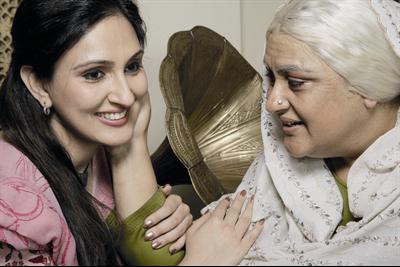
Nadira Zaheer Babbar plays the title role of Begum Jaan, an octogenarian classical singer who has fallen on hard times with the emergence of pop culture.
Leading a quiet life with granddaughter Zarina (Juhi Babbar), Begum Jaan relives her glory days through memories of a bygone era.
Things come to head one day when a journalist enters their lives, promising to do a story on Begum Jaan and return her to her former fame.
But the journalist is only interested in gaining access to letters in possession of Begum Jaan, which were written to her by freedom-fighter Maulana Azad and former Indian Prime Minister Jawaharlal Nehru.
Organised by Mind Direct, the play will be staged tomorrow at the Centrepoint Theatre, Mall of the Emirates, from 7.30pm. Tickets cost Dh75, Dh125 and Dh200. Call: 04 391 1960
"It's terrible to see that today's children can't even speak their own language with ease," comes the obvious dig directed at this reporter, who admittedly lapsed into English after a few desperate attempts at conversing in Hindi.
"It's a dangerous landscape where Indians are now more American than the Americans themselves," she says. "What's worse is that we are obviously not changing our attitude towards things that really matter: a woman's equal place in society or the hatred towards other religious practices within the country. These are things we should be broadminded about, not smoking, drinking or wearing clothes that make you appear naked."
The actress, who single-handedly changed the performing arts scene in India, will take to the stage tomorrow at The Centrepoint Theatre in Dubai with her play, Begum Jaan, which also stars her daughter Juhi.
Some would say the Hindi language play and its subject is yet another attempt by Babbar to cement her cause in front of the masses. She is noncommittal when questioned, and only says: "Theatre is not about propaganda, but entertainment."
And over the past 25 years, Babbar – who has by and large steered clear of film, despite roles in such projects as Gurinder Chadha's Bride and Prejudice – has done exactly that by creating her theatre group Ekjute and producing some award-winning plays such as Look Back in Anger, Bharam Ke Bhoot and Begum Jaan; she also turned scriptwriter with Sakku Bai and Dayashankar Ki Diary (both of which have been staged in Dubai).
"Theatre has seen some big changes over the past two decades," she says. "Twenty-five years ago, we would probably see 10 people sitting in the audience; today, we sell out to packed houses and several theatre groups have also mushroomed alongside."
But can theatre – long considered a dying art – now survive the juggernaut Bollywood industry, which seems to be spreading its tentacles across urban India?
Babbar is quick to respond: "There is no comparison. Theatre has its place as a classical art, while cinema is mainstream. It would be like comparing a concert by [popular Bollywood actor/ musician] Himesh Reshammiya to a performance by [award-winning classical musician] Pandit Hari Prasad Chaurasia."
However, she admits the quality of plays produced may have taken a beating. "There have been bad quality plays produced over the years, and I've been tempted to walk out of some of them. But I'm a well-known face in India and it would be terribly rude.
"Like real life, theatre also has a central mafia where frauds resort to lobbying and manipulation to get their name out. Nevertheless, I have faith and am far too superior for them."
So how would she rate herself as an actress? "I think I am the best," comes a laughing response. "Theatre truly is my greatest weapon and I will never retire, not until you have to carry me off stage."
Begum Jaan
Nadira Zaheer Babbar plays the title role of Begum Jaan, an octogenarian classical singer who has fallen on hard times with the emergence of pop culture.
Leading a quiet life with granddaughter Zarina (Juhi Babbar), Begum Jaan relives her glory days through memories of a bygone era.
Things come to head one day when a journalist enters their lives, promising to do a story on Begum Jaan and return her to her former fame.
But the journalist is only interested in gaining access to letters in possession of Begum Jaan, which were written to her by freedom-fighter Maulana Azad and former Indian Prime Minister Jawaharlal Nehru.
Organised by Mind Direct, the play will be staged tomorrow at the Centrepoint Theatre, Mall of the Emirates, from 7.30pm. Tickets cost Dh75, Dh125 and Dh200. Call: 04 391 1960