Ramsay murder retold in "tabloid hell"
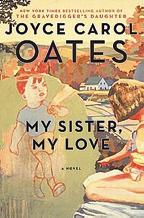
Some of Oates's books feel like she wrote them as dares to herself. This novel, her 37th, is one of the wildest.
Oates sets out to solve a fictionalised version of the JonBenet Ramsey murder, with skating prodigy "Bliss" Rampike replacing the real-life child beauty pageant contestant. Her resolution is heartrending, grotesque and totally believable.
It's also only the second-best thing about the book. More impressive is that Oates unravels the murder mystery from the perspective of one of the least reliable narrators imaginable. Skyler Rampike, Bliss's older brother, aged 19, is so shaky in his memories that he can't say for sure he didn't kill his sister. Lonely, disturbed and an ex-junkie, he both attracts and repels.
Unreliable and occasionally unpleasant narrators are among the greatest challenges for writers and readers alike, and Oates is able to keep us turning pages even when we wish we could leave Skyler alone in "tabloid hell".
But for all his flaws – Oates takes her time revealing their extent – Skyler writes beautifully. His voice shifts from stream of consciousness to a formal detachment reminiscent of Vladimir Nabakov's The Eye. The way to handle broken narrators, perhaps, is to try to find poetry in their plain speech. But Oates has already done that – her "zombie" is a brilliant exercise" in the art of the seemingly unedited confessional.
In My Sister, My Love, she attempts a more difficult manoeuvre: a literary memoir, obsessively footnoted and vetted by some unseen editor. Some 100 pages longer than need be, and filled with Skyler's misinterpretations, it feels like a draft that leaves the narrator overexposed.
The recent announcement that prosecutors have cleared the Ramsey family in JonBenet's death does nothing to take away from the drama of Oates' version of the crime, and the conflicted narration is part of the reason.
My Sister, My Love. By Joyce Carol Oates, from Dh85.