Climate change will have a serious impact on this region
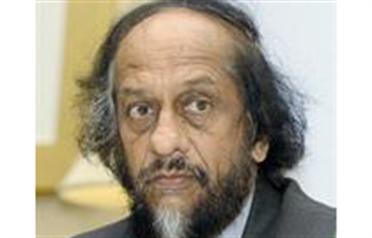
The key to long-term environmental sustainability in the region is to move away from oil wealth to 'soil health', according to Nobel Peace Prize Laureate Dr Rajendra K Pachauri. Pachauri was the co-recipient of the award in 2007 on behalf on the Inter-Governmental Panel on Climate Change (IPCC), along with former US Vice-President, Al Gore. As Director-General of The Energy and Resources Institute (Teri), Pachauri this week signed two memoranda of understanding in Dubai to set up graduate and research programmes in the Gulf.
"The impact of climate change on this region is likely to be quite serious, and there's already some evidence of that happening," Pachauri told Emirates Business.
He said battling climate change required the UAE to be "part of the solution", involving measures at a local level and efforts to reduce the emission of greenhouse gases for the global benefit and for the benefit of this region.
Pachauri said specific concerns were becoming more obvious, particularly the excessive consumption of specific resources, a lack of good quality soil and adequate amounts of water.
"The soil in this country has to be resuscitated and revived, and that would be the central core of a pattern of sustainable development," he told Emirates Business.
—What is the key impact of climate change on Dubai? What's the biggest threat to growth?
—There's more than one. Of course, a rise in sea level is important given the fact you have a significant coastline. It's something that will have an impact on several sectors that are vulnerable. Then there's the problem of changes such as an increase in heat – the more people, the more severe rises in heat will be. Changes in precipitation patterns, for instance, suggest there's a likelihood that rainfall will reduce in this region. But we'll also witness more extreme events as far as rainfall is concerned. That has implications not only in terms of the kind of damage and destruction that would take place but also on the availability of water itself.
Drought conditions are likely to increase, which would have an adverse impact on agriculture. I realise this region has very little agriculture, but whatever little there is could be affected negatively because of climate change.
—What dangers do you see caused by the economic boom in Dubai, particularly from the industrial sector?
—There are environmental implications that we have to keep in mind. There's much more discharge and pollution as a result and all of that has to be managed, otherwise it will have a negative impact on the environment. But more importantly the sheer demand for energy and for natural resources is also something that we need to be concerned about. The question is what kind of industries should be promoted and fostered here? In my view those industries that have very low ecological impact should be promoted and, therefore, policies are required by which only those industries are promoted.
—Is being an oil-producing region an advantage or disadvantage when it comes to climate change?
—It's an advantage at this point in time. But you would be really utilising that advantage if you can work oil wealth into soil health. With these resources we now need to move in a direction that would ensure a much more sustainable pattern of development. And since this region has the resources, it can go in and invest in the technologies, and go in for the kind of infrastructure that would lead to a more green economy.
—What actions would you urge governments in the region to take, in particular the powerful emerging economies like Dubai, Abu Dhabi, Doha, et al?
—You need a mix of regulatory solutions, as well as market solutions. In regulation, for example, the construction of new buildings would have to be much more energy efficient, much more environmentally sensitive, and all of that will have an impact in terms of affecting what will happen in the future. If we don't pay any attention to these issues then the demand for energy from all sectors will grow to unsustainable levels and that really will not be to the benefit of the region. We need to make sure that in our measurement of economic growth we take into account some of the negatives.
In other words, if we are using, for example, water in a wasteful manner then we need to assess what the impact of that water usage would be in terms of the environment and measurable costs.
But most importantly, we have to increase awareness among all people everywhere about climate change and its impact on their lives.
PROFILE: RK Pachauri, Chairman of the IPCC
Pachauri is the 2007 Nobel Peace Prize winner and Chairman of the IPCC. He accepted the Nobel Peace Prize, along with co-recipient Al Gore, on behalf of the IPCC for its work on climate change. It is an organisation he has chaired since 2002. He has a double PhD in industrial engineering and economics from North Carolina State University in the US. He has headed The Energy Research Institute (Teri) in New Delhi since 1981, first as director and, since April 2001, as director-general. Pachauri was awarded the Padma Vibhushan, the second highest civilian award, by the President of India in 2008 for his services to science and engineering, and the Padma Bushan in 2001 for his contribution to the field of environment. He has written 23 books plus academic papers.