Selling the promise of youth
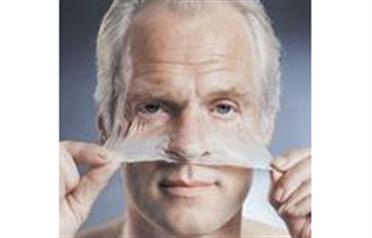
The mythical Fountain of Youth might be a figment of our fabled heroes' imaginations, but for thousands of years, humankind has had an unbounded fascination with youth and staying young. If it was wizards and magi who concocted potions for believers in days of yore, today, are a fraternity of medical practitioners propagating what they claim is the closest we can get to the elixir of life.
And the industry promoting it is now worth billions of dollars. The American Academy of Anti-Ageing Medicine (A4M) says the worldwide anti-ageing marketplace was worth $88.92 billion (Dh326.61bn) in 2007 with a projected growth of $96.89bn by 2008 and an estimated $115.5bn by 2010.
A medical society dedicated to the advancement of technology to detect, prevent, and treat aging related disease, the A4M, which already organises regular conventions in cities such as Las Vegas, Singapore, Tokyo and Mumbai, is all set to debut in Dubai later this year.
More than 70 medical experts from around the world will gather at the Dubai Congress on Anti-Ageing and Aesthetic Medicine (DCAAAM) in November. The event will be an opportunity for local healthcare professionals to learn about the latest research in early detection, prevention, treatment and reversal of age-related diseases and the latest techniques on cosmetic surgery and aesthetics, say organisers.
According to Dr Robert Goldman, the co-founder of the A4M, the event is just the beginning of what his organisation plans to bring to the region.
"The anti-ageing industry is the fastest growing new medical speciality today and we are one of the fastest growing medical societies in the world with more than 20,000 members in 100 countries," he says. "We pick the best from all medical specialities from internal medicine to dermatology and plastic surgery. We take the latest developments and integrate them.
"Dubai is aggressively seeking out new technologies and with all the exciting things being done here, it is the perfect place to build a strong annual conference."
To reiterate his organisation's seriousness in pushing the cause here, the A4M recently set up the Arabian Academy of Anti-Ageing Medicine (Arabian A4M).
"The market for anti-ageing products in the Middle East is projected to reach $4.77bn in 2008 and rise to $5.58bn by 2010," says Dr Goldman, and pushing these numbers are increased demands in premium facial products.
The A4M however, does not endorse or promote the consumer industry, clarifies Dr Goldman.
"We are an academic society. Doctors are not allowed to speak about any commercial products in any of the lectures," he says, adding that all conferences have an expo area that exhibits the latest anti-ageing products and innovations. "That is a separate industry we cannot control. Our business is to educate doctors. They can educate their patients. So it is up to people to decide."
Dr Ali Mohammed, the chairman of the Arabian A4M, agrees. "Who is not going to be excited about looking good and staying young?" he asks. "One of the purposes of these conventions is to educate the consumer so people will be able to fool them less."
From nanotechnology – where anti-wrinkle creams are absorbed deeper into the skin than traditional treatments because of the far smaller size of their particles – and stem cell enhancers that promises to rebuild and renew cells to keep organs healthy, to the use of growth hormones for enhancing muscle growth and reducing fat, there are a host of new technologies and less invasive means to stay younger, he adds.
"We are on the crest of a wave," he says. "We are moving from symptomatic treatment to a more integrated approach. From aesthetics to general medicine and lifestyle, the anti-ageing industry has a much broader definition and the future is nothing compared to now."
But not everyone in the medical fraternity shares the anti-ageing specialists' enthusiasm. The Royal Society and the Food and Drug Administration (FDA) in the US for instance has asked for a more comprehensive research regarding the use of nanotechnology in cosmetics. Minute particles, they warn, could have dangerous implications if they enter cells in the human body or leach into the bloodstream.
Last January, Hollywood star Sylvester Stallone, 61, admitted to using human growth hormone (HGH) to prepare for his physically demanding roles in Rocky Balboa and Rambo, and endorsed them, saying they "increase your quality of life". But a report by US-based medical journal Annals of Internal Medicine warned recently that the use of HGH as an anti-ageing therapy could possibly have side effects and that regular users are putting their health in jeopardy. Others say these new trends are based on wispy science.
A4M's Dr Goldman dismisses the critics. "When you are pioneer and ahead of the crowd, you are ridiculed. These are comments made by those who are not really up on what is truly going on in the world of medicine," he says. "We have many conventionally trained doctors and some of the best in the world in our industry and our detractors are just competitive and jealous of the rapid growth the industry is having."
Dr Jyothish George, the specialist dermatologist and medical director for the Jumeirah Prime Medical Centre in Dubai, says while he endorses the anti-aging industry and its importance, consumers should observe caution and not be blinded by promotional campaigns.
"It's always a good idea for anyone who has decided to do something to take an opinion from an experienced cosmetologist or a dermatologist rather than just going with advertisement," he says. "There are a lot of grey areas in the anti-ageing industry and people should be careful when using certain products, especially if there is no definite scientific proof."
Dr Goldman says the industry will continue to grow in leaps and bounds as awareness increases. "You can't change your chronological age but you can adjust your physiology," he says. "This is an industry that can only grow. It is like a billion-tonne elephant going down a hill."