Chef Gabriela Chamorro: 'If I have to choose 1,000 times where I want to live, that's going to be Dubai'
She arrived in Dubai with $200 and a childhood dream. The ‘Dubai-It’ story of the Girl and the Goose, where Chef Chamorro is using her grandmother’s recipes and traditions to introduce Nicaraguan cuisine to a wider world
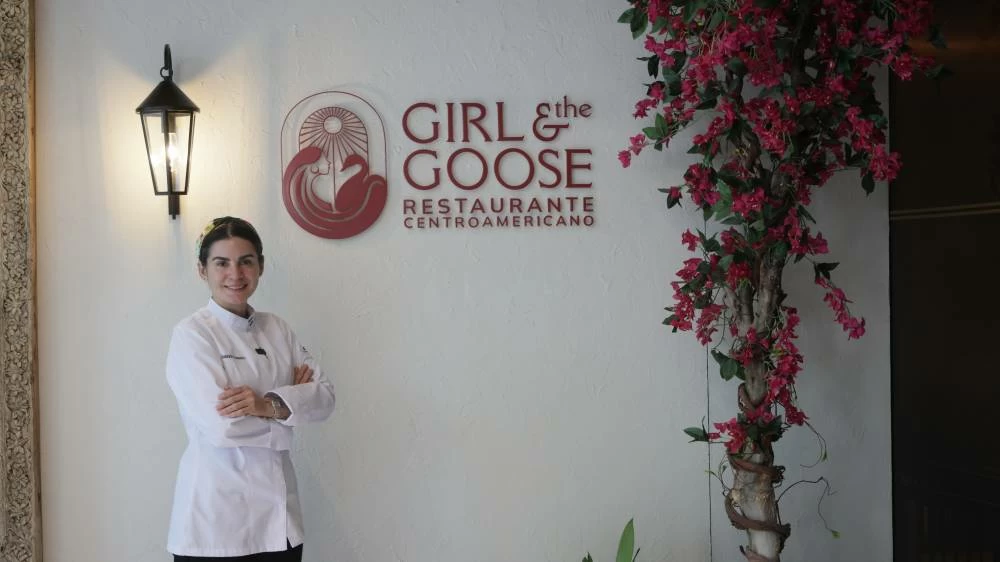
Dubai, UAE: She walked in, right on time, framed by the colonial interiors of her restaurant. A nervous energy bounced off her. It felt like a Frida Kahlo painting on the move.
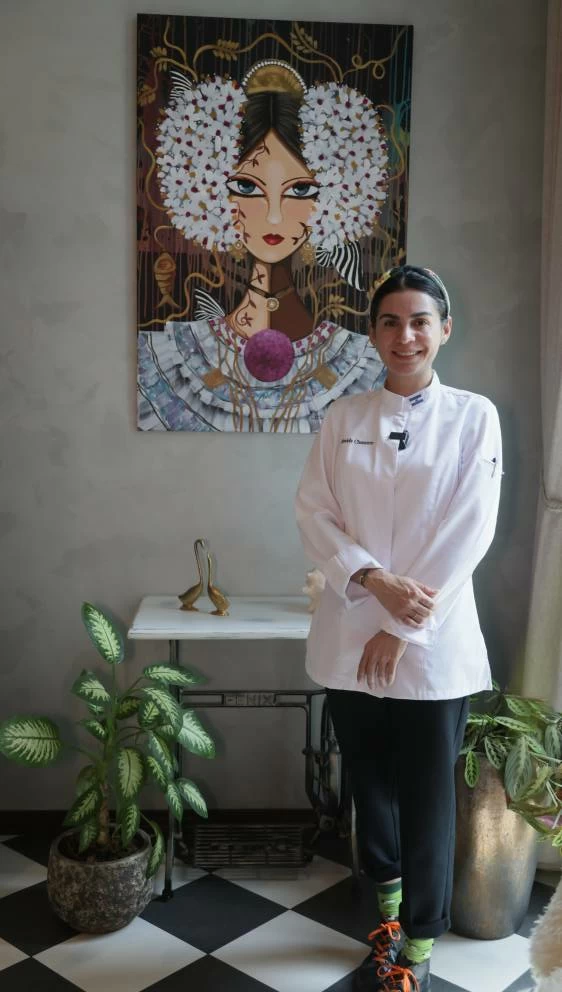
A firelight shone from within her — a steel tempered by years of control beneath her beaming smile, quirky socks, hiking boots, and traditional floral hair grip.
The fiery Latina who learned to cook on the hip of her grandmother Teresita; who spent years chasing dreams so her father would “look”; the daughter of a revolutionary mother who knows in her bones that the kindness of strangers sometimes defines the paths we take in life.
Chef Gabriela Chamorro is home. “Dubai is home,” she says with the look of a person who has finally found safe harbour. “If I have to choose 1,000 times where I want to live, that's going to be Dubai.”
Nicaraguan by birth, she wears her Central American identity with pride. A viral sensation for her culinary skill in bringing her region’s cuisine to Dubai and the world, Emirates 24/7 was at the Girl and the Goose to understand what fires this 41-year-old to place Nicaragua on the world food map. And why her journey is almost a prototype for Dubai-It.
The verb ‘Dubai-it’ is officially defined as achieving something extraordinary with excellence in record time, which is symbolic of the Emirate.
“Food has always been an important part of my life, and for that, I have to take you back to Nicaragua, where I grew up in the 1980s during the revolution. My mum had to join the army … to bring money home and also because she was part of that cause. In those complex circumstances, it was my grandmother who raised me until I was 8 years old. She was a cook herself, hired to work in the army’s kitchen, at a hospital, or for people with money. She would take me with her, and for me, seeing her cook was an expression of love. I just wanted to be like her. I remember my first time cooking rice with her when I was 6 years old. Those are the first emotional memories I have with food, and it’s all I ever wanted to do.”
Her mother became a revolutionary in her late teens and met Chef Chamorro’s father in the army. A much older, senior officer. They never had a traditional marriage. As the revolution continued, times were tough at home, with days when there was just some bread and milk to eat. But that didn’t deter the Latin spirit.
Much later, when she was 15 years old, Chamorro established contact with her father, who paid for her private school education for a while at the behest of her grandfather. But by the time she reached university, she was back to funding her own life. Her mother wanted her to have a good education, so she had to say she knew flamenco to be granted a cultural scholarship to a private university. There she studied International Affairs and Diplomacy. Next pit stop — a job and perhaps discover the world.
Dreams take flight
“I love being Nicaraguan; it’s something I will never stop being — it’s what has given a story to what I do. But early on, I felt there was something else waiting for me outside, something calling me to the Middle East. I was working for American Airlines in the legal and agent department, and I took a short holiday to Argentina. I was in a city called Córdoba. Next to the hotel where I was staying, I saw this banner, along with this beautiful girl with red lipstick and a red hat. I was like, ‘It’s so beautiful, what is that?’ So I entered the room, and it was an Emirates open day; it was the first time I had heard about Emirates and about Dubai. I was like, ‘Oh my Lord, what is this? I want this!’”
She got hired by Emirates as cabin crew. This was 2008 and Chef Chamorro was 24 years old.
“It doesn't matter what you want in life, your lines are already written by God. I could have taken so many different paths, but I never knew that by keeping this passion of wanting to be a chef, working for an airline, and moving to Dubai, I would actually flourish and have the opportunity to follow my childhood dream. Humbly, I ask: how many people can actually say that they're living their childhood dream?”
A dream fired by her farmer grandmother. Teresita doesn’t know how to read and write but is a living history of Central American cuisine, its ingredients and ancient cooking techniques — a repository of knowledge and Chef Chamorro’s “first culinary school”. She was cooking the fresh produce she grew and the rest was locally sourced.
“If I have to go back to one of those memories of cooking with her, it was making nacatamal. It’s a corn-based dish, made after the corn is exposed to limestone, then formed into corn dough or masa. I can close my eyes and smell the limestone, feel the humidity in the air of the corn macerating until the next morning, when you actually have to wash it and start grinding it.”
The process is called nixtamalisation, which involves cooking and soaking corn in an alkaline solution to soften it and make it into a workable dough.
“The dough is filled with rice, beef, and potato, wrapped in a banana leaf, and then boiled for hours. That was one of the things I used to cook with her. She taught me how essential corn was in our culture. My grandmother is 100% traditional, from making nacatamal to tortillas, baho [a slow-steamed combination of beef brisket, green plantains, sweet ripe plantains, and yuca or cassava], indio viejo [a thick, savoury stew made from shredded beef, melted corn masa, sour orange juice, onions, garlic, and mint]… all those in the most traditional way.”
Nicaragua has an extremely interesting food map. Geographically and culturally, the country is split into two culinary zones: the Pacific, which is based on corn, avocados, tomatoes, red beans, squash, and meat, along with a Central part that is more coffee plantations, mountains, and lakes; and the Atlantic or Caribbean coast, defined by coconut, seafood, and African roots.
“The terrain, the weather … everything changes,” explains Chef Chamorro. She grew up in the Pacific part of the country.
“This is the ancient technique of how the indigenous people were cooking it. It gives a different flavour profile, and we still use it in the kitchen to cook in that same way. At the end of the day, my mission is to put Central American food on the culinary map, and I am able to do that because she gave me that knowledge.”
Each of these more-than-500-year-old techniques has found its way into the Girl and the Goose kitchen. It’s a conversation of indigenous human history on a plate. But for Chef Chamorro, evolution is key to a cuisine staying relevant. So, she adapts.
“Our food is not very spicy, it is acidic, mild, and tropical. We are obsessed with plantains; you are going to see them in everything from chips to purée. I also want to honour root vegetables that nobody is talking about, like yuca or cassava, which is widely used on the Caribbean coast and a true backbone of Central American cuisine.”
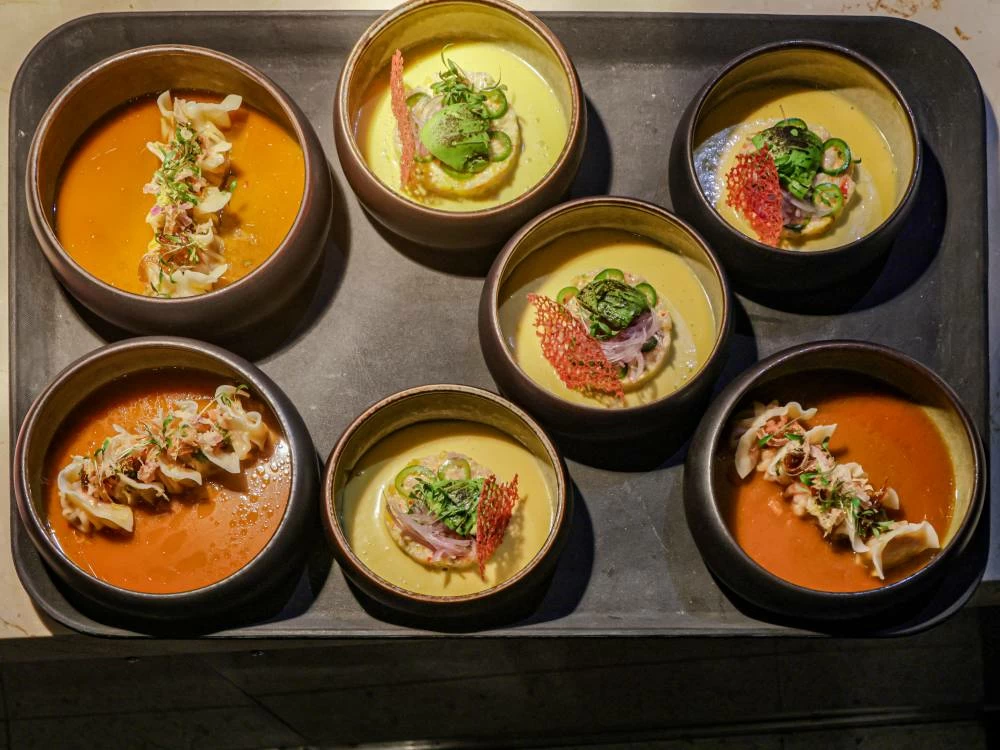
She took the traditional cassava and used that to create gnocchi served with a delicate and rich lobster bisque, and burnt sage. It is her favourite dish on the entire menu and guests have warned that they will not return if it is ever taken away.
But this incredible success, she believes, is only possible because it is Dubai.
“Where the impossible is possible, every day.”
“I think Dubai has been the catalyst, the foundation for placing Nicaraguan food onto the global culinary map. It was here that doors opened, from coming to work as cabin crew, to launching the supper club, to the opportunity to run a business where you feel safe. It’s very important to feel safe as a business owner; here, everything is structured, everything is in its place, and that gives you a sense of calm and reassurance. The community in Dubai, the expats, Emiratis, people from all walks of life, has been so open and supportive in coming to try the food.
“Dubai has given us a voice. It has given me the opportunity to amplify this mission so that more people learn about Nicaragua and the region I come from. It is only in a place like this that something like this is possible. Dubai gives you the opportunity to reinvent yourself; you choose how.
“I grew up very humbly and moved to Dubai with just $200 and a contract with Emirates. The first true symbol of hospitality was when I arrived at my apartment and found a basket left by the airline, filled with dry food — rice, pasta, long-life milk, and tuna. For someone who knows what it is to be hungry, as a child in the 1980s, there were times when you might only get one piece of bread and one litre of milk, so seeing the basket, knowing I only had $200, meant the world to me. It was everything. That is one of the moments I am most grateful for, and it showed me what it truly means to have gratitude toward the place that welcomed me.”
As she took to the skies and discovered new places, her childhood dream grew. She used the opportunity Emirates gave her to travel, to discover the “hawker food culture” of South East Asia. The breaks were used to go to places like Thailand and Vietnam, where she would spend time learning with the street cooks. “I would prep during the day and cook at night, doing that for four to five days on my holiday. That was my second culinary school.
“There are so many other proper chefs out there carrying out traditional cooking, generation after generation, with knowledge that was passed down to them. They are amazing, and we use all those same techniques here at the restaurant now.”
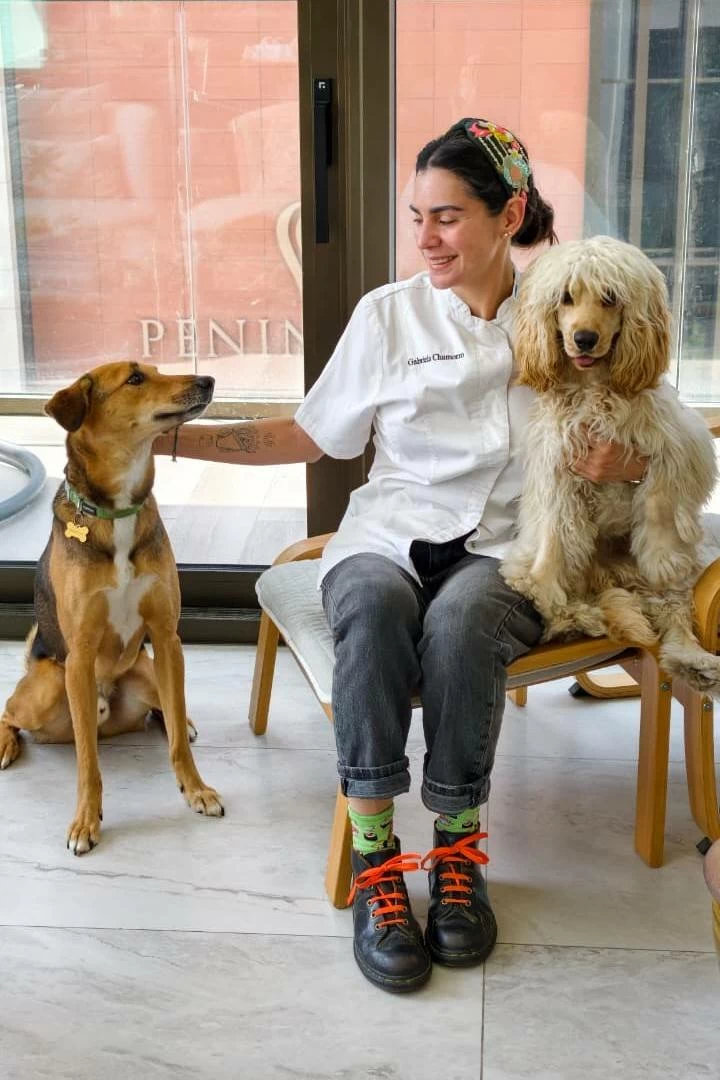
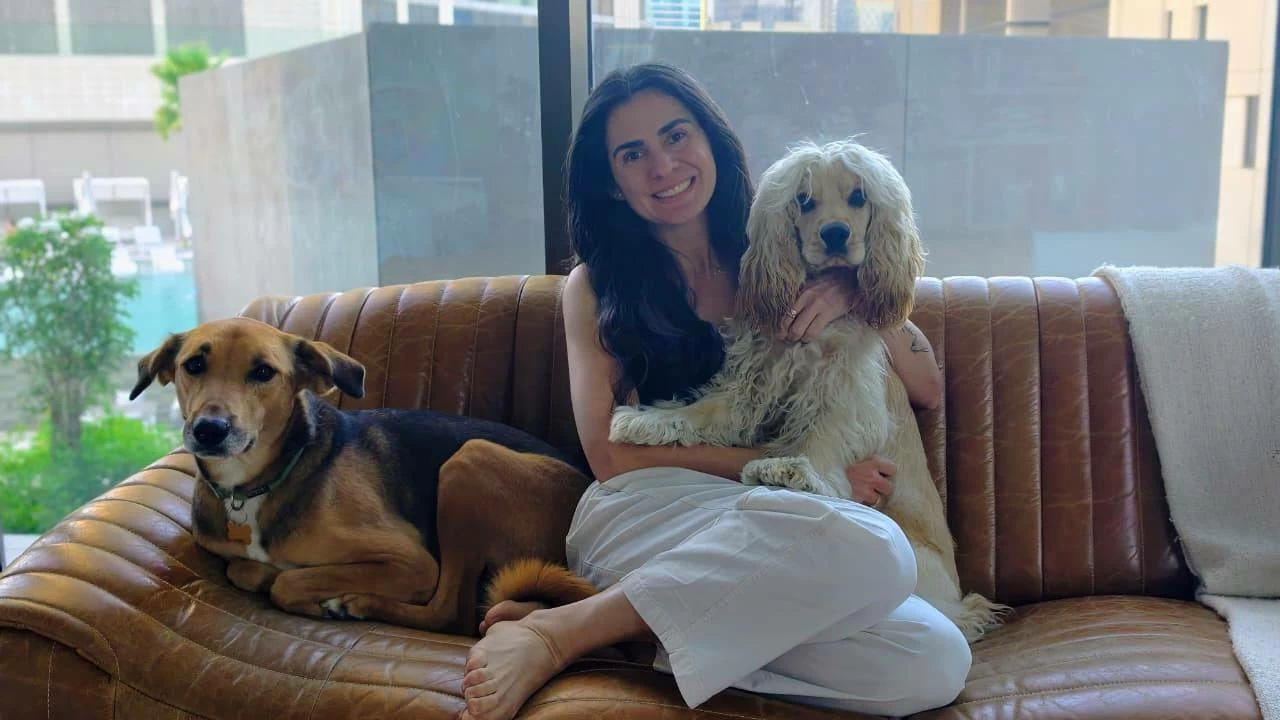
Along the way, while she fired her true passion, Chef Chamorro fell in love. She met Austrian cybersecurity expert Heimo Grasser; they’ve been married since 2018 and have two adopted dogs, Strotie and Moxy.
“I think Dubai is a place that dreams big and allows you to dream with it. It is also a place that rewards hard work; nothing comes easy. People might think you come here and they just throw money at you, but it’s not like that. If you work hard, stay patient and consistent, and remain kind and generous, you are going to achieve a lot of things. My husband and I often have this conversation. He’s from Austria, a place that is very open, European… I come from Nicaragua, a country that has faced so many struggles. Yet when I look at what we do, it would have never worked in a place like Austria or Nicaragua.
“It worked in Dubai because it is a city with a high level of tolerance, immense curiosity, and a deep respect for innovation. Somehow, within that innovation, authenticity also holds a very special place, and I am living proof of that.
“It makes the impossible possible. You can look at my journey: I grew up very humbly, and there were days when we didn't have food to eat while I was living with my grandmother, though my mother always did her absolute best. I moved to Dubai with very tricky English, $200 in my pocket, and a new city 14,000 miles away from my home country, with no real notion of what I wanted to do or who I was. But it was Dubai that allowed me to reinvent and find myself, and discover that passion.
“I didn't just wake up one day and have someone say, ‘Here, go run a restaurant.’ It was my husband who supported and pushed me, along with my friend Jill, who encouraged me to start hosting the supper club [in 2019].
“That’s another thing Dubai has, this openness and tolerance. I started hosting from home simply with the idea of introducing people to a new cuisine. Dubai is the perfect place for that. Every chef and every individual who comes here puts their own DNA into the culinary ecosystem, and that is what makes Dubai so special, so cosmopolitan.”
She ended up hosting 5000 people from her apartment in JBR, as part of her supper club, over five years, while keeping a full calendar of 120 flight hours a month as Emirates cabin crew. It was a grinding schedule, but for Chef Chamorro, it was living her lifelong passion. Nothing was too much.
“It was about: how can I take the humble food that I grew up with and elevate it, and make it in a way that people in Dubai will be willing and open to explore? That was the supper club, food as a medium to connect and create a community.”
There were a lot of challenges, such as last-minute cancellations and no-shows, but through it all she pushed on, supported by her biggest cheerleader, her husband.
“I know people, what they see is me, you know, on the face, and the one who represents and the one who is on the magazine, but behind me is my husband. My husband is my backbone, my everything, my greatest cheerleader, but also my critic. Not because he doesn't love me; he knows what is my potential and where I can get to.”
A chef’s toque
After the COVID-19 pandemic, Emirates gave an unpaid leave option, which she took for a year and a half. She wanted to study, experience culinary school to be able to scale up the supper club. Chef Chamorro quit Emirates, took her end-of-service benefits, and moved to Barcelona with her husband for five months. There, at a culinary institute, she learnt about cooking and food that helps gut health and overall wellbeing. This was her “third school”.
“I took all that knowledge and applied it to the way we cook here [Girl and the Goose]… there’s no excessive use of butter, there’s coconut cream, avocado, Palestinian olive oil.”
After Barcelona, when she returned to Dubai, word got around and she started getting approached by restaurants and hotels to do takeovers. The first one was at Boca, which gave her the confidence that she could scale from a 10-seat dinner to 40 covers. It was as part of this journey that she and her husband met their business partners, Rosy Hospitality, at ‘a tea omakase’. Founded by the husband-and-wife duo Ziad and Rowan Kamel, the hospitality group focuses on creating premium home-grown restaurant brands.
Girl and the Goose restaurant opened in March last year. It is located in Anantara Downtown Dubai Hotel in Business Bay.
“The idea of the restaurant, it was always coming from my husband and myself. We never tried to replicate the supper club because it has a very unique ambience. We wanted to build upon these things that made it special… the people, the food, the atmosphere, those were the things that we can translate. I wanted to take people back to one of the colonial houses where I grew up, so when you are in the restaurant, you're going to be in a colonial house overlooking the inner courtyard.”
Life has come full circle for Chef Chamorro, who named her supper club and restaurant after a goose that chased her in a dream. She learnt that they are resilient, disciplined creatures who travel far, just like her, and in Egyptian mythology birthed the sun every day to spread hope.
Is the journey done?
Right now, she says, her goal is: “To make this work. We are healthy, but we must be better. And I think Dubai is a place that allows you to grow at your pace, while you discover other things.”
----
Anupa Kurian is a Dubai-based senior editor and writer with nearly 28 years in journalism. She has been a food editor. Anupa writes across gastronomy, culture, health, environment and the people who make a city what it is, drawn to stories that reveal themselves in the details.