Australia set to toughen privacy laws
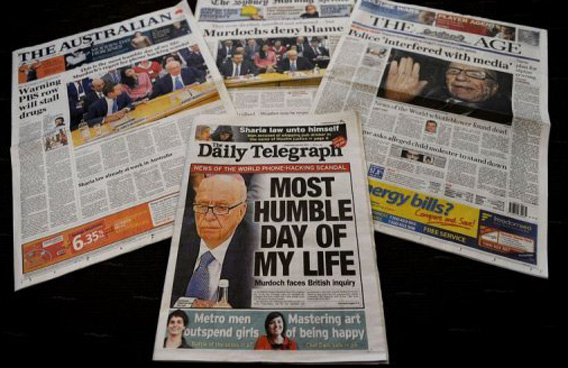
Australia Thursday moved to introduce a legal right to privacy after the phone-hacking scandal in Britain, paving the way for people to sue media organisations for serious breaches.
Laws are already in place to deal with criminal offences related to privacy abuses but there is no statutory right to sue.
Home Affairs Minister Brendan O'Connor said he was acting now after the News of the World furore heightened concerns.
"Right now there is no general right to privacy in Australia, and that means there's no certainty for anyone wanting to sue for an invasion of their privacy," said O'Connor, whose government is in a running battle with some Murdoch-owned publications.
"The News of the World scandal and other recent mass breaches of privacy, both at home and abroad, have put the spotlight on whether there should be such a right."
Rupert Murdoch was grilled by British MPs this week over the outcry that saw him close British tabloid News of the World and dump his bid for satellite broadcaster BSkyB over the hacking of phones.
The story has been front-page news in Australia and O'Connor said Canberra would seek the views of the public immediately on introducing a right to privacy.
"This government strongly believes in the principle of freedom of expression and also the right to privacy. Any changes to our laws will have to strike a balance between the two ideals," he said.
"Privacy is emerging as a defining issue of the modern era, especially as new technology provides more opportunities for communication, but also new challenges to privacy."
The move comes a day after Prime Minister Julia Gillard warned Murdoch's Australian arm it faced some "hard questions" as calls intensify for a media inquiry following the explosive hacking crisis.
It followed senior ministers lashing out at Sydney's Daily Telegraph newspaper, accusing the Murdoch-owned daily of being intent on bringing down the Labor-led minority coalition government.
Murdoch controls about two-thirds of Australia's regional and metropolitan newspapers, has a stake in broadcasters Sky News and Fox Sports, and is angling to run the Australia Network, the international public TV channel.
In a scathing editorial, the mogul's flagship newspaper here, The Australian, hit back Thursday, accusing the government of getting caught up "in the feeding frenzy against News Corporation and our proprietor".
"The creeping opportunism of this government and its coalition partners, the Greens, in trying to use the cover of the News of the World scandal to put pressure on journalists in Australia is troubling," it said.
"Brendan O'Connor's ambit claim for a statutory right of privacy makes an extraordinary leap from the British phone-hacking scandal to Australia, where such practices are unknown in journalism and already illegal."
Malcolm Turnbull, the conservative opposition's communications spokesman, cautioned the government against linking its push for a statutory right to privacy with the phone-hacking scandal.
"We really do need to make sure that any discussion doesn't become a sort of antipodean re-run of the News of the World inquiries in the UK," he told ABC radio.
"If we're going to look at privacy, we should look right across all media and have a honest debate about how much privacy we are entitled to. The debate should also consider the media's right of free speech."