Abu Dhabi to need less construction labour
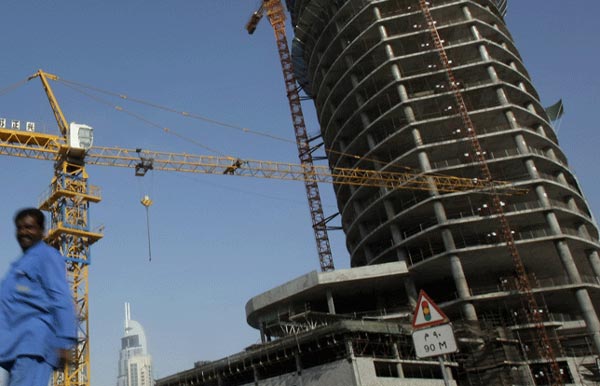
Abu Dhabi emirate will require fewer workers for its construction sector in the final years of its 2008-2012 development plan as such activity gives way to other sectors set as priority, according to a government report.
The decline in labour needs for that sector will be offset by growth in 10 other fields, dubbed “the focus sectors”, which are expected to create nearly 40,000 jobs for nationals, the Abu Dhabi Department of Economic Development (DED) said in a new study as part of its 2010 economic report.
The study said the “human capital” is crucial to the success of the five-year plan in terms of workforce size, capabilities and potential.
“To provide the adequate labor force, policy makers focus on three issues: improving productivity, achieving higher rates of participation of UAE nationals and the rapid population growth,” it said.
“Under the current levels of productivity, economic growth expected in the five-year plan requires more than 600,000 additional workers during the period 2008-2012. The building and construction sector needs nearly half of them.”
But the study projected a large decline in demand for construction workers in the last two years of the development scheme on the grounds building and contracting activity would pave the way for growth in the focus sectors.
“The construction sector is mainly associated with productivity upgrading, so any improvement in productivity in the short term, would be related to the impacts of growth in the 10 focus sectors and anticipated development in the areas of training and educational programs in Abu Dhabi,” it said.
“The significant growth in focus sectors is expected to generate 40,000 new jobs during 2008-2012, with more new opportunities after 2012.”
The study said Abu Dhabi’s government gives priority to facilitating the process of preparing national citizens and raising their participation in the labor force.
It said key sectors that drive economic growth would benefit from the many qualified staff of the already working national citizens.
“However, the economic activities in the focus sectors will require relatively highly skilled levels, as compared to the current requirements of the economy. More than half of the jobs in the focus sectors’ high-growth activities need skilled labor, compared to the 2005 base figure of 40 per cent,” it said.
“To raise the proportion of the expected participation of UAE nationals in general, and their participation in focus sectors in particular, the participation of female nationals is essential. The low participation of Emirati women could be an important factor behind the decline in the overall ratio for the participation of the nationals in the labor force in the focus sectors.”
The report stressed that addressing female participation in the labor force, remains a main challenge for the industrial sectors, such as basic industries, manufacturing industries, petrochemicals, plastic products, and civil aviation since the proportion of female workers in these fields has remained low.
“In addition to increasing private sector participation and promotion of SMEs, the economic vision is clearly designed to achieve economic growth, which supports the improvement of productivity, thereby enhancing competitiveness and sustainability of the Abu Dhabi economy,” the report said.
“The analysis of the time period for 2008-2012 expects a decrease in the productivity of the aggregate economy. Productivity per employee will go down from $96,000 in 2008, to $86,000 in 2012. However, the growth strategy for the focus sectors emphasizes achieving relatively high productivity. It is therefore expected that the long-term impact on productivity will be positive, where sector activities increasingly focuses on promoting economic growth.”
The study said the increase in productivity at a later stage could come mainly from the activities of the main focus sectors.
In particular, the activities of information technology and telecommunications, petrochemicals and plastic products, basic metals, transport and logistics services, will lead to the improvement of productivity, at an estimated range between $170,000 and $250,000 per worker during the plan period, it added.
In an earlier study, DED estimated investments in the plan at nearly $130 billion and said this would enable Abu Dhabi to attain its economic targets.
By the end of the plan, the non-oil sector could become the dominant component of the emirate’s gross domestic product as it is projected to rise to nearly 53 per cent from around 40 per cent at the start of the five-year plan.
The report said high growth in the non-oil economy would allow the government to realize the targeted average growth of seven per cent in its overall GDP.
“The non-oil economy will be an important contributor to the overall growth of the economy of Abu Dhabi….similarly, it is expected to match the rates of contribution and achieve growth of 8-10 per cent over the set period of time. It would be supported also by an expected growth of 14-15 per cent by the 10 focus sectors of the Five-year Plan,” the report said.
“While overall growth may be affected significantly by oil revenue, the non-oil sector is expected to continue to contribute to the overall economic growth by an estimated rate of 4-5 per cent, if the oil sector revenues get stable….this will be reflected in that the ratio of non-oil sector to oil sector would be 53:47, compared to 40:60 in 2006; which is consistent with the objectives of the Vision.”