Monti to head new Italy government
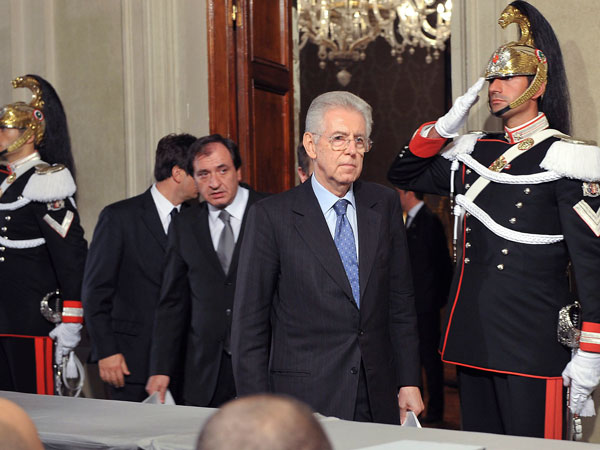
Italy's president appointed former European Commissioner Mario Monti on Sunday to head a new government charged with implementing urgent reforms to end a crisis that has endangered the whole euro zone.
After a frenetic weekend during which parliament passed the reforms and Prime Minister Silvio Berlusconi stepped down to the jeers of hostile crowds, President Giorgio Napolitano asked Monti to form a government, expected to be composed largely of technocrats.
The respected economist, made a life Senator last week, said he would work urgently to form a government and is likely to name around 12 ministers within days.
"I intend to fulfil this task with a great sense of responsibility in the service of our country. In a moment of particular difficulty for Italy, in a turbulent situation for Europe and the world, the country needs to meet the challenge," Monti said after his nomination.
"We owe it to our children to offer them a future with dignity and hope," he added.
A process that normally takes several days or weeks was completed over the weekend as Napolitano raced to restore market confidence, which collapsed disastrously last week.
After nominating Monti, the president said that Italy must make an extraordinary effort to overcome the crisis and to restore the trust of investors and European institutions.
Italy's borrowing costs soared to unmanageable levels last week, threatening a Europe-wide financial meltdown.
Markets calmed down at the end of the week once it became clear that Berlusconi would go and Monti would take his place. Rome will watch on Monday to see if the formal nomination will continue the positive effect on markets.
If Monti manages to secure enough backing in parliament, he will implement reforms agreed by Berlusconi with euro zone leaders to cut Italy's massive debt and revive a chronically stagnant economy.
There are clear signs that he will face problems, with Angelino Alfano, secretary of Berlusconi's PDL party, saying there was "huge opposition" in its ranks to a Monti government.
Alfano said after meeting Napolitano on Sunday afternoon, however, that the party, which has been badly split by the crisis, would support Monti.
Sunday newspapers said Berlusconi's departure marked the end of an era and spoke of the irony of a media magnate famed for his skill at communicating with the public being seen off by jeering crowds.
Monti has received the backing of the main opposition groups and the PDL and should have strong support in parliament, at least at first.
But he could face strong opposition from both left and right to some of the tough austerity measures he must implement to satisfy markets and euro zone leaders.
The next elections are not due until 2013 but there are widespread predictions Monti will leave before then, making way for polls once he has passed the reforms promised to Europe.
Italy came close to a full-scale financial emergency last week after yields on 10-year bonds soared over 7.6 percent, levels which forced Ireland, Portugal and Greece to seek an international bailout.