The greatest showcase on earth begins
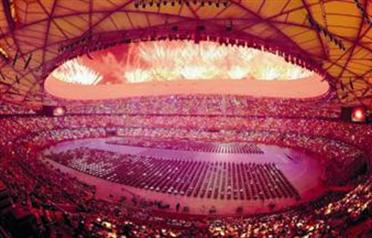
Once-reclusive China commandeered the world stage yesterday, celebrating its first-time role as Olympic host with a stunning display of pageantry and pyrotechnics to open a Summer Games unrivalled for its mix of problems and promise.
Now ascendent as a global power, China welcomed scores of world leaders to an opening ceremony watched by 91,000 people at the eye-catching National Stadium and a potential audience of four billion worldwide.
To the beat of sparkling explosions, the crowd counted down the final seconds before the show began.
A sea of drummers – 2,008 in all – pounded out rhythms with their hands, then acrobats on wires gently wafted down into the stadium as rockets shot up into the night sky from its rim.
Already an economic juggernaut, China is given a good chance of overtaking the US atop the gold-medal standings with its legions of athletes trained intensely since childhood.
One dramatic showdown will be in women's gymnastics, where the US and Chinese teams are co-favourites; in the pool, Chinese divers and US swimmers are expected to dominate.
The run-up to the games had epic story lines – China investing $40 billion (Dh146.8bn) to build the needed infrastructure, reeling from a catastrophic earthquake in Sichuan province in May, struggling right up to Friday to diminish Beijing's stubborn smog.
China's detentions of political activists, its crackdown on uprisings in Tibet and its economic ties to Sudan – home of the war-torn Darfur region – fuelled relentless criticisms from human rights groups and calls for an Olympic boycott.
Second-guessed for awarding the games to Beijing, the International Olympic Committee stood firmly by its decision. It was time, the committee said, to bring the games to the homeland of 1.3bn people, a fifth of humanity. The games, said IOC President Jacques Rogge, "are a chance for the rest of the world to discover what China really is".
The story presented in Friday's ceremony sought to distill 5,000 years of Chinese history. Roughly 15,000 people were in the cast, all under the direction of Zhang Yimou, whose early films often ran afoul of government censors for their blunt portrayals of China's problems.
He produced some majestic and ethereal imagery – at one point a huge, translucent globe emerged from the stadium floor, and acrobats floated magically around it to the accompaniment of the game's theme song, "One World, One Dream".
The show steered clear of modern politics – there were no references to Chairman Mao and the class struggle, nor to the more recent conflicts and controversies.
A record 204 delegations were parading their athletes through the stadium – superstars such as basketball idols Kobe Bryant and Yao Ming, as well as plucky underdogs from Iraq, Afghanistan and other embattled lands.
The nations did not march in the traditional alphabetical order but in a sequence based on the number of strokes it takes to write their names in Chinese.
The exceptions were Greece, birthplace of the Olympics, which was given its traditional place at the start, and the Chinese team, which lined up last with Yao as its flag-bearer.
Abroad, human rights activists were less generous.
"The Chinese Government and the International Olympic Committee have wasted a historic opportunity to use the Beijing Games to make real progress on human rights in China," said Sophie Richardson of Human Rights Watch.