Top brands sprint for Olympic sponsorship
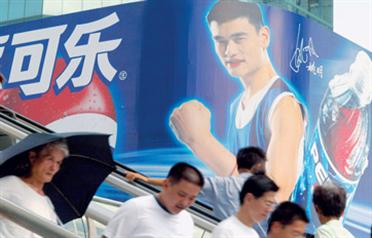
UAE businesses may have been subject to criticism for neglecting to sponsor the national Olympic team, but it could make perfect business sense in the long run.
While a lack of corporate investment in the team has been condemned, a leading China-based research group has intimated that Chinese Olympic fans do not necessarily associate specific brands with the Olympic Games.
Hydra Properties, an Abu Dhabi-based international developer, is the sole sponsor of the eight UAE candidates competing in Beijing this month, but an analyst from the research group does not expect their partnership to open up the lucrative Chinese market to the company.
"In terms of broad brand recognition it's extremely low in China because the average person is not going to be savvy enough to pay attention to a property developer based in the UAE," said the analyst, who requested anonymity due to his company's quote policy.
"Of course, there are going to be people in China who are aware of these things, but they will probably be people in the industry themselves, who already know the brand.
"So the issue is that companies are not getting too much feedback or pick-up from people in China and therefore don't see it as a sound economic investment," he added.
However, while Emirati businesses are reluctant to plough money into the country's bid for medals, some of the world's most influential multinationals are jostling to promote their brand on sport's greatest stage.
German sportswear company adidas – one of the 12 official partners of Beijing 2008 that have contributed $900m (Dh3.3 billion) collectively – have expended £50m (Dh357.6m) to own exclusive use of the Olympic logo on its clothing inside China and Hong Kong in a bid to usurp rivals Nike at the top of the Far Eastern market.
Adidas expects China to become its second largest revenue generator behind the United States within the next two years and has estimated the amount of stores in the country will increase from 4,000 to 6,300 by 2010.
"Our marketing campaign for China is the largest we have ever done in a single country," said Erica Kerner, director of the Beijing Olympic programme for adidas.
"We see this as a marketing platform that will help us to achieve market leadership in China this year." An analyst working in Shanghai agrees that global brands should benefit from Olympic involvement, but questions the value of extensive campaigns.
"I think the average consumer in China is going to be very aware of the multinational brands that have already put in a lot of work over here," he says. "But then the question from an Olympic sponsorship standpoint would be 'does it even matter?' By sponsoring teams or placing adverts for the Olympics are they really getting positive feedback?
"Based on interviews we've carried out, the suggestion is no. It doesn't really help much because Chinese consumers are not paying attention to who the sponsors are; they just make assumptions based on their preconceived notions of what the best brand is."
The theory rings true when applied to the battle between drink giants Coca-Cola and Pepsi. Coca-Cola are an official sponsor of the Games, having pumped in more than $100m through long-term deals with the International Olympic Committee, yet China Market Research Group have reported that 60 per cent of those interviewed in a survey last month thought Pepsi were licensed partners.
Coca-Cola has retaliated by inviting 10,000 guests to Beijing and erected the world's largest overhead LCD screen, initiatives designed to reinforce their position at the Games. The company is playing down the move. "Our people are really excited to be here," said Christina Lau, director of external affairs in Beijing. "We have selected employees who have demonstrated their passion and commitment to Coke and the Olympics."
Confusion surrounding Olympic affiliation will only heighten as the opening ceremony sparks into life this afternoon, with leading multinationals scrambling for success in the global battle for priceless market share.
Despite adidas spending big on sponsorship, Nike have signed a deal with hurdler Liu Xiang, gold medal winner at the last Olympics in Athens and hugely popular in China. It is a concerted move to detract attention from their main competitor and the American giant has a history of foul play away from the track.
In 1996, Nike set up billboards and established a "Nike Village" even though Reebok had paid $40m to be an official sponsor of the Games. Not to be outdone, Puma convinced Linford Christie, the British sprinter, to sport contact lenses embossed with their logo at a press conference on the eve of the 100m final in one of the most high-profile examples of ambush marketing.
The battle for supremacy is warranted, though. A study by R3, a media consultancy situated in Beijing, found that the "Olympic Effect" has caused the Chinese to spend $54.3bn this year, a 19 per cent increase on last year's outlay. According to the firm, 90 per cent of the population reportedly view the Olympics, and its associated companies, in a positive light.
Therefore, sponsors are quick to jump onto the Olympic bandwagon, displayed by their willingness to spend $3.2bn on promotions this year, more than half as much as they did in 2007. Coupled with the projected additional $1bn that Beijing organisers attract from local marketing, it is understandable that major players find the Games so alluring.
Beijing 2008 bares witness to one of the largest marketing and advertising campaigns in the 112-year history of the modern Olympics and big brands are racing to catch the new generation of Chinese consumers.
It is little wonder, in an arena as competitive and highly charged as at the Games itself, that UAE companies have been unwilling to lend their names to sponsoring the event.
Dr Sulaiman Al Fahim, CEO of Hydra Properties, says he only decided to sponsor the national team because it was "a kind of responsibility from a local company to my country and the athletes" and does not think it necessary for others to invest.
"I don't know why there is not interest in sponsoring the Olympic team", said the 31-year-old businessman. "Maybe it's because many companies like to sponsor other things. We have sponsored the Olympic Committee so whatever they want we will give to them as the exclusive sponsor. I think if they only have one, and it is good, then that is enough.
"I look at it as community support for people living in the UAE and think every company should try to sponsor some community project," added Al Fahim. "It's the intangible things that I'm looking for. I wasn't looking to put my brand on T-shirts." Perhaps Hydra contact lenses would be more effective.
Cost of hosting Beijing 2008
- About £20 billion (Dh143bn) on infrastructure, including the £250m Olympic Stadium ('Bird's Nest'). About 41, 875 tonnes of steel was used to give its lattice design. New subway lines, a light railway, an airport terminal, roads and sporting venues make up the rest of the cost.
- A 100,000-strong security force is stationed around the city and authorities have installed 300,000 surveillance cameras and deployed anti-aircraft missiles next to the Olympic Stadium. From 10,000 yuan to 500,000 yuan (Dh5,351 to Dh267,586) – five times the usual maximum amount – will be rewarded to those who give information on any "major security threat".
- About 1.5 million people have been relocated for the Olympics, according to the Geneva-based Centre for Housing Rights and Evictions. China have refuted the number, saying only 6,000 residents have been moved.
- According to figures released by the Beijing municipal tourism bureau last month, five-star hotels have an occupancy rate of just 77 per cent, while four-star hotels were lower at 44 per cent. Travel agency Ctrip said hotels had reduced their room rates to encourage visitors to stay with them.
- Based on past Olympics, organisers say Beijing would welcome 500,000 foreign and 1.1 million mainland tourists, generating 116 billion yuan.
- More than 400,000 volunteers have been recruited, one million cars taken off the road and 250 factories have been temporarily closed for the Games.