Avoid late Emirates ID renewal fines in the UAE: Check if you are eligible for exemption
From medical emergencies to travel abroad, several cases qualify for fine exemptions. Here’s a step-by-step guide to applying for a waiver on late Emirates ID renewal penalties
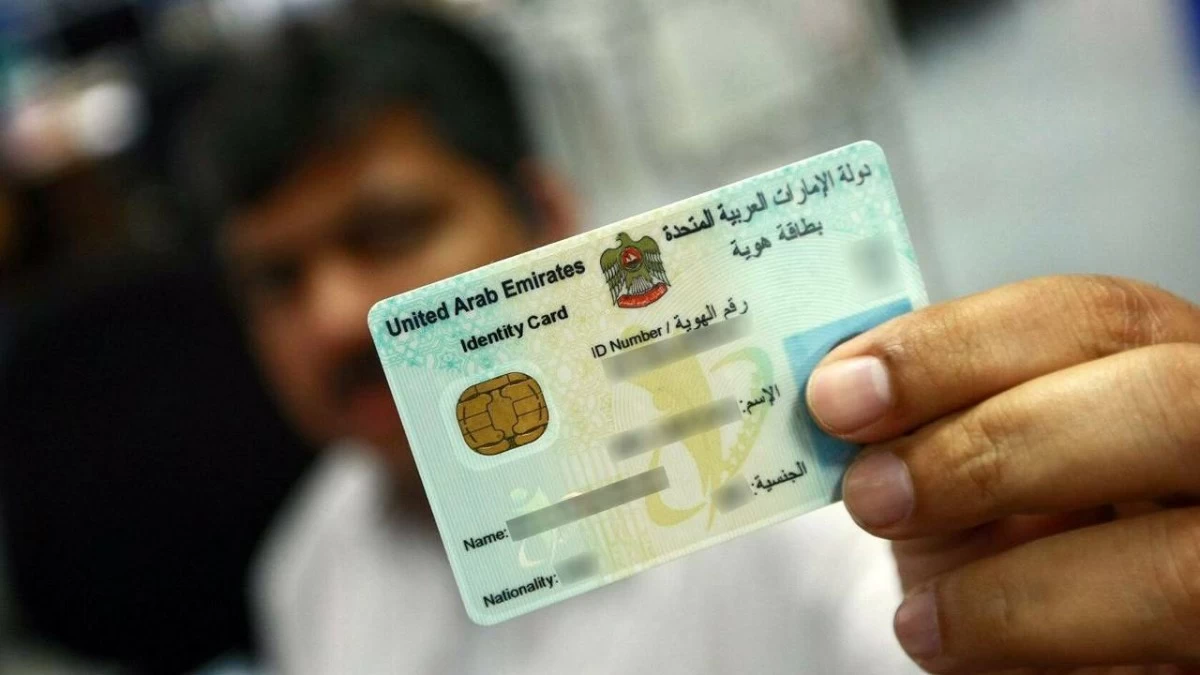
Dubai: A fine of Dh20 per day adds up – and that’s the penalty for delaying Emirates ID card renewal. But what if you could request the authorities for exemption from late fees?
The Federal Authority for Identity, Citizenship, Customs and Ports Security (ICP) has outlined specific categories of people who can apply to be excused from paying fines for late renewal of their Emirates ID card. Here’s what you need to know about the process.
When should I renew my Emirates ID card?
Emirates ID renewal is a mandatory process, and applies to UAE citizens, GCC nationals and expatriates whose IDs are about to expire, or have already expired. Timely renewal ensures you have uninterrupted residency status, and access to all services, such as government-related services, banking, healthcare and legal facilities in the country.
Renewal is directly linked to the validity of your residency status in the UAE. Citizens of the country must renew their Emirates ID every 5 to 10 years, GCC nationals every five years, while expatriate residents must renew every two years, in line with the duration of their residency visa.
What is the penalty for late renewal?
As per UAE law, the renewal process must be initiated within 30 days of expiry. Otherwise, you will garner daily fines of Dh20, up to a maximum of Dh1,000.
Eligibility criteria for exemption from fines for late Emirates ID renewal
According to the UAE Cabinet’s Decision No.25 for 2011, shared by the ICP, these categories of people qualify for exemptions from fines for late renewal:
- Total or partial disability cases or clinical pathology cases, if proved by a certificate issued by competent authorities in the UAE.
- Elderly people, above the age of 70, who are unable to visit registration centres in any part of the UAE, as determined by the Emirates Identity Authority (EID).
- UAE VIPs – the full list has been issued by the EID, and includes diplomatic staff or missions in consulates and embassies in the UAE.
- Any individual who has left the UAE and spent more than three months outside the UAE, or any resident whose residency has expired while outside the UAE and whose ID card has expired after departure. A fine, however, will be due in case the individual has not obtained an ID card or his/her ID card has expired before leaving the UAE. The fine will cover the period between the date of entry or ID card and the departure date.
- Any individual whose ID card has expired after being deported by an administrative order/decision or by a court verdict by the competent entities for the period that follows his/her departure. The fine, however, will be due, in case the individual has not obtained an ID card or his/her ID card has expired before leaving the UAE. The fine will cover the period starting from the date of entry or date of deportation. If deported before this decision has been released, the individual will be exempted from all delay fines due for non-issuance or non-renewal of the ID card.
- Any deceased individual or individual with a communicable disease, whether he/she has not been issued an ID card or his/her ID card has not been renewed for the period, starting from the date of death or the date at which the communicable disease has been confirmed. In case no ID card has originally been issued to the individual, a fine will be due for the period from the date of entry to the UAE to the date of issuance of the medical certificate confirming the communicable disease. The fine will also be due from the date the disease is proved to have disappeared from the individual, whether for the issuance or renewal of the ID card.
- Any individual who has not been issued an ID card for the period before or after he/she has obtained the UAE passport and before he/she has obtained a summary of civil status (Family book).
- Any delay caused by an error in attachments or by the EID or any of its employees or any of the typing centres assigned by the EID and resulting in a delay in ID card registration or renewal.
For unique cases or cases that have not reached a resolution, the EID’s deciding committee determines whether they deserve to incur fees or be exempted from them.
Clarification for deportees: Navandeep Matta, senior associate at Kochhar & Co. Legal Consultants in Dubai, clarified why deportees can incur fines and seek exemptions even when they are out of the UAE. He said: “A deportation order is not always permanent. Some deportation orders are time-bound (commonly two years or five years), and others can be lifted on application. When the former deportee later seeks to return to the UAE, whether on a new visit or residence visa, or even when a relative attempts to sponsor them, the legacy fine sits on their ICP record and can obstruct the new application until it is cleared or formally exempted.”
This holds true even if the deportee has no plans of returning to the UAE. Matta said: “Even where the cardholder never returns, the Emirates ID file remains open on the federal database and continues to show the accrued penalty. The exemption mechanism exists, in part, to allow the file to be formally closed without payment, so that the record correctly reflects the lawful reason for non-renewal.
Required documents for application
The documents required to apply for exemption of fees differs based on your specific exemption category. However, these are the general documents you will need, according to the ICP:
- Passport copy
- Entry permit or residence visa copy (for non-UAE citizens)
- Your contact information
- Official supporting evidence, such as:
A letter explaining your situation.
In case of expired residency: Flight tickets and travel-related documents proving you have been outside the UAE for more than three months.
In case of medical incapacitation: Official medical certificate issued by competent health authorities in the UAE.
For the elderly: Family book, passport or a birth certificate proving their age.
In legal or deportation cases: Receipts or official letters from competent courts or public prosecution.
For administrative errors: Prior application receipts or system error logs provided by the typing centre.
How to apply for exemption
The process for applying for exemption is simple and straightforward. You can do so through ICP’s Smart Services website, it’s UAEICP mobile app, or in-person at ICP Customer Happiness Centres around the UAE.
Follow these steps to apply on the ICP website:
- Visit ICP’s online portal at icp.gov.ae. Log in using your UAE PASS.
- Go to ‘Services’, and ‘Interactive Services’. Select ‘Request for Exemption from Delay Fees’.
- Select the category that applies to you – UAE citizen, resident or GCC country citizen.
- Review and update your personal details, including your address and contact information.
- Select the category for your exemptions (for example: medical reasons, being outside the UAE for more than six months, etc.).
- Attach documents: Upload all the supporting evidence for your case.
- Submit your application.
It takes 48 hours for your application to be processed, and you will receive a notification once a decision has been made.