3,997 federal road accidents in four years linked to four dangerous driving behaviours

An AI-generated traffic management system is helping shape congestion solutions in the UAE.

By Emirates247 Published: 2026-05-15T13:24:00+04:00 4 min read
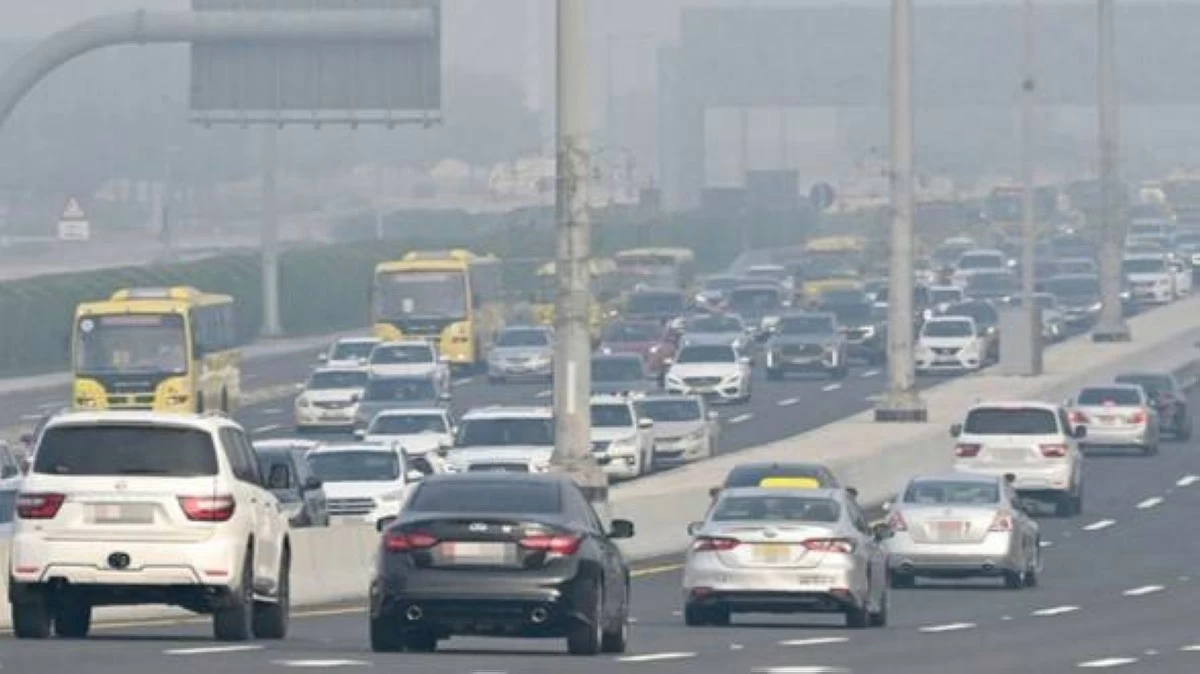
Despite the UAE ranking fifth globally in road quality, traffic congestion remains an ongoing challenge requiring coordination among relevant authorities.
File photo used for illustrative purposes only.
Despite the UAE ranking fifth globally in road quality, traffic congestion remains an ongoing challenge requiring coordination among relevant authorities. File photo used for illustrative purposes only.

By Amr Bayoumi, Emirates 24|7

A parliamentary report has revealed that 3,997 accidents were recorded on federal roads in the UAE over four years, causing damages exceeding AED 17 million, largely due to negative human behaviour.

The report also highlighted three UAE projects using smart technologies to improve traffic flow, including Dubai’s 'Guide Clear – Drive Data' platform, Abu Dhabi’s 'Green Light' project, and a traffic congestion prediction platform in Abu Dhabi, alongside 50 smart monitoring stations providing real-time road data.

The report on road safety and traffic flow, issued by the Constitutional, Legislative and Appeals, Complaints Committee of the Federal National Council, stated that despite the UAE ranking fifth globally in road quality, traffic congestion remains an ongoing challenge requiring coordination among relevant authorities.

According to data from the Ministry of Energy and Infrastructure, 3,997 accidents were recorded on federal roads between 2021 and 2024, resulting in damages exceeding AED 17 million.

Although the UAE maintains a relatively low road fatality rate of 1.8 deaths per 100,000 people, the report noted that these losses are still avoidable.

The report, whose recommendations were adopted by the FNC earlier this week, attributed most of the accidents to four forms of negative driving behaviour: sudden lane deviation, failure to maintain a safe distance, overspeeding and fatigue.  It added that most accidents stem from split-second decisions made by drivers while distracted, angry or exhausted.

The committee warned that even minor accidents can trigger severe traffic congestion, increasing stress levels among motorists and raising the likelihood of secondary accidents.

Some negative driving behaviours were also found to cause damage to road infrastructure.

The report argued that the persistence of congestion despite high-quality infrastructure proves that engineering solutions alone are no longer sufficient.

It called for a shift towards 'traffic behaviour engineering', which focuses not only on expanding road capacity, but also on improving driver behaviour to use roads more efficiently.

It also noted that traditional awareness campaigns focused purely on legal compliance may no longer be enough, stressing the need for coordination among all entities involved in road safety and traffic management to develop more effective behavioural awareness programmes.

AI-powered traffic solutions

The committee emphasised the importance of smart technologies in improving traffic flow.

Dubai’s Roads and Transport Authority’s 'Guide Clear – Drive Data' platform uses artificial intelligence and big data analytics to instantly analyse historical and live traffic patterns, road conditions and support decision-making.

The report noted that the platform reduced the time required to collect, analyse and prepare traffic reports from weeks to just three minutes.

In Abu Dhabi, the Integrated Transport Centre launched two initiatives with Google aimed at using AI to support sustainable transport.

The first initiative, the 'Green Light' project, analyses intersection data to improve traffic signal efficiency, reduce congestion and cut carbon emissions.

The second uses Google AI platforms to analyse Google Maps data, predict congestion and develop mitigation plans.

The centre also uses live accident and congestion data to speed up emergency response times.

The report further revealed a proposal discussed by the Emirates Society for Urban Planning involving a smart application that would reduce congestion on federal highways by dynamically changing the number of lanes during peak hours.

Under the proposal, lanes heading towards high-traffic destinations during rush hour could increase from three to four, while the opposite direction would temporarily reduce from three lanes to two.

Challenges identified

The committee identified several challenges, including: Difficulty in data sharing between relevant authorities, varying levels of technical readiness across some areas, the need to modernise older systems to integrate with new smart platforms and a need for more specialised training on smart systems and data analysis. The report said the government is addressing these issues through electronic integration, updated regulatory frameworks, development plans and strategic partnerships.

50 smart monitoring stations

The Ministry of Energy and Infrastructure confirmed that 50 smart traffic monitoring stations have already been distributed across the Northern Emirates, alongside cameras and control rooms.

These stations collect data on road conditions, vehicle numbers and types, average speeds and peak traffic times, enabling authorities to make data-driven decisions to improve traffic flow on federal roads.

The ministry added that the data is also used to identify accident hotspots and support enforcement of axle-weight regulations, while enabling data exchange between local and federal entities.

Future plans include introducing more AI tools, linking systems with Ministry of Interior operations rooms, expanding traffic lanes and increasing smart gate coverage.