Dubai Police convert weather challenges into rapid rescue operations
Lessons from 2024 storm drive faster response, new equipment, and stronger coordination in 2026
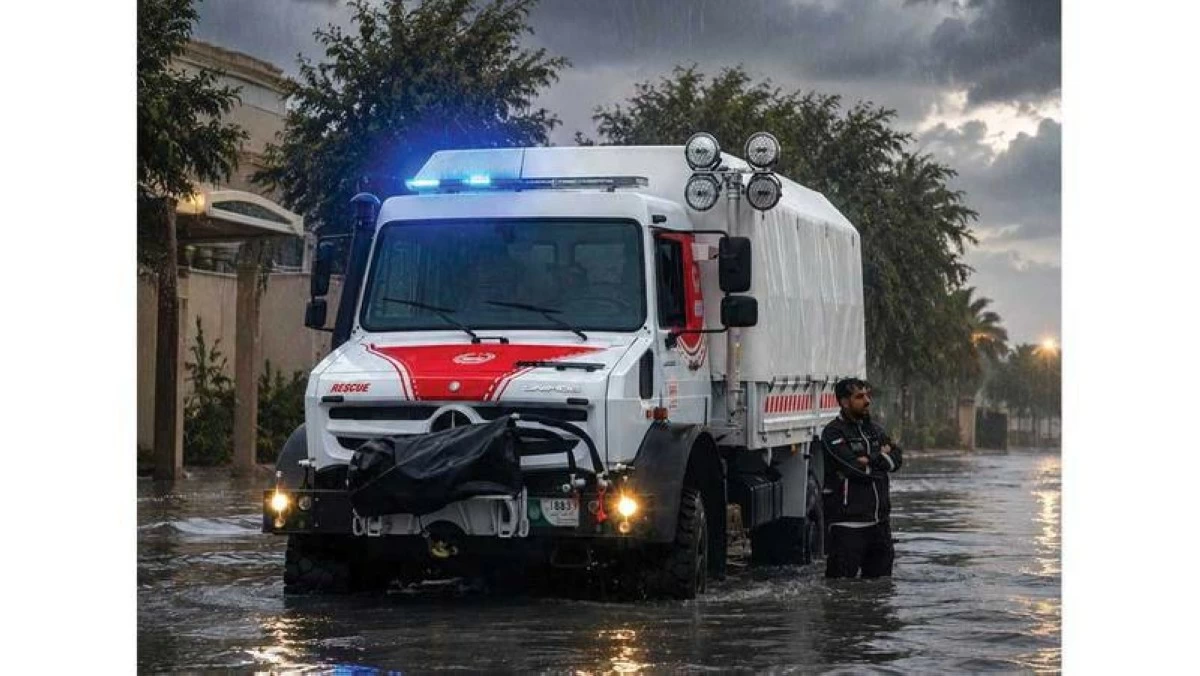
Dubai: When the country was hit by storms in 2024, rescue teams from the General Department of Transport and Rescue at Dubai Police faced exceptional challenges due to heavy rainfall, water accumulation, and a surge in emergency reports. Two years later, the response during the 2026 weather event showed a marked improvement, as lessons learned were transformed into a comprehensive proactive plan. This included updated mechanisms, the introduction of amphibious vehicles, expanded deployment points, and enhanced field readiness, contributing to faster response times and more efficient handling of emergencies.
Major General Rashid Khalifa bin Darwish Al Falasi, Director of the General Department of Transport and Rescue at Dubai Police, said that the response to the two weather systems differed significantly across all partners, including Dubai Police, the Roads and Transport Authority, and Dubai Municipality. He explained that specialized vehicles capable of navigating water depths of up to two meters were introduced, while existing equipment was modified to adapt to changing weather conditions.
He noted that despite these advancements, a key challenge remains: Some individuals continue to ignore official warnings and venture into valleys and water accumulation areas, complicating rescue operations. Teams handled complex cases, including evacuating people stranded on trees and poles, but all were successfully rescued.
Al Falasi said the 2024 experience marked a turning point in field operations, providing valuable lessons that improved planning and preparedness. “Following that experience, we developed specialized equipment for heavy rain conditions and distributed it across the emirate, while establishing additional and remote deployment points to ensure rapid access to incident locations,” he said. He added that Hatta received increased support due to its terrain and vulnerability to flooding.
The proactive plan focused on pre-deploying teams in areas expected to be affected, reducing response times and enabling faster interventions. Each team included an experienced officer connected directly to the operations room, ensuring swift decision-making. Dedicated duty officers were also assigned to each deployment point, along with a general duty officer overseeing operations.
Al Falasi highlighted the significant development of the operations room, which now includes personnel with extensive field experience. Their expertise supports real-time monitoring, analysis, and team direction, making the operations room a central component of the rescue system. It also enables direct coordination with partner entities, some of which have representatives present to accelerate decision-making.
He emphasized that success was the result of integrated efforts across multiple entities, including Dubai Municipality, the Roads and Transport Authority, ambulance services, police stations, and supporting organizations. All teams were trained in advance within coordinated frameworks to ensure smooth execution without overlap or delays.
At the same time, risky individual behavior continued to pose serious challenges. Some people entered valleys and flood-prone areas for sightseeing or recreation, while others traveled from unaffected areas to reach flood zones. Rescue teams dealt with critical incidents, including vehicles trapped in floodwaters, requiring careful site management before safe rescue operations could proceed.
He stressed the importance of public compliance with safety warnings, stating that while vehicles can be replaced, lives cannot.
Colonel Khalid Al Hammadi, Director of the Search and Rescue Department, said that a comprehensive program to modernize the rescue fleet was implemented in 2025 and 2026. This included the addition of 12 specialized vehicles designed for flood and rain conditions, with four more expected soon.
He explained that the new vehicles are capable of operating in water levels of 120 to 150 centimeters and are equipped with rubber boats and integrated rescue tools. Existing vehicles were also upgraded, raised, and fitted with specialized ventilation systems to handle difficult weather conditions.
Al Hammadi added that readiness levels improved through the strategic distribution of teams across 14 key locations, including increased coverage in Hatta and mountainous areas, which significantly reduced response times. During the recent weather event, teams handled 13 incidents in valley areas, rescuing individuals trapped in dangerous conditions, including those clinging to trees and others stranded in hard-to-reach locations.
He noted that reaching these areas quickly would not have been possible without the newly introduced equipment. Some operations required crossing large bodies of water to reach stranded individuals. Vehicles were also fitted with roof-mounted inflatable boats for immediate deployment, alongside the use of six-wheeled and amphibious vehicles capable of navigating flooded areas.
He highlighted the importance of coordination with partners, noting that Emirates Auction provided 60 additional cranes during the rainy season, while Dubai Municipality played a key role in managing water accumulation through pumps and emergency plans.
24/7 commitment
Al Falasi praised the dedication of transport and rescue personnel who worked around the clock during the weather events, emphasizing that their efforts reflected a strong sense of national responsibility.
He commended the cooperation between rescue teams, partner agencies, and the community, noting that the level of commitment demonstrated reflects the UAE’s strong work ethic and shared responsibility.