Dubai Safari Park concludes successful season 7 with conservation and visitor milestones
Park records 144 animal births, strong visitor growth and major global partnerships before summer closure
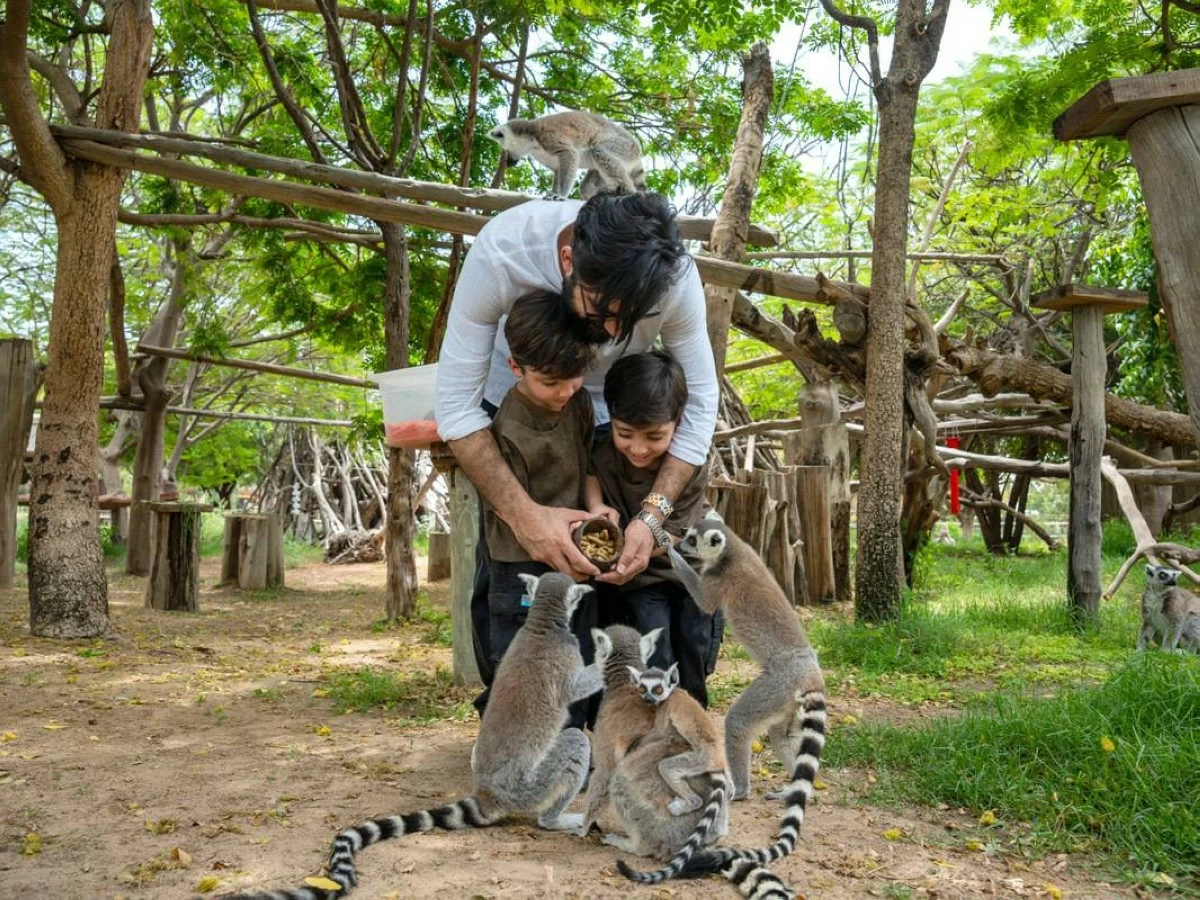
Dubai: Dubai Safari Park has officially concluded its seventh season, marking a successful year across conservation, education, animal welfare, scientific research and visitor engagement.
Muna Alhajeri, Director of Dubai Safari Park, described the season as a significant chapter in the park’s journey. She highlighted achievements including the birth of 144 animals, key conservation milestones, student engagement and strengthened global partnerships, noting that these reflect the park’s commitment to wildlife, education and meaningful visitor experiences.
She added that the season demonstrated a growing connection between the community and nature through educational programmes, conservation initiatives, family experiences and encounters with animals such as Salam and Zuri.
Throughout Season 7, the park introduced new attractions while continuing to offer popular experiences. Highlights included the launch of the first Festive Village, the introduction of Wild Offers in line with the UAE’s Year of Family, and the return of the Iftar in the Wild experience during Ramadan.
Dubai Safari Park also recorded strong visitor engagement, including record participation during Eid Al Etihad celebrations, reinforcing its role as a leading family destination in the emirate. Community campaigns such as the Month of Salam initiative encouraged discussions around conservation, coexistence and wildlife protection.
The park reported solid growth in visitor numbers, with increasing demand from international tourists and tour operators. More than 22,000 tickets were sold through travel trade partners in 2025, while over 62,000 redemptions were recorded in January and February alone.
Education remained central to the park’s mission, with 27,654 students participating in wildlife-focused programmes designed to promote awareness and hands-on learning experiences.
Conservation and animal welfare continued to be key priorities. During the season, the park welcomed 144 newborn animals, including vulnerable and endangered species such as Addax, Arabian wolves, ring-tailed lemurs, Speke’s gazelles, mountain gazelles, scimitar-horned oryx, Arabian sand gazelles, Barbary sheep and Nubian ibex.
Among the most notable arrivals were Salam, a southern white rhinoceros calf marking a milestone for the breeding programme, and Zuri, a baby giraffe that became a visitor favourite.
The season also saw Dubai Safari Park achieve global recognition by becoming a member of the World Association of Zoos and Aquariums (WAZA) and the European Association of Zoos and Aquaria (EAZA).
Beyond its facilities, the park continued its conservation efforts through the Addax rewilding programme, supporting the protection of one of the world’s most critically endangered antelope species.
Advancing its role in wildlife science and veterinary care, the park published two scientific studies and conducted 34 life-saving surgeries. It also introduced enhanced pregnancy monitoring, advanced diagnostics, genetic analysis capabilities and internationally aligned biobanking systems.
Preventative healthcare measures included diet reviews for 29 species, expansion of a fruit-less diet initiative, cardiac screenings and ongoing disease surveillance programmes. The introduction of advanced laboratory technologies reduced reliance on external testing by approximately 99 percent.
Dubai Safari Park is now closed for the summer break and will reopen later this year for its eighth season.