UAE
From first jobs to family businesses: The journeys of Dubai’s textile traders
Textile merchants who arrived decades ago share how they built businesses, raised families, and found a home in Dubai

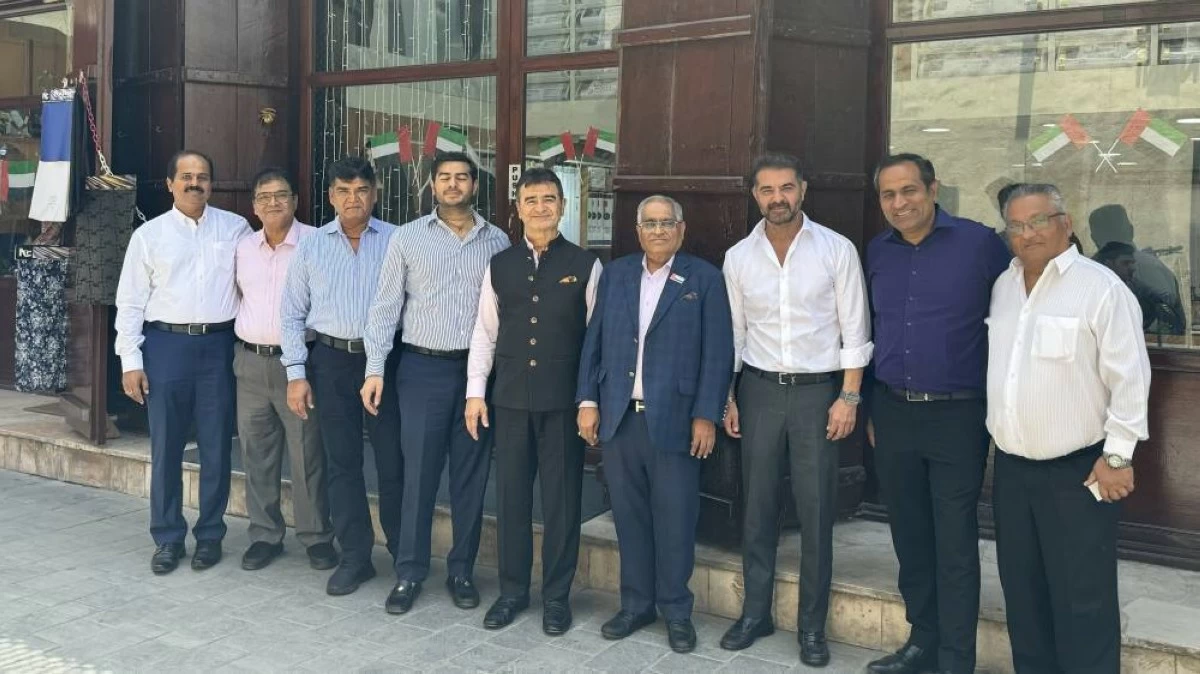
From left: Unnikrishnan Nair (30 years in the UAE), Naresh Advani (35 years), Suresh Advani (35 years), Sanjit Advani (30-year-old, UAE-born resident), Mahesh Advani (44 years), Sunderlal Bhatia (47 years), Sanjay Advani (40 years), Bharat Sahityani (25 years) and Chandrasen Bhatia (47 years).
Photo credit: Huda Tabrez/Emirates24|7
Dubai: In the narrow lanes of Bur Dubai’s historic Fahidi district, where wind towers rise above coral-stone buildings, bolts of fabric spill out of shopfronts much like they have for decades. Tourists browse silks and chiffons, traders negotiate over wholesale consignments, and somewhere between the hum of commerce and the rhythm of footsteps, history quietly persists.
For the textile merchants who built their lives here, this is not just a market. It is memory.
It is here that Mahesh Advani’s story began. When he landed in Dubai in 1982, he was just 18 years old.
“I had just finished high school and came to Dubai,” he said.
He joined a local textile company and worked there for six years. In 1988, he took the leap — leaving his job to start his own business in the same historic Al Fahidi market.
Today, he sits in that very building, running the business he has built over decades.
“This building was made in 1952. And it’s still the same. If you want to see old Dubai, you have to come here,” he said.
Around him, generations of traders continue to operate side by side. In some cases, even a third generation is preparing to take over, working out of the same lanes and storefronts their families once started in.
But long before Advani arrived, the foundations of textile trade were already being laid. By the early 20th century, merchants from the Indian subcontinent had begun arriving in the UAE.
“The first textile merchant from India landed here, I think, in the 1920s,” says Advani. “So textile is that old — a 100-year-old trade.”
Over the decades, that early wave of traders grew into a close-knit community – one that continued to draw families, each adding its own chapter to the market’s story.
Staying for life
Sunderlal Bhatia is another such trader, who came to the UAE with his brother in 1979.
“My parents came to the UAE in 1960. My father had a textile business here,” he said.
“In 1986 we opened a shop in Meena Bazaar, we had four shops there at one point,” he added.
But like many in the market, their business evolved with time, from retail counters to wholesale operations.
There are around 700 traders in the market today, according to Advani, most of whom can cite the exact date they arrived in the UAE – a mental timestamp marking the day their new lives began.
“I came on October 7, 1989. If you want, I can even tell you the flight I took — EK701, Delhi to Dubai," Raja Narwani, another businessman in the market, said.
His brother had arrived years earlier, and over time, the family built a business that now stretches from Africa to China. Back then, he recalls, the market looked very different.
“The market wasn’t as developed back then,” he said. “We had a retail shop… then after 10–12 years, we moved to wholesale.”
Slowly and steadily, Narwani’s family, like many others in the community have built a life around these businesses.
Dubai is home
“We open our shop at 9am and we can close it at any time of the night,” Sunderlal Bhatia said.
“If sometimes our stock is left outside, there is no problem… nobody takes it. That is true only in Dubai.”
This sense of ease is reinforced by the wider support system traders say they have relied on over the years. His brother, Chandrasen Bhatia, points to the role of the government in keeping that ecosystem steady.
“We have an association for traders and we regularly meet with the government departments. If any issue comes up, we resolve it easily. Life in Dubai is very good, even for children, the education here is excellent,” he said.
For their family, that support extends beyond business.
“My father is 85. The health department calls and checks on him regularly… they came home during the COVID-19 restrictions, to deliver medicines. They again visited as recently as last month, just to check on him and his health. You won’t get that anywhere,” he said.
Across the market, that sentiment is widely shared.
“The government here considers us as their family, and we, too, think of this place as our home,” Narwani said.
Over the years, the textile market has retained its identity, and for many of those who built their lives here, it has come to mean something more. Because, today, it is not just a place where they earn a living, it is where they belong.