UAE
International Astronomy Center announces expected dates of Eid Al-Adha and Dhu Al-Hijjah
Crescent visibility forecast points to Dhu Al-Hijjah on 18 May and Eid Al-Adha on 27 May
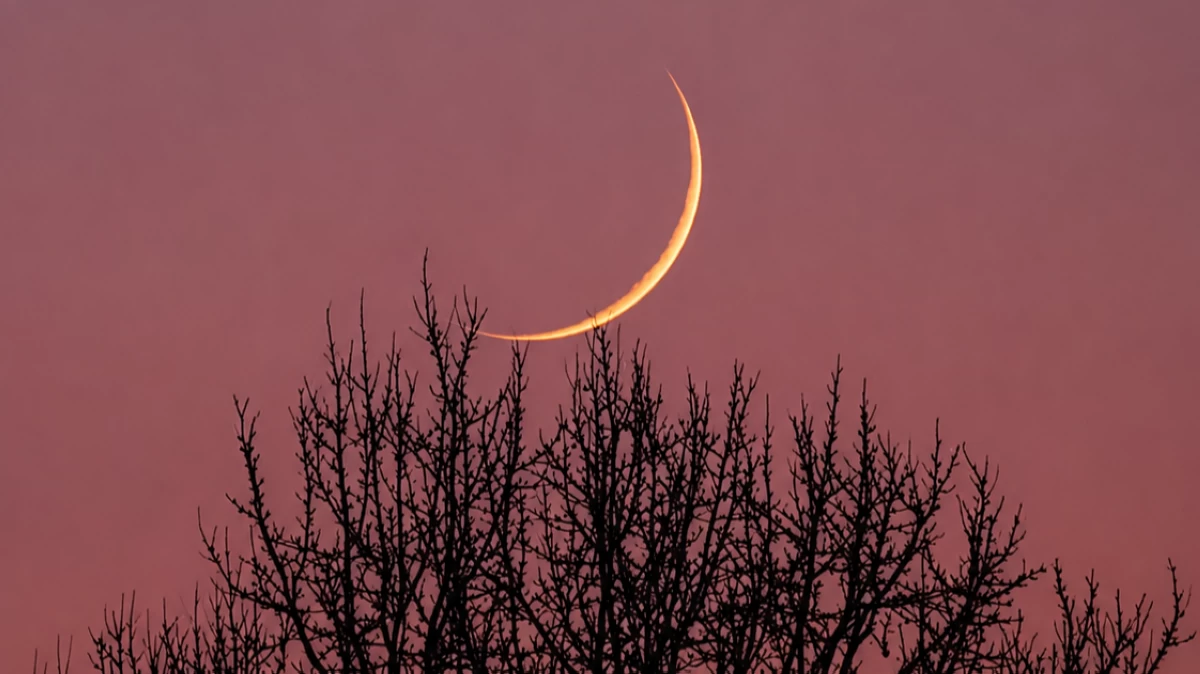
Since there is a possibility of sighting the crescent from the Islamic world on Sunday, it is expected that Monday, 18 May, will be the first day of Dhu Al-Hijjah, and that Wednesday, 27 May, will be the first day of Eid Al-Adha in almost all Islamic countries.
Amr Bayoumi, Emirates 24/7
Dubai: The Director of the International Astronomy Centre, Engineer Mohammad Shawkat Odeh, stated that Islamic countries around the world will sight the crescent of Dhu Al-Hijjah 1447 AH on Sunday, 17 May 2026. The crescent can be seen on that day using a telescope from East Asia, South Africa, and southern South America, and it can be seen with the naked eye from central and western Asia, North Africa, and most of the Americas. Since there is a possibility of sighting the crescent from the Islamic world on Sunday, it is expected that Monday, 18 May, will be the first day of Dhu Al-Hijjah, and that Wednesday, 27 May, will be the first day of Eid Al-Adha in almost all Islamic countries.
Shawkat said: “Regarding the crescent’s situation on Sunday, 17 May, in some Arab and international cities, the surface calculations of the crescent at sunset are as follows: In Jakarta, the Moon sets 26 minutes after sunset, its age is 15 hours and 36 minutes, and sighting the crescent in Jakarta is possible using a telescope only. In Abu Dhabi, the Moon sets 58 minutes after sunset, its age is 18 hours and 45 minutes. In Makkah Al-Mukarramah, the Moon sets 58 minutes after sunset, its age is 19 hours and 22 minutes. In Amman and Jerusalem, the Moon sets 69 minutes after sunset, its age is 19 hours and 55 minutes. In Cairo, the Moon sets 67 minutes after sunset, its age is 20 hours. In Rabat, the Moon sets 79 minutes after sunset, its age is 22 hours and 06 minutes, and sighting the crescent in Abu Dhabi, Makkah Al-Mukarramah, Amman and Jerusalem, Cairo, and Rabat is possible with the naked eye relatively easily.”
He added: “To understand the meanings of these figures, it should be noted that the shortest stay of a crescent that has been seen with the naked eye was 29 minutes, while the youngest age of a crescent that has been seen with the naked eye was 15 hours and 33 minutes. It is not sufficient for the crescent’s stay and age to exceed these values for it to be seen, as sighting the crescent is related to other factors such as its angular distance from the Sun and its distance from the horizon at the time of observation.”
He indicated that to learn the results of crescent observations, one can visit the website of the Islamic Crescent Observation Project ([www.AstronomyCenter.net](http://www.AstronomyCenter.net)), as the project was established in 1998 and currently includes more than 1,500 members of scientists and those interested in crescent observation and calendar calculations. The project encourages interested people in various countries around the world to sight the crescent and send their observation results to the project through its website, where they are published sequentially after being checked and scrutinised.