Iranian aggression was planned and not reactive: Anwar Gargash
Anwar Gargash calls for realistic Gulf narrative and strategic reassessment after Iran’s planned aggression
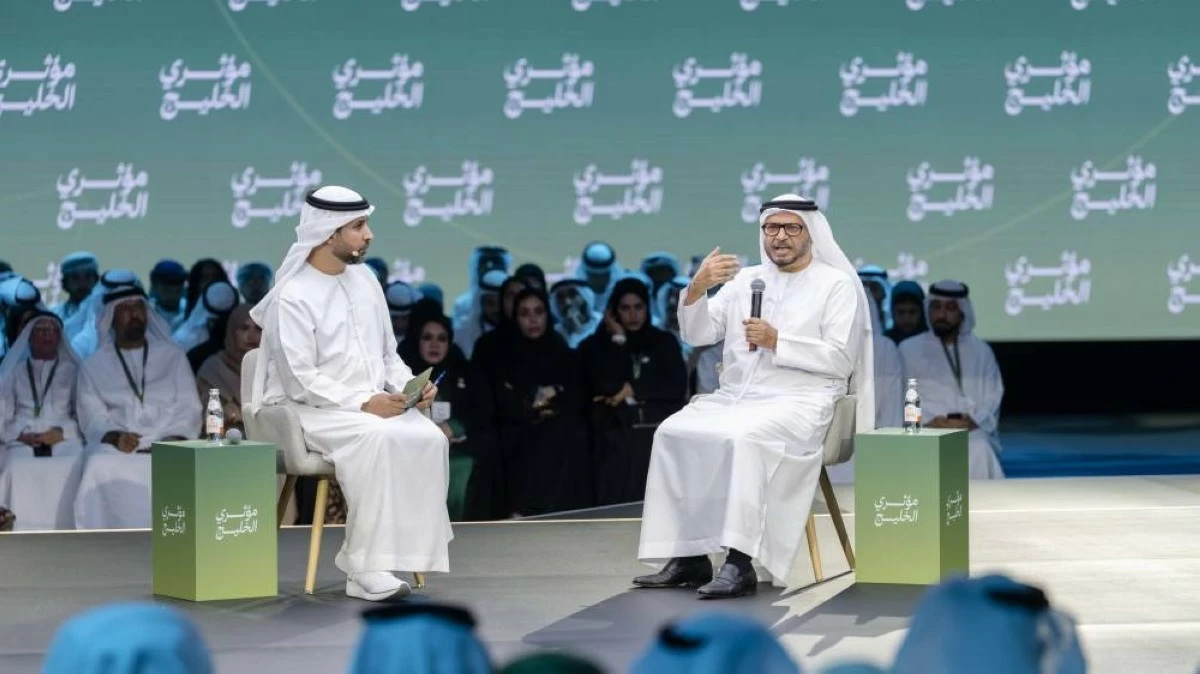
Dubai: His Excellence Dr Anwar Gargash, Diplomatic Adviser to the UAE President, said the recent Iranian aggression was severe, deliberate, and calculated, reflecting prior planning rather than a momentary escalation.
He stressed that its scale and execution confirm this was not an isolated decision but a strategic move carried out despite sustained Gulf efforts to de‑escalate and avoid confrontation, including a unified position not to facilitate any action against Iran.
Dr Gargash described the escalation as a decisive turning point for the region, unprecedented in both scale and impact, marking a clear break from previous patterns of engagement.
He noted that while Gulf states had long pursued policies of containment, recent developments have exposed the limits of that approach and reinforced the seriousness of the threat posed by Iran.
Dr Gargash was speaking during a panel discussion titled “Re‑evaluating Alliances in Times of Tension” at the Gulf Creators event, organised by the UAE Government Media Office at Atlantis The Palm, Dubai.
The event brought together more than 1,000 Gulf media professionals, thinkers, and content creators to discuss shaping a GCC narrative that reflects the region’s priorities and values.
Dr Gargash said GCC cohesion during the recent escalation fell to one of its lowest levels, particularly when compared to previous crises, despite the scale of the threat and the urgency of coordinated action. He also noted that the Arab League’s response fell short of expectations.
He added that the escalation has exposed deeper structural challenges, including fragmentation in Arab national security and diverging regional priorities. It has also underscored the continued importance of strategic alliances, particularly the role of the United States in supporting regional stability and protecting shared interests.
Dr Gargash said recent developments have reinforced the view that Iran can no longer be addressed through traditional containment alone.
He stressed that the regional landscape will not return to its previous state, and that a shift of this magnitude requires a rational, realistic, and comprehensive reassessment of Gulf relations.
He noted that for over two decades, the region has sought to manage this challenge through political engagement, but the scale of recent developments has fundamentally altered the equation.
Dr Gargash warned that the fallout has created a deep and enduring crisis of confidence that will shape regional dynamics for decades, requiring a more decisive and long‑term approach to safeguarding Gulf interests.
Dr Gargash emphasised that this reassessment must be grounded in national interests and conducted with strategic discipline. He stressed the importance of protecting the region’s security and future from external influence, particularly attempts to shape its stability through ideological agendas.
He added that recent developments have fundamentally reshaped regional perceptions and reinforced the need to build a clear and coherent Gulf narrative. He noted that media professionals, intellectuals, and content creators play a critical role in shaping awareness, influencing perception, and strengthening the region’s position in the evolving information landscape.
He stressed that building a unified and credible narrative will be central to enhancing the region’s global influence.
Dr Gargash concluded that while conflict carries costs, Gulf countries have demonstrated resilience and institutional strength. He highlighted key pillars of stability, including leadership, social cohesion, economic diversification, and a strong value proposition that continues to attract global investment.
He added that recent developments will accelerate efforts to reinforce these strengths and invest further in infrastructure capable of mitigating future risks