UAE delegation discusses ways to transform global climate commitments into concrete action, ahead of COP31
The UAE’s participation highlights its commitment to promoting global sustainable development and coordinating international efforts to accelerate climate action.
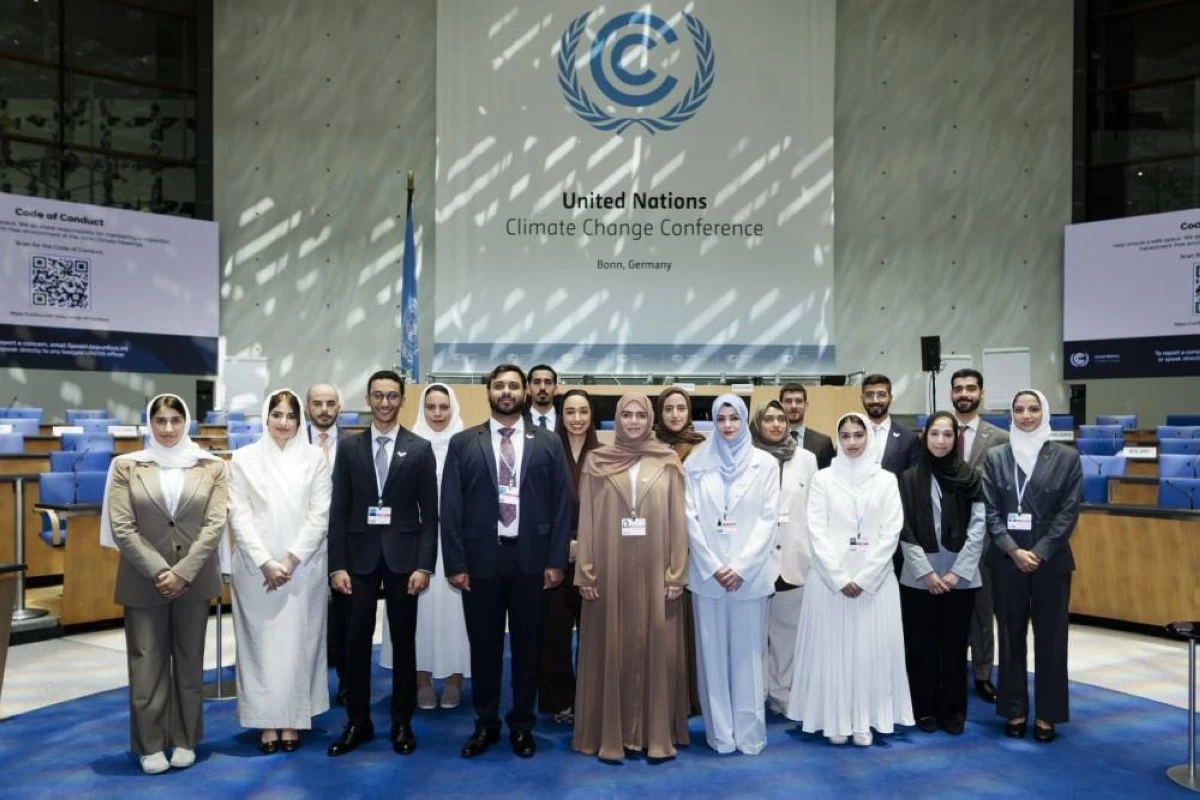
Bonn: The United Arab Emirates is participating in the Bonn Climate Meetings with a clear strategic and implementation-focused approach. These meetings include the sixty-fourth session of the Subsidiary Bodies (SB64) under the United Nations Framework Convention on Climate Change (UNFCCC), which are taking place in Bonn, Germany from June 8 to 18, 2026.
The UAE’s participation highlights its commitment to promoting global sustainable development and coordinating international efforts to accelerate climate action across mitigation, adaptation and resilience with the aim of driving climate finance, technology transfer, capacity building and strengthening community resilience, including through climate finance, technology development and transfer, capacity building, and enhanced community resilience in response to the growing impacts of climate change.
The Ministry of Climate Change and Environment (MOCCAE) is leading the UAE delegation in the negotiations. The delegation includes Dr. Alanoud Abdullah Alhaj, Assistant Under-Secretary for Green Development and Climate Change Sector at MOCCAE, alongside a team of negotiators and a group of experts and representatives from key national entities.
Participating entities include the Ministry of Climate Change and Environment, the Ministry of Energy and Infrastructure, the Ministry of Interior (MOI), the Ministry of Finance, and the Ministry of Foreign Affairs, in addition to the Anwar Gargash Diplomatic Academy (AGDA), the Environment Agency - Abu Dhabi, Abu Dhabi Global Markets (ADGM), the Federal Youth Authority (FYA) and the Arab Youth Centre (AYC), as well as representatives from the Salama bint Hamdan Al Nahyan Foundation (SHF). This broad participation reflects the UAE’s integrated, whole of government approach to strengthening its leadership in global environmental forums.
The Bonn meetings play a strategic role as a key preparatory milestone for the upcoming COP31, scheduled to take place in Antalya, Türkiye, from November 9 to 20, 2026. The meetings provide a crucial opportunity to address technical issues and advance implementation across key negotiations tracks, including adaptation, finance, technology, capacity building, and resilience, with a focus on water security and sustainable food systems.
Through this platform, the UAE aims to build consensus, reinforce trust among international Parties and translate multilateral commitments into actionable and measurable national policies. This will help establish a solid foundation for achieving future climate milestones successfully.
In her address at the plenary session of the Bonn Climate Negotiations, Dr. Alanoud Alhaj said, "We convene today at a crucial moment for global climate action. The historic outcomes of COP28, highlighted by the UAE Consensus, have established a clear and ambitious roadmap for accelerating climate action while promoting sustainable development and global prosperity. The Bonn meetings provide an opportunity to focus on what truly matters, moving from pledges to real, tangible action on the ground.”
She added, "We can no longer afford to delay our efforts in adaptation. Building climate resilience in light of increasing impacts is both a moral and practical necessity to protect sustainable development and ensure food and water security. We believe that climate action, human progress and economic growth are mutually reinforcing pathways. We remain committed to constructive collaboration with all parties in Bonn to build trust and drive the implementation of multilateral commitments through measurable actions, paving the way for a successful COP31.”
The UAE delegation is focused on translating global climate commitments, particularly the significant outcomes of the UAE Consensus, into actionable measures and tangible results. Adaptation remains central priority, given its direct link to water security, food security and sustainable development. Their top priority is adaptation, which strongly link to water and food security, as well as sustainable development. This is especially relevant as the UAE prepares to co host the 2026 UN Water Conference (2026 UNWC) with the Republic of Senegal in Abu Dhabi from December 8 to 10, 2026.
The negotiating team is also working to advance the UAE Framework for Global Climate Resilience and integrate nature protection and restoration into core economic decision making. Regarding climate finance, the UAE is highlighting its pioneering approach in mobilising investment through ALTÉRRA, a climate finance platform launched at COP28 with an incentive capital of $30 billion (Dh110 billion). This fund aims to mobilise $250 billion (Dh918 billion) by 2030. Additionally, the UAE is emphasising the urgent need to accelerate the delivery of resources from the Fund for Responding to Loss and Damage (FRLD) to the most vulnerable countries and communities, ensuring a transparent and equitable process that supports climate action while promoting sustainable economic growth.
To accelerate implementation, the UAE’s discussions emphasise the need to remove financial barriers faced by developing countries and facilitate their access to climate finance, in addition to strengthening technology transfer and capacity building efforts. To achieve these goals sustainably and effectively, the UAE underscores the importance of innovation, strategic investment, international cooperation and inclusive partnerships. These are essential for ensuring that climate action progresses alongside economic growth and human development.